
Friendly UK optics advice
Binoculars you’ll actually enjoy using.
No jargon maze and no obsession with the biggest number. We help you find a steady, comfortable view for the things you really want to see.
- Plain English
- UK-focused
- Specs in context

Three ways to look
Choose the instrument before the specification.
Start with how you move and how long you want to watch. The right format narrows the rest of the decision quickly.
The everyday all-rounder
Binoculars
Two-eye comfort for birds, wildlife, walks and sport. Usually the best first optic.
Explore binoculars →The pocket option
Monoculars
Small, light and one-handed when saving space matters more than long-viewing comfort.
Explore monoculars →The long-range view
Spotting scopes
More reach from a hide, coast or viewpoint when you are happy to stop and use a tripod.
Explore spotting scopes →Which optic for me?
Three questions. One sensible starting point.
Use this as a direction, not a diagnosis. Comfort, eyesight and the exact model still deserve a real-world check.
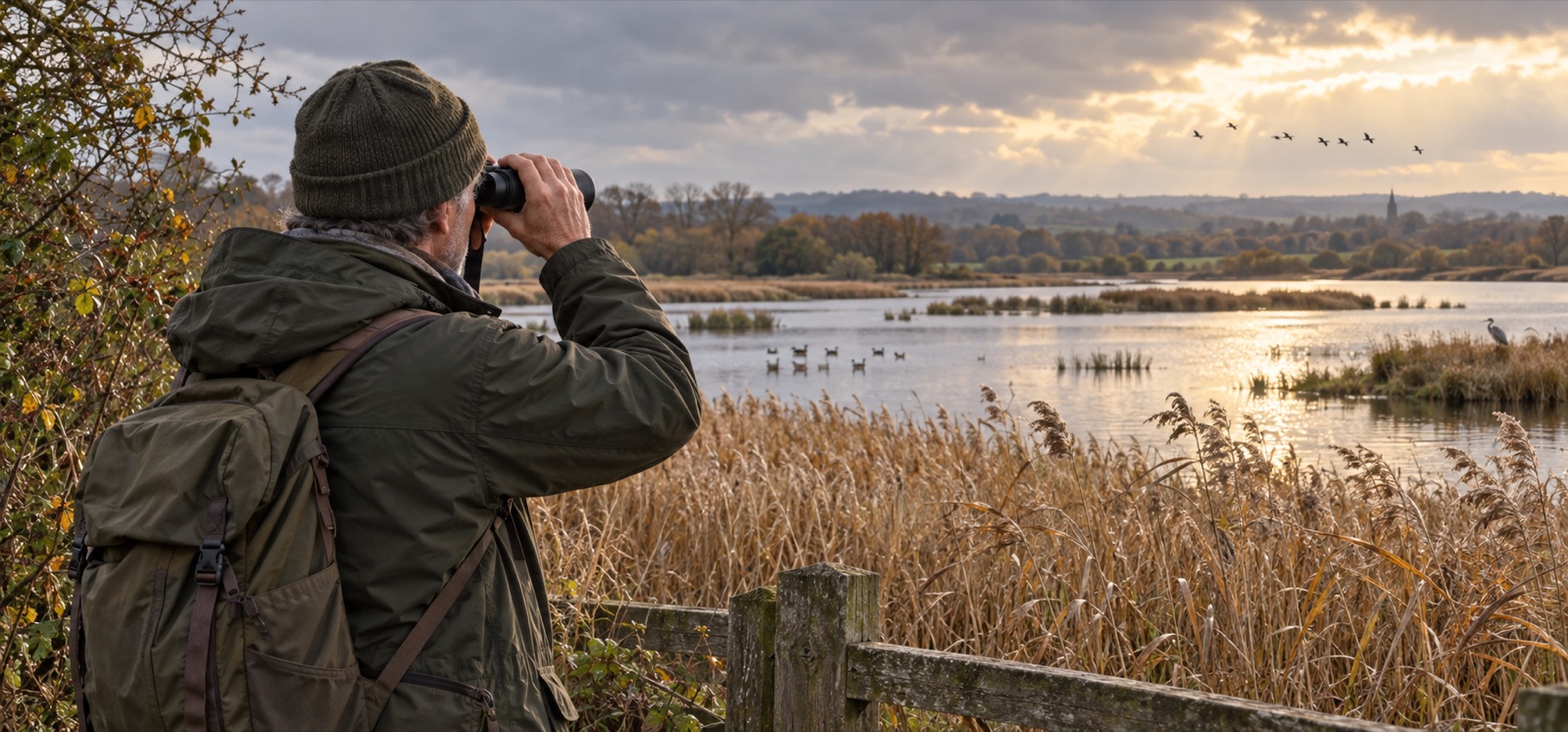
Field guide
For most birdwatchers, begin at 8×42.
It is steady enough to follow movement, bright enough for mixed British weather and comfortable enough for a long look. Our shortlist shows where five current models genuinely differ.
- Field width for finding moving birds
- Eye relief for glasses and eyecup fit
- Close focus, carry weight and weather sealing
Decode the numbers
8×42 is a format, not a verdict.
Eight is the magnification. Forty-two is the objective diameter in millimetres. Neither tells you how wide the view feels, how close it focuses or whether your eyes sit comfortably behind the eyecups.
- 8×
- How much closer the subject appears
- 42mm
- The diameter of each front lens
- 5.25mm
- The exit pupil: 42 divided by 8
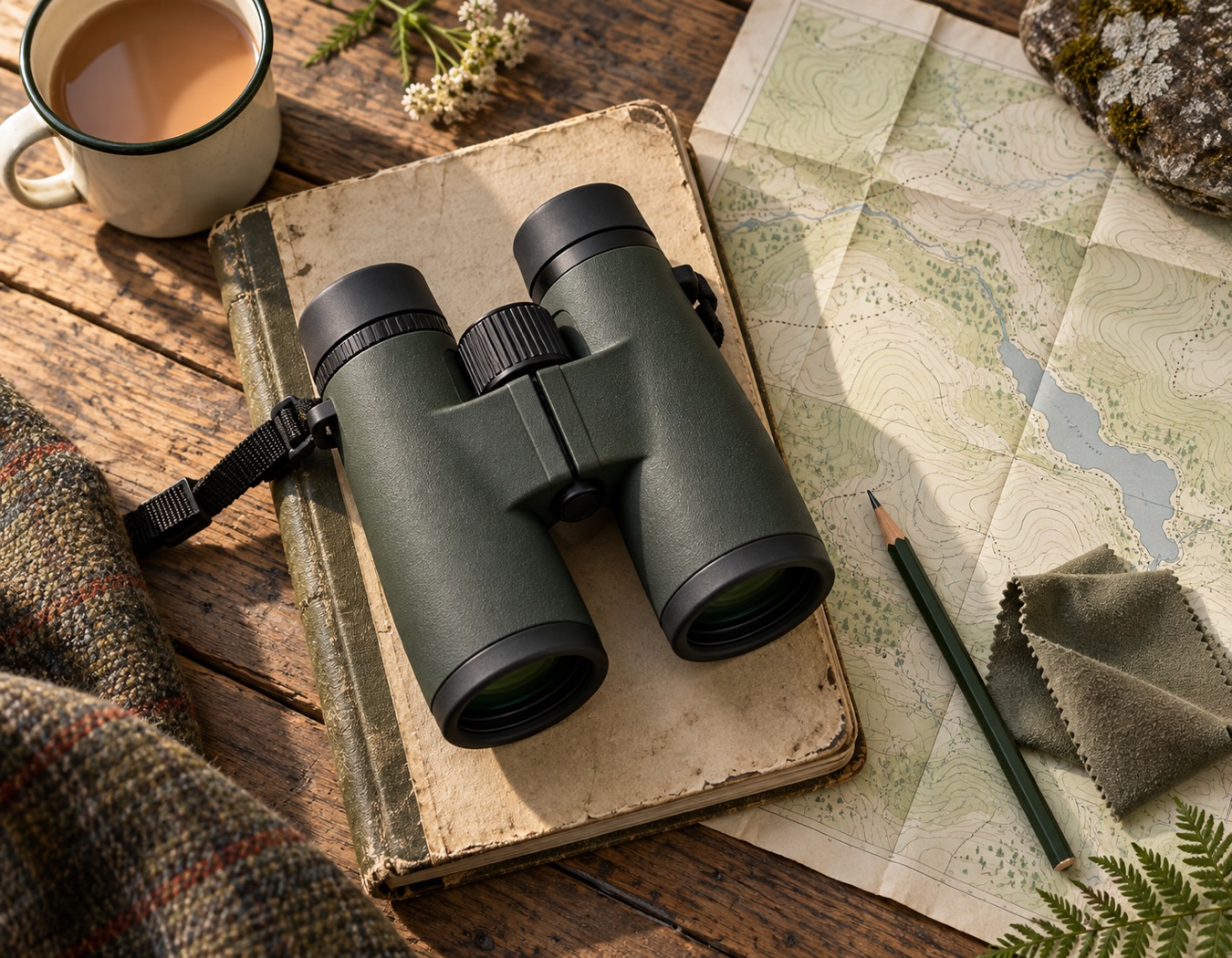
Our promise
Useful guidance, with the limits left visible.
We compare documented specifications, calculate where the numbers help, and explain the practical trade-offs. We flag where individual fit or current stock still needs checking.
How we research →