
04 · Understand the view
Using optics
Plain-English help with magnification, objective size, field of view, eye relief, focus, cleaning and stable observation.
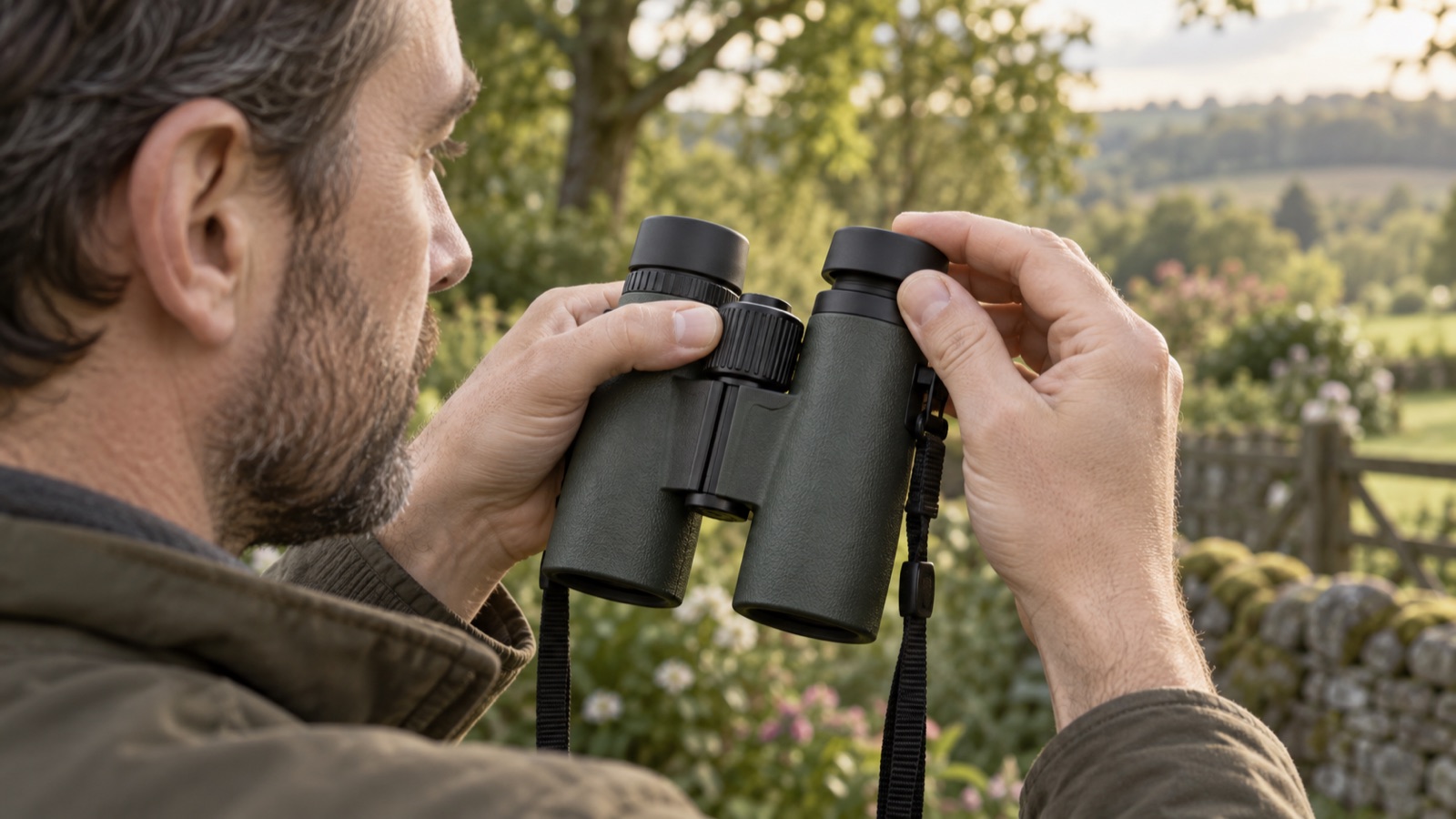
The first number is magnification; the second is the objective-lens diameter in millimetres.
A wider field helps you find and follow a subject; higher power usually makes shake and aiming more obvious.
Never look directly at the Sun through binoculars, a monocular or a spotting scope.
An 8×42 binocular magnifies the apparent size of the view eight times and has 42mm objective lenses. Those numbers describe the basic format; they do not tell you the sharpness, colour, contrast, field width, focusing feel or comfort.
Field of view changes how quickly you find things
Field of view is commonly given as metres at 1,000 metres or as an angle. A broader field can make a moving bird easier to acquire and follow. Two binoculars with the same 8×42 label can have meaningfully different fields, so compare the model-level figure.
Eye relief is about where your eye must be
Eye relief is the distance behind the eyepiece where the complete image forms. Glasses add separation, so a longer stated figure is often helpful, but facial shape, lens position and eyecup design still affect whether you see the full field without dark crescents.
A safety limit with no compromise
Never look directly at the Sun through ordinary binoculars. Our solar-viewing safety guide explains why the familiar shortcuts are unsafe. For wildlife, responsible birdwatching starts with a different but equally useful habit: observe from a distance rather than moving closer for a better view.
Care and troubleshooting
A clean lens, dry case and comfortable eye position solve many everyday problems. Start with how to clean binocular lenses or how to store them. If the view is dark at the edges, see black circles in the view; if a wheel grinds or slips, see focus-wheel checks. Internal haze, suspected fungus and double images deserve more caution than an exterior wipe.
Explore this topic
Useful guides and comparisons
Objective size explained
Choose 25mm, 32mm, 42mm or 50mm by light, use and carry weight.
Read the guide →Eye spacingInterpupillary distance
Set the hinge for one circular view and check the binocular fits your eyes.
Read the guide →Format choiceAre zoom binoculars any good?
Test variable power against a fixed pair and a supported scope.
Read the guide →Optical treatmentLens coatings explained
Separate anti-reflection, prism and protective claims when buying.
Read the guide →PhotographyTake photos through binoculars
Mount, focus, align a phone behind one eyepiece and fix black-ring problems.
Read the guide →TravelBinoculars in hand luggage
Pack optics safely and check airline, airport, tripod and liquid rules.
Read the guide →Lens careHow to clean binocular lenses
A gentle grit-first method for objectives, eyepieces and stubborn fingerprints.
Read the guide →TroubleshootingBlack circles in the view
Fix eye spacing, eyecup position and moving dark crescents before blaming focus.
Read the guide →Weather careExterior condensation
Clear ordinary cold-to-warm lens mist and dry the complete carry kit.
Read the guide →Internal faultFungus inside binoculars
Separate a surface mark from possible internal growth and choose a safe service route.
Read the guide →Mechanical faultStiff or loose focus wheel
Check the setup and recognise a wheel that should not be forced or oiled.
Read the guide →StorageHow to store binoculars
Keep the lenses, strap and case dry between outings and through longer breaks.
Read the guide →Coastal careAfter rain or sea spray
Dry fresh rain and handle abrasive salt without assuming every model can be rinsed.
Read the guide →Service decisionsWhen binoculars need repair
Draw the line between owner checks, warranty support and qualified service.
Read the guide →FieldcraftResponsible birdwatching
Watch from paths and hides without disturbing nesting or feeding birds.
Read the guide →Essential safetySolar-viewing safety
Why ordinary binoculars must never be used to look directly at the Sun.
Read the guide →Practical setupHow to focus binoculars
Set the eyecups, hinge and dioptre once; use the centre wheel in the field.
Read the guide →MaintenanceBest lens-cleaning kits
Compare a complete optics pouch with a pocket tool and follow a grit-first routine.
Read the guide →TroubleshootingBinoculars showing a double image
Rule out eye spacing and focus, then recognise when alignment needs service.
Read the guide →TroubleshootingBinoculars fogging inside
Tell exterior condensation from internal moisture and avoid damaging home fixes.
Read the guide →Start hereHow to choose binoculars
Turn magnification, objective size, fit, weight and weather protection into a sensible shortlist.
Read the guide →SpecificationsWhat do binocular numbers mean?
Decode 8×42, exit pupil, close focus and the other figures on a specification sheet.
Read the guide →Eye positionEye relief explained
Understand the millimetre figure, eyecup position and fit checks that matter with glasses.
Read the guide →Width of viewField of view explained
Compare metres, feet and degrees—and see why a wider view helps with moving subjects.
Read the guide →Light and fitExit pupil explained
Calculate the beam of light leaving the eyepiece and learn when a larger one helps.
Read the guide →Weather careWaterproof vs water-resistant
Read weather claims properly before relying on a pair in rain or sea spray.
Read the guide →Fog preventionNitrogen vs argon
Understand dry-gas purging, seals and the difference between internal and external fog.
Read the guide →Optical basicsMagnification explained
Decide when 8×, 10× or more power gives usable detail rather than extra shake.
Read the guide →Nearby natureClose focus explained
Put minimum focusing distance into garden, butterfly and birdwatching context.
Read the guide →Optical designRoof prism vs Porro prism
Understand the shape, coatings, sealing and value of two classic designs.
Read the guide →Optical designIs ED glass worth it?
Weigh colour-fringing control against field, fit, weight and cost.
Read the guide →SetupWhat is a binocular dioptre?
Set the focus difference between your eyes and know when a locking ring helps.
Read the guide →Choose an instrumentApply it to binoculars
Use the basics to compare full-size, mid-size and compact handheld formats.
Read the guide →Worked exampleSee a current comparison
Five birdwatching binoculars show how field, eye relief, close focus and weight interact.
Read the guide →