
Safety · Solar viewing
Can you look at the Sun through binoculars?
Ordinary binoculars must never be used to view the Sun directly. Understand why sunglasses and eyepiece filters are unsafe and where to find specialist guidance.
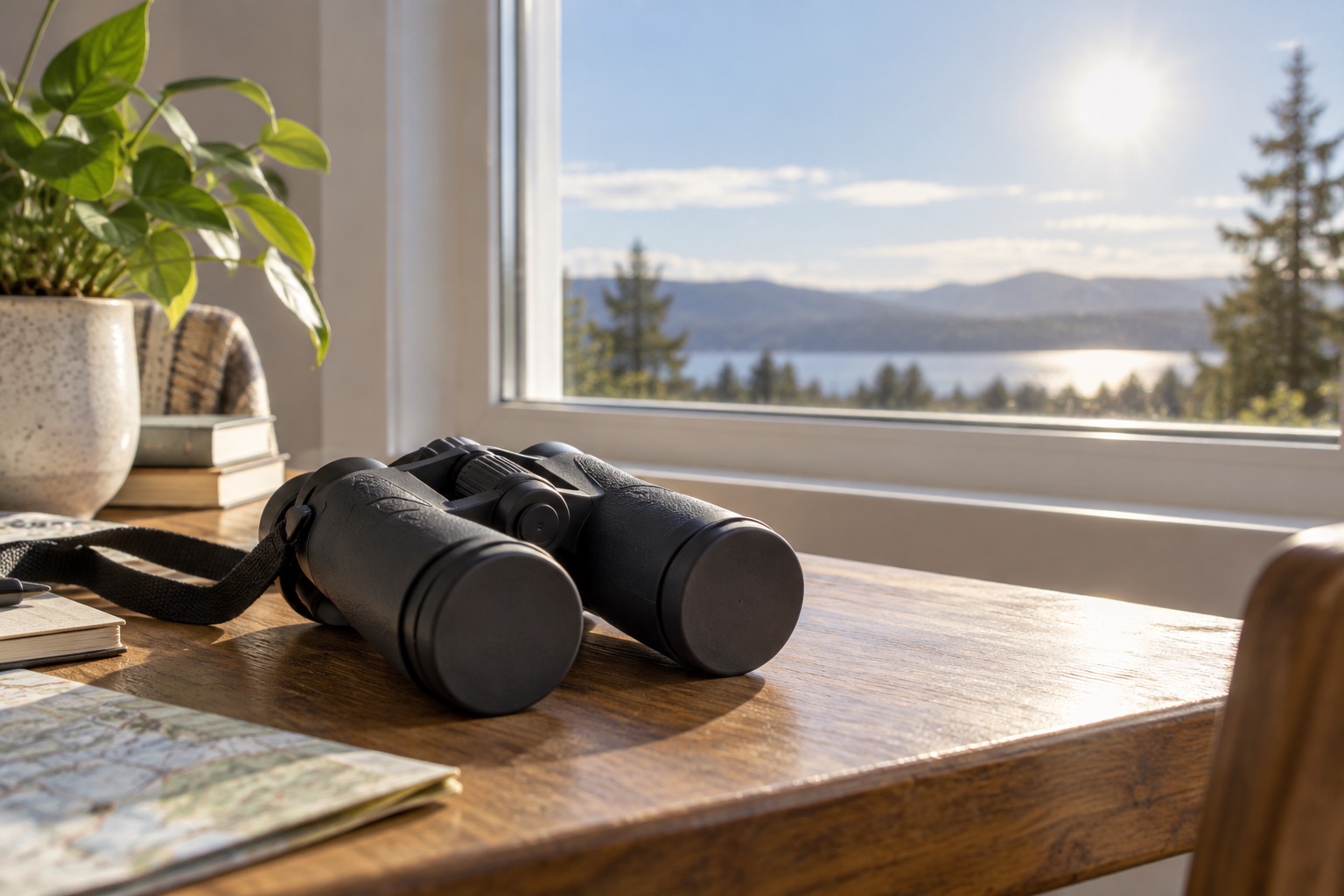
Never aim binoculars at the Sun and then look through them.
Do not put a makeshift filter at the eyepiece.
The Moon and stars are different targets; keep daytime aiming away from the Sun.
No. Never look directly at the Sun through ordinary binoculars. Their lenses concentrate sunlight, and a brief glance can permanently damage your eyes. The rule applies during an eclipse and when the Sun is partly obscured by cloud. This is not a matter of choosing a lower magnification or darkening the image with sunglasses.
Why the familiar shortcuts are unsafe
Sunglasses are for ordinary daylight, not concentrated light from an optical instrument. Holding eclipse glasses behind a binocular eyepiece is also unsafe: the intense light has already passed through the objectives and been focused by the instrument. A loose sheet of film, smoked glass, exposed photographic material or a filter screwed to the eyepiece is not an appropriate workaround.
The Royal Astronomical Society's solar-viewing guidance warns against looking through an unprotected telescope or binocular. It describes specialist methods, but these require strict precautions, correct equipment and supervision. We do not recommend an improvised setup or give a home filter-making procedure here. If you want to observe the Sun, follow current advice from a reputable astronomy organisation or join an experienced observing group with purpose-built equipment.
Everyday ways to avoid an accident
When using binoculars in daylight, choose a subject well away from the Sun. Do not scan across it while searching for a bird or aircraft. Keep children from picking up an uncapped binocular at a sunny window and pointing it skywards. On a hill or at the coast, look with the unaided eye first to establish a safe direction before raising the instrument.
If you have accidentally looked at the Sun through binoculars or notice a new visual disturbance after suspected exposure, stop observing and seek prompt professional medical advice. Do not wait for discomfort to decide whether it matters. The purpose of this guide is prevention, not diagnosis or treatment.
Binoculars remain excellent for night-time stargazing and viewing the Moon when the Sun is absent from the viewing direction. Our responsible birdwatching guide covers the different question of observing wildlife without disturbing it. Both begin with the same habit: choose a safe, appropriate target before lifting the optics.
Frequently asked questions
Solar-viewing safety
Can I look at a solar eclipse with binoculars?
Not through ordinary binoculars. An eclipse does not make concentrated sunlight safe. Follow current Royal Astronomical Society guidance for observing without direct optical viewing.
Do sunglasses protect my eyes behind binoculars?
No. Sunglasses are not designed to make concentrated sunlight through binoculars safe.
What about eclipse glasses behind the eyepiece?
Do not place eclipse glasses or a loose filter behind the eyepiece. Optical equipment concentrates light before it reaches that point; specialist solar systems require expert, equipment-specific guidance.
Is it safe to look at the Moon through binoculars?
Normal night-time lunar viewing is a different activity. Keep the binocular away from the Sun when aiming, including near dawn or dusk.