
Astronomy · 10×50 comparison
Best 10×50 binoculars for astronomy
Four 10×50 binoculars compared for night-sky field width, eye relief, weather sealing, weight and tripod use, with clear advice on which trade-off to choose.
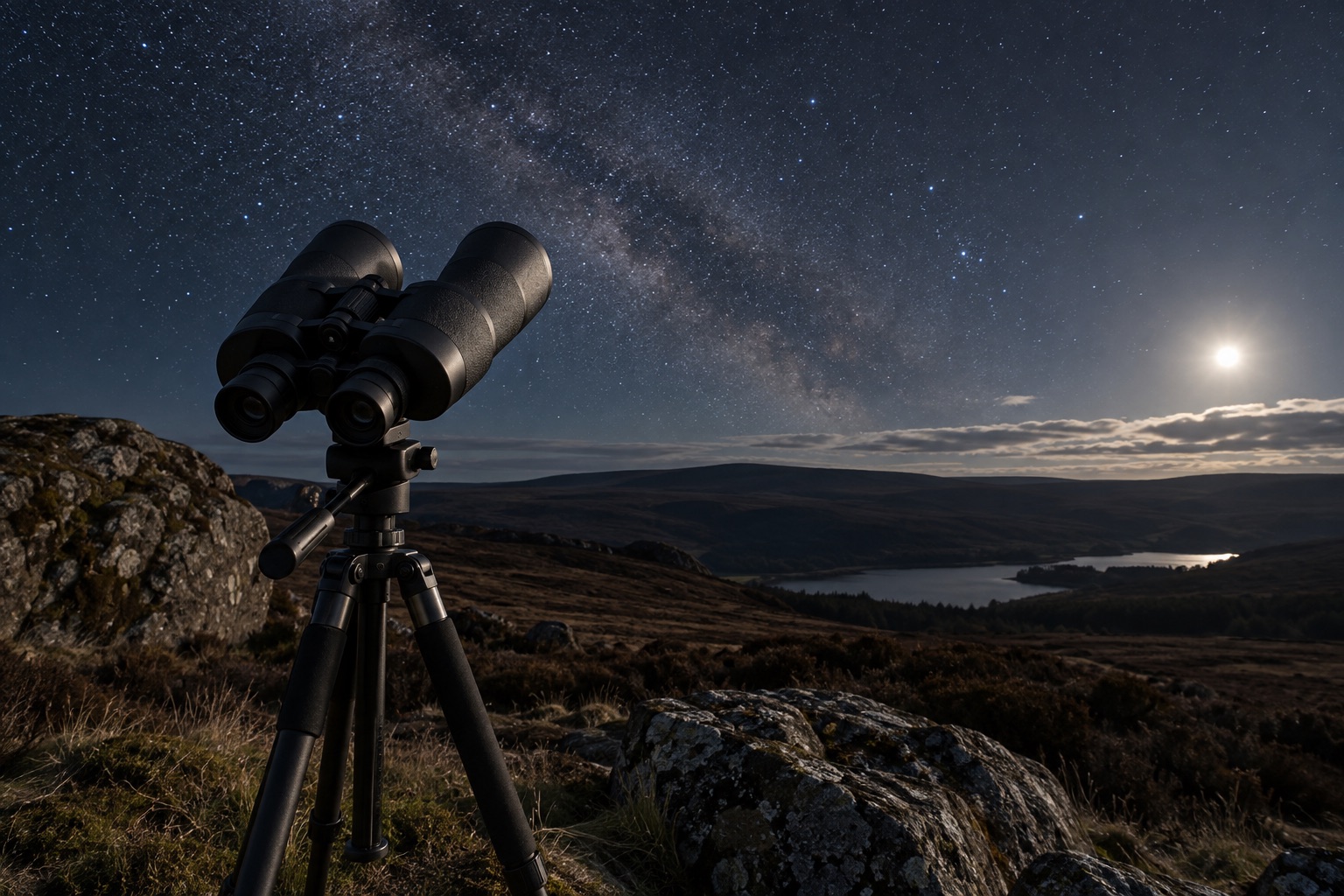
Every 10×50 has a nominal 5mm exit pupil; field, coatings and eye relief still differ.
A tripod or reclined chair often reveals more detail than changing between similar 10×50s.
Water resistance and waterproofing are not interchangeable for dew-heavy nights.
Quick picks
Choose by the detail that matters most
Links open the matching Amazon UK listing. Prices and sellers can change, so confirm the model name and ASIN before buying.
Swipe to compare all details →
| Model | Field at 1km | Eye relief | Weight | Weather | Best fit |
|---|---|---|---|---|---|
| Nature DX ED | 103m | 17.8mm | 806g | Waterproof | Balanced step-up |
| UpClose G2 | 118m | 12mm | 765g | Water-resistant | Wide fair-weather value |
| Nature DX | ≈101m | 17.5mm | 806g | Waterproof | Mixed wildlife and sky |
| Outland X | 98m | 17.4mm | 765g | Waterproof | Lighter sealed option |
The detailed shortlist
Four 10×50s for night-sky use
Compare the field, eye relief and support needs of each 10×50, and check the exact variant before ordering; similarly named 8× and ED versions may appear alongside it.

Celestron Nature DX ED 10x50
Best for: Dusk and sky crossover
An ED-glass 10×50 with 103m field, 17.8mm eye relief and waterproof nitrogen-filled construction.
What stands out
- ED objectives and fully multi-coated optics
- 103m field at 1,000m
- Waterproof and tripod adaptable
Keep in mind
- 806g is tiring unsupported
- ED glass does not increase aperture or overcome sky glow
- 10×50
- 806g
- 103m / 1,000m
- 17.8mm eye relief

Celestron UpClose G2 10x50
Best for: Occasional clear-sky viewing
An inexpensive traditional 10×50 Porro with a broad 118m field and tripod socket for supported night-sky viewing.
What stands out
- 118m field at 1,000m
- 5mm exit pupil
- Tripod adaptable
Keep in mind
- Only water resistant, not waterproof
- 12mm eye relief is poor for glasses
- 10×50
- 765g
- 118m / 1,000m
- 12mm eye relief
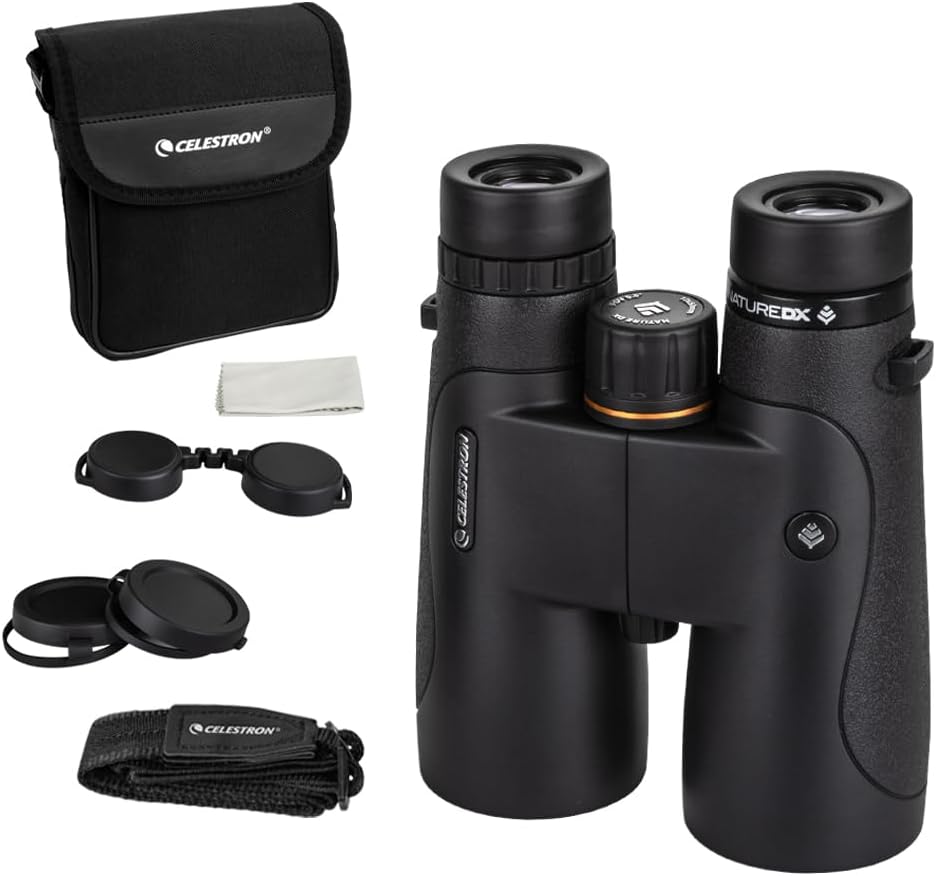
Celestron Nature DX 10x50
Best for: Wildlife and night-sky crossover
A 10×50 with waterproof nitrogen-filled construction, 17.5mm eye relief and an approximately 101m field at 1,000m.
What stands out
- 5mm exit pupil
- Waterproof and nitrogen filled
- 2.5m close focus
Keep in mind
- 806g is heavy for all-day carrying
- Field is narrower than the UpClose G2's
- 10×50
- 806g
- ≈101m / 1,000m
- 17.5mm eye relief

Celestron Outland X 10x50
Best for: Damp-field 10×50 use
A waterproof, nitrogen-filled 10×50 roof model with 17.4mm eye relief and a 98m field.
What stands out
- Waterproof and nitrogen filled
- 17.4mm stated eye relief
- Tripod adaptable
Keep in mind
- 98m field is narrower than the Nature DX
- 765g requires support for long sessions
- 10×50
- 765g
- 98m / 1,000m
- 17.4mm eye relief
“10×50” says magnification and objective diameter, not whether a binocular is comfortable for an hour under the stars. These four Celestron models share a nominal 5mm exit pupil, but their fields range from about 98m to 118m at 1,000m. Eye relief ranges from 12mm to 17.8mm. Those gaps are large enough to change the buying decision.
Nature DX ED 10×50: the balanced step-up
The Nature DX ED combines ED objectives, fully multi-coated optics, a 103m field and 17.8mm eye relief. The specification is particularly well balanced for a buyer who wants one 10×50 for dusk wildlife and sky use. Waterproof nitrogen-filled construction also makes dew and wet grass less worrying than with a fair-weather model.
At 806g, it is not lightweight. Support is valuable for prolonged observing. ED glass can reduce colour fringing around the Moon and bright high-contrast objects, but it cannot enlarge faint objects or defeat an urban sky glow. If you already own a good 10×50, switching solely for “ED” may be a poor use of money.
UpClose G2 10×50: wide-view value with conditions
The UpClose G2 offers the broadest published field in this four-way comparison: 118m at 1,000m. That extra width is useful when stepping from a bright guide star to a neighbouring cluster. Its traditional Porro body is also tripod adaptable.
The limits are clear. Celestron calls it water-resistant, not waterproof, and does not nitrogen fill it. Eye relief is just 12mm. It is a sensible choice for dry, occasional viewing without glasses, but a weak one for damp overnight trips or a glasses wearer who needs the full field.
Standard Nature DX 10×50: sealed crossover
The standard Nature DX 10×50 has about 101m field at 1,000m and 17.5mm eye relief. Celestron gives its field as 304ft at 1,000yd; the page's 92.66m conversion is at that same distance, not at 1,000m. Scaling to 1,000m yields about 101m. That is only about 2m narrower than the ED version's stated 103m, not a meaningful field-width reason by itself to buy ED. Both weigh 806g and focus to 2.5m in Celestron's figures. The ED decision is primarily about the added glass type and its current cost; the wider-field UpClose G2 is a separate fair-weather choice.
Choose it if you want a sealed 10×50 and do not expect to pay for ED objectives. At 806g, its weight is the same as the ED model in Celestron's published data; the lower-tier optics do not automatically mean a lighter instrument.
Outland X 10×50: lighter sealed choice
The Outland X weighs 765g, publishes 17.4mm eye relief and is waterproof and nitrogen filled. Its 98m field falls between the two Nature DX versions. It is a reasonable route for buyers who want sealed 10×50 construction but find an 806g model tiring.
The published field and shorter 4m close focus are less attractive for mixed nature work than the Nature DX models. Astronomy, however, rarely needs close focus, so this limitation may not matter. Hold it against the standard Nature DX before buying; shape and balance can offset a 41g difference.
Choose a viewing position before a bigger binocular
Looking high in the sky while standing strains the neck and amplifies hand shake. A reclining chair with supported elbows is an inexpensive improvement. A suitable tripod helps for fixed targets, although ordinary tripod heads can become awkward near the zenith. Never attach a heavy binocular to a mount below the maker's rated capacity.
Let your eyes adapt to darkness, block local lamps and use a dim red reference light. A darker site may reveal far more than a small change in coatings. In light-polluted areas, the Moon and bright star clusters remain rewarding. A 10×50 will not deliver telescope-like planetary detail.
When to leave the 10×50 format
If you want one instrument for walks, birds and occasional stars, an 8×42 is easier to carry and steadier. If night-sky observing is the main hobby and you are ready for a proper mount, compare the 15×70 option in best binoculars for stargazing. For a deeper explanation of the light-beam sizes, see exit pupil explained.
Never point binoculars at or near the Sun. Ordinary binoculars can cause permanent eye injury within moments; see solar-viewing safety for the full warning.
Frequently asked questions
10×50 astronomy questions
Is 10×50 a good size for astronomy?
Yes. It offers a useful 5mm exit pupil and more apparent scale than 8×42 while remaining transportable. Many observers benefit from bracing or mounting it.
Are Porro binoculars always better for stargazing?
No. A Porro can offer good value and a broad view, but coatings, alignment, field, fit and weather protection vary by exact model. Compare specifications and handling.
Do I need a tripod for 10×50 binoculars?
Not always for short looks. A chair, supported elbows or tripod makes sustained viewing steadier and reduces fatigue, especially near the zenith.
Which 10×50 suits glasses wearers?
Start with the Nature DX ED's 17.8mm or Nature DX's 17.5mm stated eye relief, then test the full field with your actual glasses. The UpClose G2's 12mm is a poor starting point.