
Format guide · 8×42
Best 8×42 binoculars
Five 8×42 binoculars compared for field of view, eye relief, close focus, weight, weather protection and the users each model genuinely suits.
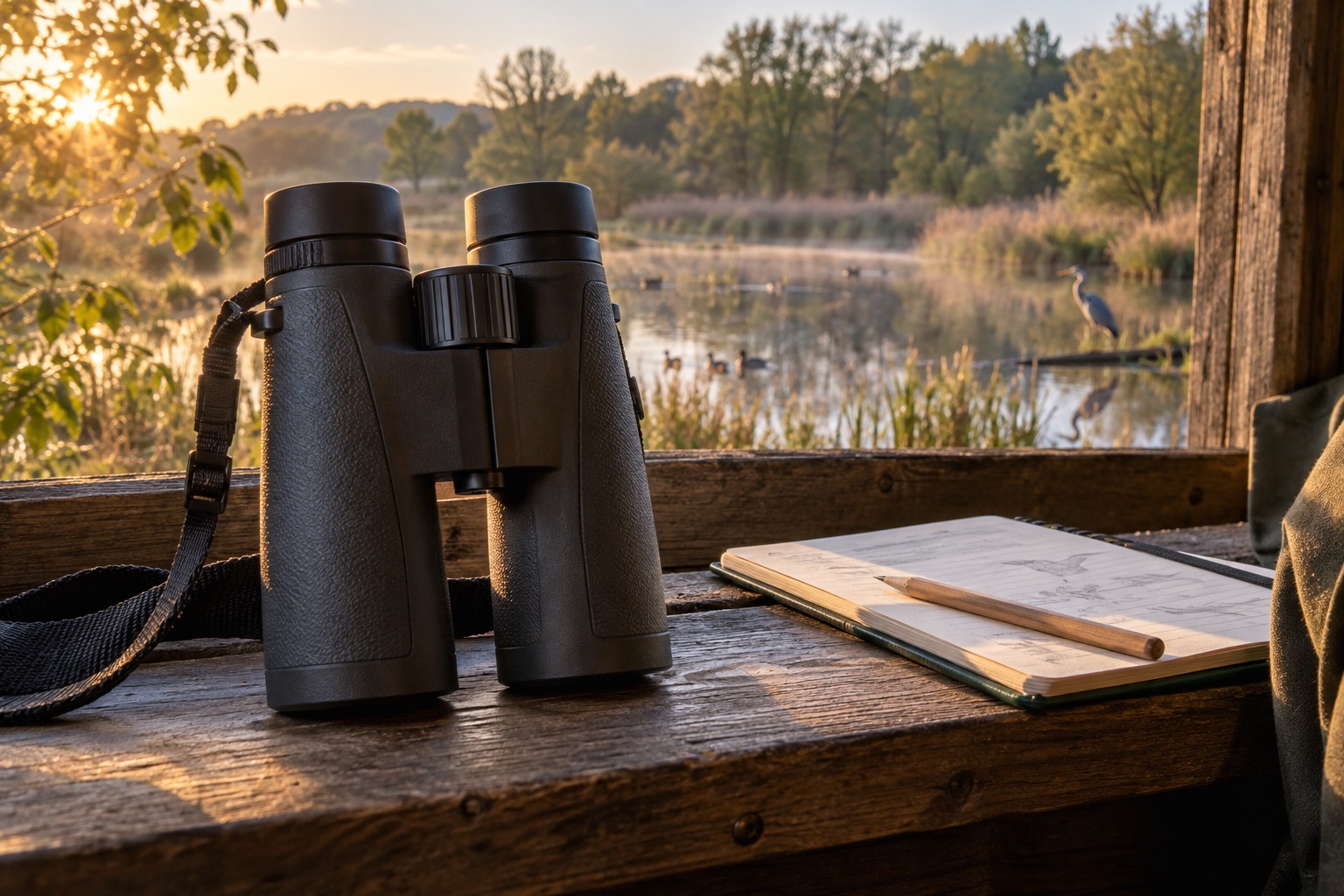
All 8×42s share a nominal 5.25mm exit pupil; they do not share the same view.
Glasses fit, field width and close focus are stronger differentiators than the format label.
A lighter 8×32 may be better if long walks dominate and twilight is rare.
Quick picks
Choose by the detail that matters most
Links open the matching Amazon UK listing. Prices and sellers can change, so confirm the model name and ASIN before buying.
Swipe to compare all details →
| Model | Weight | Field at 1km | Eye relief | Close focus | Strongest reason |
|---|---|---|---|---|---|
| Nikon MONARCH M7 | 670g | 145m | 17.1mm | 2.5m | Widest premium field |
| Nikon PROSTAFF P7 | 590g | 126m | 20.2mm | 3m | Glasses and carry comfort |
| Vortex Diamondback HD | 618g | About 131m | 17mm | 1.5m | Harness and close focus |
| Celestron Nature DX | 629g | 129m | 17.5mm | 2m | Accessible balanced start |
| Nature DX ED | 705g | 129m | 17.8mm | 2m | ED optics and nearby nature |
The detailed shortlist
Five 8×42 binoculars worth distinguishing
Compare each 8×42 by field, eye relief, close focus and carried weight, then check the exact variant before ordering.

Nikon MONARCH M7 8x42
Best for: Finding and following moving birds
A step-up ED-glass 8x42 whose key distinction is an expansive 145m field, alongside a locking dioptre and protective external lens coatings.
What stands out
- 145m field of view at 1,000m
- ED glass and dielectric prism coating
- Locking dioptre and oil-repellent external coating
Keep in mind
- Costs materially more than capable starting models
- 17.1mm eye relief gives less margin than the PROSTAFF P7
- 8×42
- 670g
- 145m / 1,000m
- 17.1mm eye relief

Nikon PROSTAFF P7 8x42
Best for: Wide viewing with glasses
A 590g all-round 8x42 with a wide 126m field, long stated eye relief and a locking dioptre ring that helps preserve a personal focus setting.
What stands out
- 126m field of view at 1,000m
- 20.2mm stated eye relief
- 590g waterproof body with locking dioptre
Keep in mind
- 3m close focus is useful rather than class-leading
- No ED glass in the published specification
- 8×42
- 590g
- 126m / 1,000m
- 20.2mm eye relief

Vortex Diamondback HD 8x42
Best for: All-weather wildlife walks
A weather-sealed 8x42 with a broad published field, 17mm eye relief and an included harness, giving it a practical ready-to-carry package.
What stands out
- Wide 7.5-degree published field
- GlassPak harness included
- Waterproof, fogproof roof-prism body
Keep in mind
- 17mm eye relief may not suit every glasses wearer
- HD naming alone does not mean ED objective glass
- 8×42
- 618g
- 7.5° field
- 1.5m close focus

Celestron Nature DX 8x42
Best for: First 8×42 and close garden viewing
A well-specified first birdwatching binocular with a wide 129m field, 2m close focus and phase-coated BaK-4 prisms without stepping up to ED-glass pricing.
What stands out
- 129m field of view at 1,000m
- 2m stated close focus
- Waterproof, nitrogen-filled body
Keep in mind
- 17.5mm eye relief offers less margin than the Nikon P7
- No ED glass in this standard Nature DX model
- 8×42
- 629g
- 129m / 1,000m
- 17.5mm eye relief

Celestron Nature DX ED 8x42
Best for: Birds, butterflies and nearby detail
An ED-glass 8x42 with a 129m field and 2m close focus, making its published specification especially relevant to mixed bird, butterfly and garden viewing.
What stands out
- 2m stated close focus
- ED objectives and phase-coated BaK-4 prisms
- 17.8mm eye relief with multi-stop eyecups
Keep in mind
- 705g is the heaviest body in this shortlist
- The useful ED-glass claim still does not replace an in-person view
- 8×42
- 705g
- 129m / 1,000m
- 2m close focus
An 8×42 is the reference format for general birdwatching, wildlife and nature walks for good reason. Eight-times magnification is easier to hold steady and aim than 10×, and 42mm objectives create a 5.25mm exit pupil. But five 8×42s can feel remarkably different. The real comparison is what each model does better, and what it asks you to give up.
Nikon MONARCH M7 8×42: the wide premium view
The MONARCH M7 publishes a 145m field at 1,000m—the widest in this shortlist. That gives moving birds more room in the image and makes scanning reedbeds or woodland gaps faster. ED objectives and dielectric prism coatings add a more ambitious optical specification. The locking dioptre can preserve a personal setting.
At 670g and with 17.1mm stated eye relief, it is neither the lightest nor the obvious glasses pick. Buy it for the field and overall step-up specification; confirm the eyecups work for your face before paying a premium. The birdwatching guide gives habitat-specific context.
Nikon PROSTAFF P7 8×42: the glasses-and-comfort choice
The P7 is 590g and publishes 20.2mm eye relief. It is a strong candidate when you wear glasses or hold binoculars for long stretches in a hide. Its 126m field is useful, though not as expansive as the M7's 145m or Vortex's approximately 131m. A locking dioptre is a small but pleasant feature for an individual user.
The P7 does not list ED objectives. That may matter around strong backlighting, but the difference is not as simple as an ED-versus-non-ED badge. If the full field is visible and your hands settle naturally on the P7, it may be the more effective binocular for you.
Vortex Diamondback HD 8×42: close focus and a carry system
Vortex states a 7.5° field, or 393ft at 1,000yd. That scales to about 131m at 1,000m, not 142m (393 ÷ 3 ≈ 131). Its 1.5m close focus suits a walk between distant birds and nearby insects. The 8×42 package includes a GlassPak harness, which can keep the 618g body secure during longer routes. Do not transfer that accessory claim to the smaller 8×32 package.
Its 17mm eye relief leaves less glasses margin than the P7. The “HD” label is not proof of ED objectives; buy on the published field, close focus, sealing and how the view looks to you. Its argon purge is one route to internal fog resistance, not a guaranteed optical advantage over nitrogen-filled models.
Celestron Nature DX 8×42: an accessible first pair
The standard Nature DX gives a 129m field, 2m close focus and waterproof nitrogen-filled construction at 629g. It covers the basic jobs of birdwatching, garden viewing and general wildlife without requiring a premium model. This is a practical starting point for someone who wants to learn what matters through use.
The 17.5mm eye relief is less generous than the P7's. It also lacks the ED objectives of the higher Nature DX ED model. If your glasses or close-subject interests are demanding, compare both before defaulting to the entry option.
Celestron Nature DX ED 8×42: close viewing with ED objectives
The Nature DX ED keeps the 129m field and 2m close focus while adding ED glass and 17.8mm stated eye relief. Colour fringing around dark branches against a bright sky is a plausible reason to consider the upgrade. It also remains useful for butterflies and garden subjects that sit near the observer.
At 705g it is the heaviest here. ED glass is not an excuse to ignore that weight if you walk for hours. In good daylight, a lighter pair that you bring on every outing can be more valuable than a heavier pair with a higher-tier label.
Which one should you buy?
For flying birds or broad habitat scanning, begin with the MONARCH M7's 145m field; the Vortex's 131m is a different choice driven more by close focus and the included harness. For glasses, begin with the P7 and run an actual full-field check. For nearby garden nature and a straightforward entry point, compare the standard Nature DX with the ED version while holding both. For walking-first use, ask whether a 451–510g 8×32 would save enough weight to be carried more often.
Use how to choose binoculars for a step-by-step fit test. If the only unresolved question is power, 8×42 vs 10×42 explains why more magnification is not automatically more detail.
Frequently asked questions
8×42 binocular questions
Is 8×42 the best all-round binocular size?
For many people, yes: 8× is steady and easy to aim, while 42mm objectives give a forgiving 5.25mm exit pupil without an oversized body. Walking-first users may prefer 8×32.
Which 8×42 has the widest field here?
The Nikon MONARCH M7 publishes 145m at 1,000m. The Vortex Diamondback HD 8×42 has about 131m, converted from 393ft at 1,000yd. Check that the full field is visible with your glasses.
Is ED glass worth paying more for?
It can reduce colour fringing around high-contrast edges, but it does not guarantee a brighter or more comfortable view. Compare the whole optical design and fit.
Which 8×42 is best for glasses?
The Nikon PROSTAFF P7 publishes the most eye relief in this shortlist at 20.2mm. Test the complete field with your actual glasses and eyecups folded down.