
Format guide · 8×32
Best 8×32 binoculars
Compare three 8×32 binoculars for field of view, carry weight, glasses fit, close focus and low-light limits, with clear picks for walking and birdwatching.
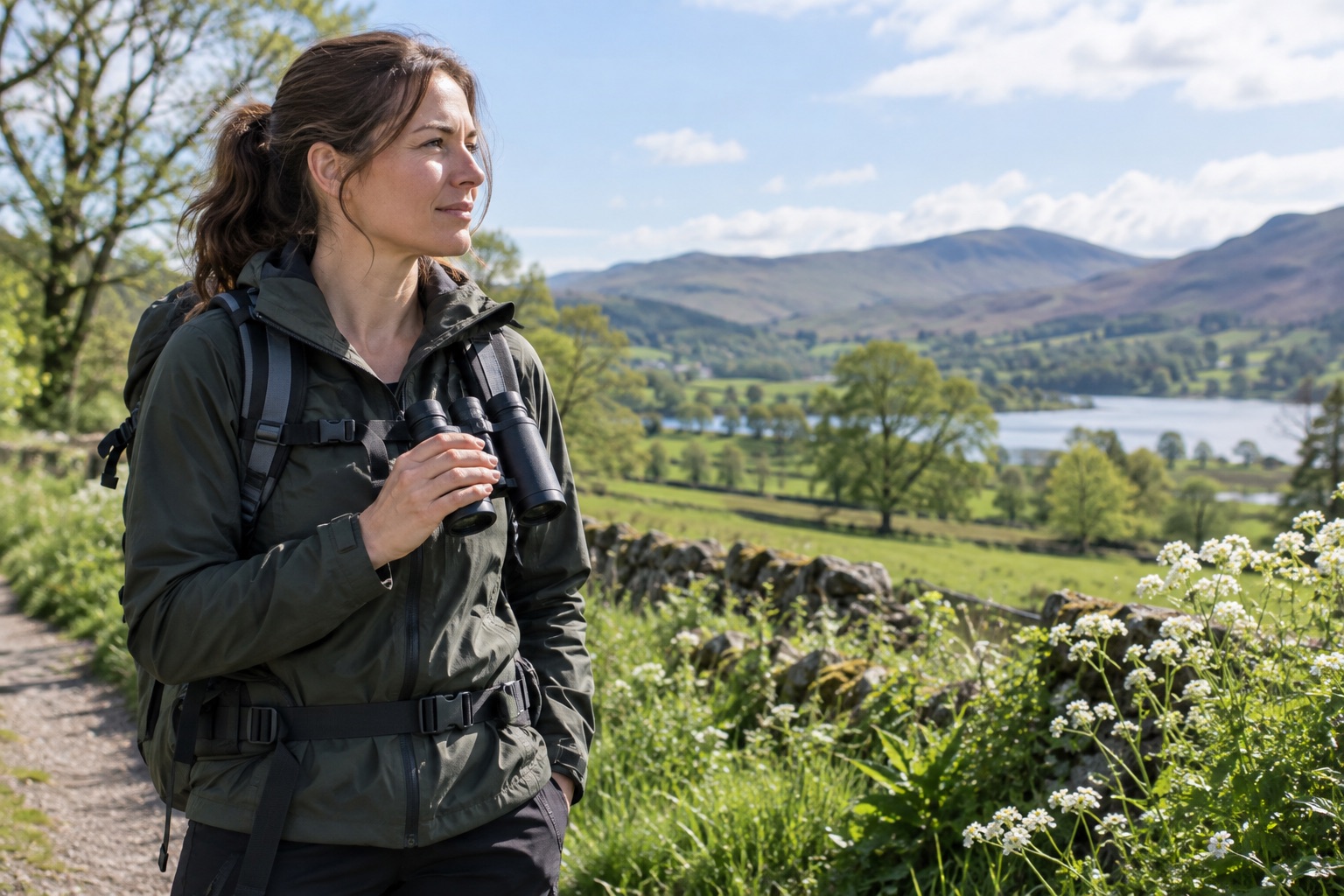
All three have the same 8× magnification and a 4mm nominal exit pupil.
An 8×32 is usually a daytime-first tool; carry an 8×42 for frequent dusk watching.
Eye relief and field width vary enough that the format alone cannot choose for you.
Quick picks
Choose by the detail that matters most
Links open the matching Amazon UK listing. Prices and sellers can change, so confirm the model name and ASIN before buying.
Swipe to compare all details →
| Model | Weight | Field at 1km | Eye relief | Close focus | Best for |
|---|---|---|---|---|---|
| Vortex Diamondback HD | 451g | About 142m | 16mm | 1.5m | Light wide-field walking |
| Celestron Nature DX | 510g | 129m | 17.5mm | 2m | Balanced general use |
| Opticron Adventurer II WP PC | 571g | 108m | 20mm | Check model spec | Glasses-first fit |
The detailed shortlist
Three genuinely different 8×32 picks
These are exact 8×32 models with corresponding Amazon UK images and links. Check the listing variant before ordering.

Vortex Diamondback HD 8x32
Best for: Walks, travel and close viewing
A compact weather-sealed 8×32 that combines a 451g carry weight with a very wide 142m field and 1.5m close focus.
What stands out
- Approximately 451g
- Approximately 142m field of view at 1,000m
- Waterproof, fogproof and 1.5m close focus
Keep in mind
- 16mm eye relief may be marginal with some glasses
- Smaller 32mm objectives give up some low-light ease to 42mm models
- 8×32
- 451g
- 142m / 1,000m
- 16mm eye relief

Celestron Nature DX 8x32
Best for: Nature walks and insects
A compact 8×32 with phase-coated BaK-4 prisms, 2m close focus and weather protection in a 510g body.
What stands out
- 2m stated close focus
- Waterproof and nitrogen-filled
- Phase-coated BaK-4 prisms
Keep in mind
- 129m field is good rather than class-leading for an 8×32
- 510g is compact rather than pocket-light
- 8×32
- 510g
- 129m / 1,000m
- 17.5mm eye relief

Opticron Adventurer II WP PC 8x32
Best for: Glasses-friendly day walks
A waterproof 8×32 notable for its 20mm eye relief and phase-corrected roof prisms, aimed squarely at compact viewing with glasses.
What stands out
- 20mm stated eye relief
- Waterproof and nitrogen-filled
- Phase-corrected BAK4 roof prisms
Keep in mind
- 108m field is narrower than the other 8×32 options here
- 5m close focus limits nearby nature viewing
- 8×32
- 571g
- 108m / 1,000m
- 20mm eye relief
The appeal of 8×32 is straightforward: the same eight-times apparent magnification as an 8×42 in a shorter, generally lighter instrument. The 4mm exit pupil is smaller than an 8×42's 5.25mm, so there is less margin in shade and twilight. For a binocular worn through a long walk, that can still be a worthwhile trade.
These three models show that 8×32 is not one experience. Their fields vary by more than 30m at 1,000m and their eye relief by 4mm. That is enough to make one pair noticeably easier to use than another.
The field-versus-glasses trade in three actual 8×32s
The Vortex Diamondback HD gives about 142m field, 16mm eye relief and 451g weight. Celestron's Nature DX moves to 129m, 17.5mm and 510g. Opticron's Adventurer II WP PC, model 30840, offers about 108m, 20mm and 571g. Moving from the Vortex to the Opticron therefore trades 34m of stated field and 120g of body weight for 4mm more stated eye relief. Nature DX sits between those positions on all three measures.
That is a more useful shortlist than treating every 8×32 as equally compact or equally easy with glasses. The numbers do not say how much field your own frames let you see, nor do they rank image quality. First check complete-field fit; then decide whether a wider view or lighter carry is worth giving up eye-relief margin.
Vortex Diamondback HD 8×32: light and wide
At roughly 451g, the Diamondback HD is the lightest here. Its published field is about 142m at 1,000m, useful for locating a warbler in foliage or following a bird moving across open ground. Vortex lists a deluxe carry case and strap, not an included GlassPak harness, for this 8×32 package. The 1.5m close focus extends it to butterflies and other nearby subjects.
Its 16mm eye relief is the weakest glasses figure in the shortlist. Buyers who wear glasses should check for dark crescents at the field edge before choosing the broad field on paper. The waterproof, argon-purged body is reassuring in changeable weather; it does not remove the need to dry the case and strap after rain.
Celestron Nature DX 8×32: balanced value
The Nature DX weighs 510g and publishes a 129m field. That is still usefully wide, with 2m close focus and waterproof nitrogen-filled construction. It is a reasonable first mid-size birdwatching binocular for someone who values sealed basics and a mixed garden-and-walk role.
Its 17.5mm eye relief gives more room than the Vortex, though still not the longest in this group. It lacks the Vortex's lowest weight and broadest field. If your route is mostly urban parks and short nature walks, those differences may not be worth paying extra for; try handling both.
Opticron Adventurer II WP PC 8×32: glasses priority
Opticron publishes 20mm eye relief for the Adventurer II WP PC 8×32. For someone whose glasses hold the eyes farther from eyepieces, that may be the feature that makes the complete view visible. The binocular is waterproof and nitrogen-filled, with phase-corrected roof prisms.
The cost is a narrower 108m field and a 571g weight. It is the heaviest and narrowest of these three 8×32s, so it is not automatically the best walking choice. If the glasses fit works and the others crop the field, however, usable width beats nominal width. Read eye relief explained for a quick in-person check.
When 8×32 beats 8×42
Take 8×32 when the binocular must remain on your body for hours, daylight dominates and carrying weight is likely to determine whether you bring it. It is particularly useful on mixed walks where watching is one activity rather than the whole day. Its smaller body can sit below a rucksack chest strap more comfortably.
Choose 8×42 when you spend long periods in woodland shade, watch regularly near dusk or want the easiest eye placement. The 8×32 vs 8×42 comparison sets out the calculation and practical differences. If even 8×32 feels too large, consult best compact binoculars, where 8×25 and 8×30 may be more convenient.
A five-minute fit test
Focus on a distant sign or tree, then follow a moving subject. Look for black crescents, a cramped central view or a focus wheel that requires an awkward finger stretch. Repeat with any glasses you actually wear outdoors. Check how the binocular hangs while walking and whether you can raise it quickly without re-adjusting the hinge. A tiny specification advantage matters little if the pair stays in the bag.
Frequently asked questions
8×32 binocular questions
Are 8×32 binoculars good for birdwatching?
Yes, especially during daylight and on walks. They have the same 8× magnification as an 8×42, with less weight. An 8×42 is more forgiving in shade and dusk.
Are 8×32 binoculars bright enough?
Their 4mm exit pupil is ample for many daylight scenes. In darker woodland or twilight, a 42mm objective provides a larger 5.25mm exit pupil and easier eye placement.
Which 8×32 is best for glasses?
The Opticron has the longest published eye relief here at 20mm, but real fit still depends on eyecups and your glasses. Test that you can see the complete field.
Is the widest field always best?
A wide field helps find moving birds, but comfort, eye relief, sharpness and handling may matter more. The Opticron deliberately trades width for a glasses-friendly specification.