
02 · Fixed-position viewing
Spotting scopes
More reach for long observation from a hide, coast or viewpoint—with the support, eyepiece and weather conditions included in the decision.
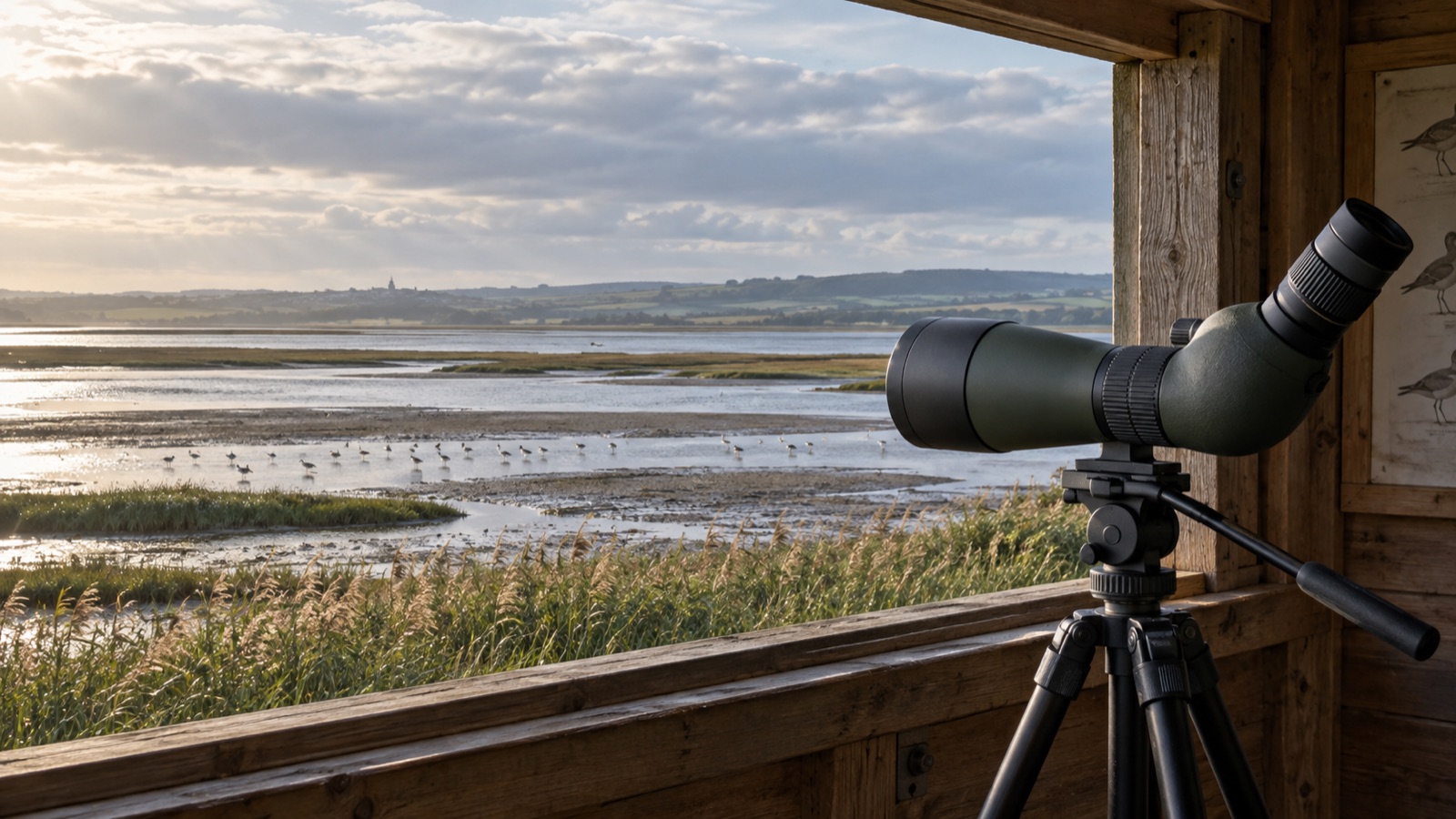
The tripod and head are part of the optical system in practice: movement is magnified along with the subject.
Angled bodies suit shared viewing and lower tripods; straight bodies can make initial aiming more direct.
The top zoom number is rarely the whole answer because heat haze, low light and vibration limit useful detail.
A spotting scope is most useful when the subject is distant and you are prepared to stop. Estuary birds, seabirds from a headland and prolonged viewing from a hide are natural examples. The extra reach comes with a narrower view, more visible vibration and the need to carry a support.
Angled or straight is a handling choice
Within the same model family, the body angle does not inherently improve optical quality. Angled scopes can be comfortable for viewers of different heights and allow a lower tripod. Straight scopes follow the line of sight directly, which some people find faster to aim and easier from a vehicle or raised position.
Choose the whole field setup
Budget for the scope, eyepiece where it is sold separately, tripod, head, stay-on case and any phone adapter you genuinely expect to use. A stable, manageable setup at moderate magnification is more useful than a high headline magnification on a support that shakes. After an outing, clean and store the whole kit rather than packing a damp scope into a closed case.
Explore this topic
Useful guides and comparisons
Spotting scopes under £300
Compare a fixed-hide 65mm scope with a compact walking scope, including support costs.
Read the guide →Fit guideSpotting scopes for glasses
Compare eyepiece relief across zoom and check the full field with your frames.
Read the guide →Size comparison50mm vs 60mm spotting scopes
Choose the compact objective size by carried kit and useful light headroom.
Read the guide →Eyepiece choiceFixed vs zoom eyepieces
Separate viewing preference from exact scope and eyepiece compatibility.
Read the guide →Scope careClean and store a scope
Remove grit gently, dry tripod and case, and avoid internal DIY repair.
Read the guide →Birdwatching guideBest spotting scopes for birdwatching
Match a 56mm, 65mm or 80mm scope to hide use, long walks and distant birds.
Read the guide →Format comparison65mm vs 80mm spotting scopes
Compare aperture, low-end field, carried weight and support requirements.
Read the guide →Zoom comparison20–60× vs 25–75× scopes
Understand what the zoom ranges say—and what they leave out.
Read the guide →Optical basicsSpotting scope magnification explained
Find the useful power for a real bird, tripod and atmospheric conditions.
Read the guide →Viewing comfortSpotting scope eye relief explained
Check full-field comfort through the zoom, especially with glasses.
Read the guide →Support guideBest tripods for spotting scopes
Compare complete supports by usable height, stability and carry burden.
Read the guide →Support guideBest tripod heads for spotting scopes
Choose smoother bird tracking and avoid head-versus-tripod confusion.
Read the guide →Digiscoping gearBest phone adapters for spotting scopes
Measure eyepiece and phone fit before choosing an alignment system.
Read the guide →Field techniqueHow to digiscope with a phone
Set up, focus, align and photograph the scope view without needless shake.
Read the guide →TroubleshootingHeat haze through a spotting scope
Recognise a shimmering sightline and improve the view without chasing zoom.
Read the guide →Buying guideBest spotting scopes UK
Four exact-model choices compared for field, glass, weight and a realistic tripod setup.
Read the guide →Start hereBest spotting scopes for beginners
Choose a first scope as a complete field system, and avoid the maximum-zoom trap.
Read the guide →Walking kitBest compact spotting scopes
When a small 56mm scope beats a bigger body you will leave at home.
Read the guide →Format choiceAngled vs straight scopes
Match eyepiece shape to aiming, tripod height, shared use and your viewing position.
Read the guide →Compare formatsStart with binoculars
For mobile viewing and finding moving subjects, binoculars are usually quicker and easier to carry.
Read the guide →Plain-English guideLearn the optical basics
Magnification, objective size and exit pupil still matter, but stability becomes even more important.
Read the guide →Buying guideRead our birdwatching shortlist
See how a handheld 8×42 comparison works before deciding whether you need more reach.
Read the guide →