
Eyepiece choice · Scope system
Fixed vs zoom spotting-scope eyepieces
Choose a fixed-power or zoom spotting-scope eyepiece by field, eye relief, flexibility and exact body compatibility.
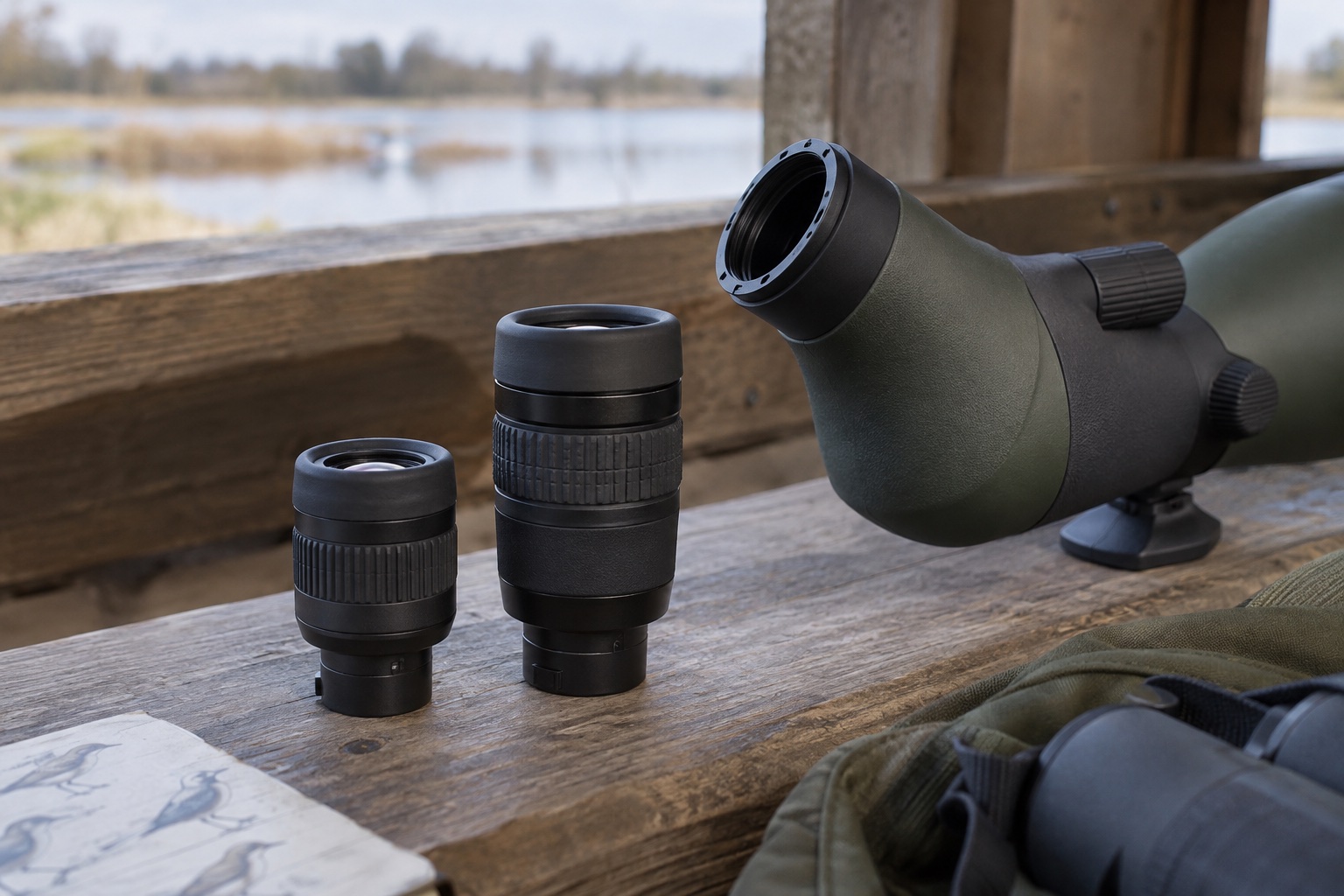
Do not infer compatibility from a 1.25-inch barrel diameter alone.
Compare actual field width and glasses fit at the power you use most.
Avoid eyepiece changes in blowing sand, rain or sea spray.
A zoom eyepiece is a sensible first scope eyepiece because the subject, distance and light change during a day. You can find a bird at the low end, then add power once the scope is aimed and steady. A fixed eyepiece does one job. It may give a particularly comfortable or wide view at that power, but it does not become superior merely by having fewer moving parts.
Compare the view at the power you will use
An advertised 20–60× zoom is a range, not a promise that 60× will reveal more useful detail. As magnification rises, exit pupil and field often shrink, while heat haze and vibration become more visible. A fixed 25× or 30× eyepiece may be appealing for repeated wetland scanning if its actual apparent field, eye relief and contrast suit you. Another fixed design may be narrower or less comfortable than the included zoom at the same power. Compare maker specifications and, ideally, view the same scene through both on the same body.
Swipe to compare eyepiece roles →
| Priority | Zoom eyepiece | Fixed eyepiece |
|---|---|---|
| Changing distance | Adapt without swapping | Stay at one power |
| Finding a bird | Start at low power | Depends on chosen fixed power |
| Field and eye relief | May change through range | One published setting to test |
| Field changes | No open mount needed | Swap only in clean conditions |
Compatibility is the purchase gate
Some field scopes have a non-removable or proprietary eyepiece. Others allow a specified interchangeable system. Celestron's Regal M2 line, for example, is published with a standard 1.25-inch eyepiece mount and accepts certain astronomical eyepieces. That does not mean every 1.25-inch barrel is a safe, focusable or weather-sealed match. Confirm the exact scope generation, adapter, locking mechanism, focus reach and whether any eyepiece change alters the maker's sealing claims. Take particular care with glasses: the body does not determine eye relief; each eyepiece does. See our scope glasses-fit guide.
A practical order of purchase
Start with the included zoom and discover which power you repeatedly use. If you regularly remain near one setting and wish for a wider or more comfortable view, compare a maker-confirmed compatible fixed eyepiece at that power. Do not buy a second eyepiece because a general article promises a sharper image. Our scope magnification guide helps find the usable range; the 20–60× versus 25–75× guide is about two zoom ranges, not fixed versus zoom hardware.
The first purchase decision is compatibility, not a generic eyepiece ranking. Confirm the body and eyepiece model codes with the manufacturer or a specialist retailer before ordering.
Frequently asked questions
Scope-eyepiece questions
Is a fixed eyepiece sharper than a zoom?
Not automatically. Optical quality varies by design and model. Compare the actual view at equivalent power on the same scope.
Do all 1.25-inch eyepieces fit all spotting scopes?
No. Barrel size alone does not guarantee mechanical fit, focus reach, lock security or weather sealing. Confirm compatibility with the scope maker.
Is zoom better for birdwatching?
An included zoom is convenient for finding birds at lower power and moving closer without swapping parts. A fixed eyepiece may suit a repeated viewing power or wider view if compatible.
Can I change eyepieces outdoors?
Only if the scope permits it and conditions are clean and dry. Cap the exposed opening promptly and avoid changes in rain, spray, dust or sand.