
Optical basics · Spotting scopes
Spotting scope magnification explained
Understand 20×, 40× and 60× spotting scope views, and why field width, exit pupil, atmospheric shimmer and tripod stability limit useful zoom.
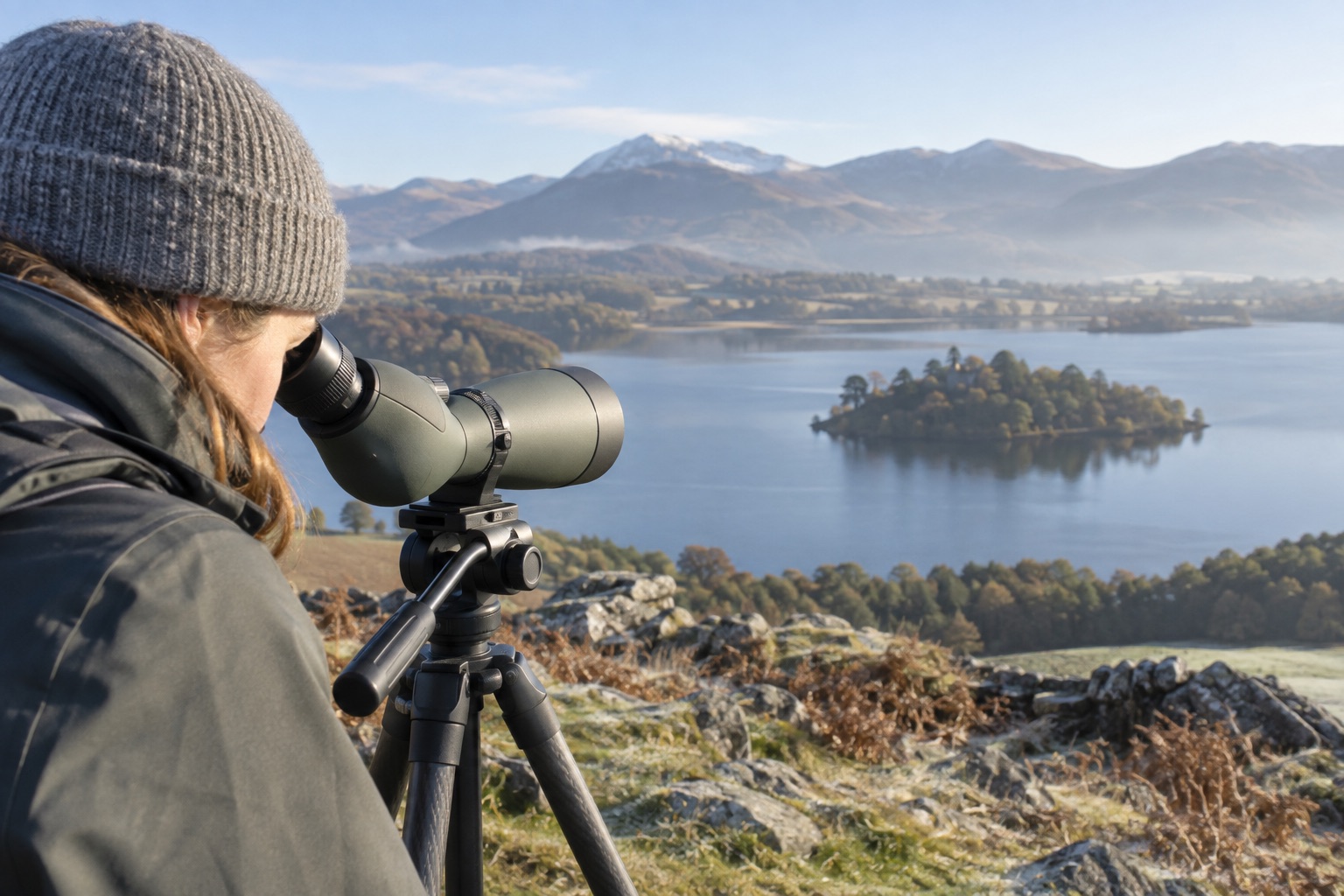
20× is often easier for locating and following birds than 60×.
Compare field of view and eye relief across the zoom, not only its endpoints.
A steady tripod and calm air determine how much of the upper range is usable.
A scope marked 20–60× lets you adjust apparent angular size with its zoom eyepiece. At 20×, a distant bird occupies about twenty times the visual angle it does unaided; at 60×, about sixty times. This is an aid to seeing, not a promise that every increment reveals new detail. Real detail can be lost to the air, the support and the optics before you reach the end of the dial.
Start low, then earn each increase
Begin at the lowest zoom. The wider field makes it easier to transfer a bird from binoculars to the scope, especially when it moves. Centre it and focus carefully before increasing power. If the image grows but feather edges do not become clearer, back down. On a breezy hide shelf, 30× with a settled image may reveal more than a trembling 60× view.
Field width is a useful cross-check. The Celestron TrailSeeker 16–48×65 is specified at 45m per 1,000m at 16× and 21m at 48×. The 20–60×80 starts at a narrower 35m per 1,000m at 20×. These are different scope-and-eyepiece combinations, so the figures are examples, not a universal formula. Read our 20–60× versus 25–75× comparison before choosing by the final number.
Aperture and exit pupil change the experience
Exit pupil is objective diameter divided by magnification. For an 80mm scope, that is 4mm at 20× and about 1.3mm at 60×. The smaller high-power beam makes eye placement more demanding and the image less forgiving in dull light. A 65mm body at 40× gives roughly 1.6mm. Coatings and optical design also affect the view, so exit pupil is a comparison tool, not a brightness score.
Eye relief can change through the zoom as well. If you wear glasses, a large objective does not guarantee that you can see the entire field at the magnification you want. Check the eyepiece's published range and, ideally, try it with your own frames. Our scope eye-relief guide explains the fit test.
What sets a practical ceiling?
A rigid tripod, a head that holds position without springing back, and a sheltered viewing position all help. Across a warm shoreline or sunlit mud, moving layers of air can make a distant subject boil even when the instrument is perfectly focused. Heat haze through a spotting scope shows how to recognise this. Magnification cannot restore information that turbulence has blurred.
Choose the zoom range for the job: a low end that finds subjects readily, a middle range you can use often, and a high end available when light, air and support cooperate. The best scope for birdwatching is the complete system that gives a stable, comfortable view—not the largest number printed on its eyepiece.
Frequently asked questions
Magnification questions
What does 20–60× mean on a spotting scope?
Its zoom eyepiece changes apparent angular size from 20 to 60 times the unaided view. It does not make a bird physically closer or guarantee three times more resolved detail at 60×.
Is 60× enough for birdwatching?
It can be more than enough. Many birds are easier to find and study at lower power, especially in wind, poor light or shimmering air. The useful maximum varies with conditions.
Why does the view get darker when I zoom in?
As magnification rises, exit pupil diameter falls for a fixed objective. A 60mm objective gives a 3mm exit pupil at 20× but only 1mm at 60×, before transmission losses.
Can a stronger eyepiece fix heat haze?
No. A stronger eyepiece enlarges the distorted image. Lower power, a different sightline or cooler, steadier air usually helps more.