
Ownership guide · Scope care
How to clean and store a spotting scope
Clean a spotting scope's exposed glass, dry the body and tripod after rain, and store the complete kit without trapping moisture.
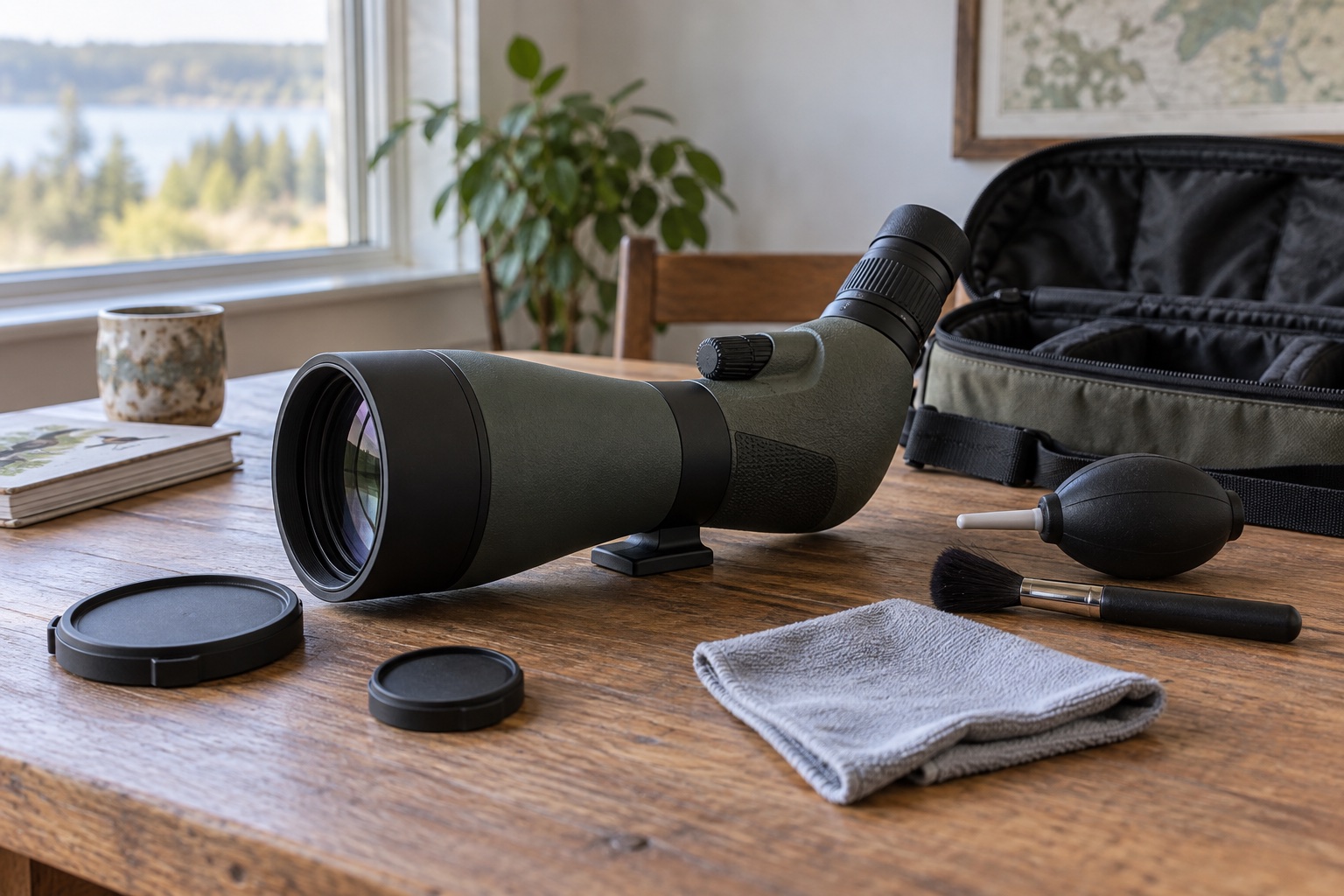
Follow the maker's instructions for your coatings and any removable eyepiece.
Apply any approved fluid to the cloth, not directly into the scope.
Treat persistent internal fog, fungus or damaged seals as a service issue.
The most useful scope-care habit happens before any cloth touches glass: keep loose grit off it. A few dust specks seldom justify repeated rubbing. The scope also includes an eyepiece, tripod head, legs, caps and case; storing any of those damp can make the next outing less pleasant and may encourage mould in fabric.
Clean the exposed glass gently
Check the scope maker's instructions first, particularly for coated surfaces and any removable eyepiece. With the scope secure on a table or tripod, use a clean air blower to lift loose particles from the exposed objective and eyepiece. A soft optics brush can move remaining dry grit without pressure. Only then use a clean microfibre or approved lens tissue for fingerprints, working lightly. If fluid is permitted, apply a little to the cloth, not directly to glass or a housing seam. Do not use household paper, clothing, abrasive cleaners or a previously gritty cloth.
Celestron's Lens Cleaning Kit 93576 brings a brush, cloth, wipes and fluid together. It is a convenient tool option, not a reason to clean every time. Check the instructions for your scope and the kit before choosing a wipe or fluid. Our binocular-lens cleaning method expands the grit-first sequence; the same surface-care principle applies, but a scope's interchangeable eyepiece and larger body add storage considerations.
After a wet or salty outing
Wipe water from the exterior body, focus controls, tripod and head with a clean absorbent cloth. Do not assume a waterproof scope can be immersed or rinsed; sealing ratings and eyepiece joints differ. Salt crystals can be abrasive, so do not rub them dry across glass. Follow the exact maker's salt-cleaning advice; if unsure, ask before applying water or chemicals to an eyepiece mount. Open the carry case indoors and let it dry separately. Allow a cold scope to acclimatise in a dry room before sealing it away, so exterior condensation can clear.
Store the whole kit, not just the tube
Once dry, replace the objective and eyepiece caps, secure the scope in a case that does not press on the focus control, and store it in a dry, moderate-temperature place. Keep the tripod clean and dry, loosen any mud from feet without letting grit into leg locks, and avoid leaving the kit in a hot car or a damp shed. Do not seal a wet cloth or rain-soaked stay-on case against the body. Celestron's care guidance recommends replacing covers and keeping optical openings protected during storage.
If haze is inside a sealed scope, if a focus control grinds or if you suspect fungal growth, do not unscrew the body to investigate. Internal work can damage alignment and sealing. Ask the retailer or manufacturer about service. The same caution applies if a removable eyepiece mount feels loose: stop swapping parts and confirm the correct locking method. For long-range viewing, a clean, dry tripod and head are as much part of a usable scope as clear glass.
Helpful products
An optional exterior-cleaning kit
Celestron's kit supplies a brush, microfibre cloth, wipes and cleaning fluid. Use only the parts appropriate to your scope maker's instructions and keep grit away from coated glass.

Celestron Lens Cleaning Kit 93576
Best for: A single pouch for binocular care
A pouch of optics-oriented cleaning essentials: retractable brush, microfibre cloth, fluid and ten individually packed wipes.
What stands out
- Brush, cloth, fluid and wipes together
- Individual wipes are practical away from home
- Soft pouch keeps tools together
Keep in mind
- Fluid should go on cloth, not directly on binoculars
- One-use wipes create waste
- Retractable brush
- Microfibre cloth
- 10 wipes
- Cleaning fluid
Frequently asked questions
Scope-care questions
How often should I clean a spotting-scope lens?
Only when visible contamination affects use or risks damaging the surface. Frequent unnecessary wiping can drag grit across coatings.
Can I spray cleaner directly on the objective?
Avoid it. If the maker permits fluid, put a small amount on a clean optics cloth, not on the lens where it can run into edges and seals.
Can I put a wet scope straight in its case?
Not for storage. Dry the body and support, leave the case open to air in a clean room, then cap and pack the kit when dry.
Should I remove the eyepiece to clean inside?
No. Only remove a user-interchangeable eyepiece as the manufacturer directs; do not open the sealed body or attempt internal cleaning.