
Care · Lens cleaning
How to clean binocular lenses
A safe, grit-first method for cleaning binocular eyepieces and objectives, with advice on fingerprints, salt marks and when not to touch the glass.
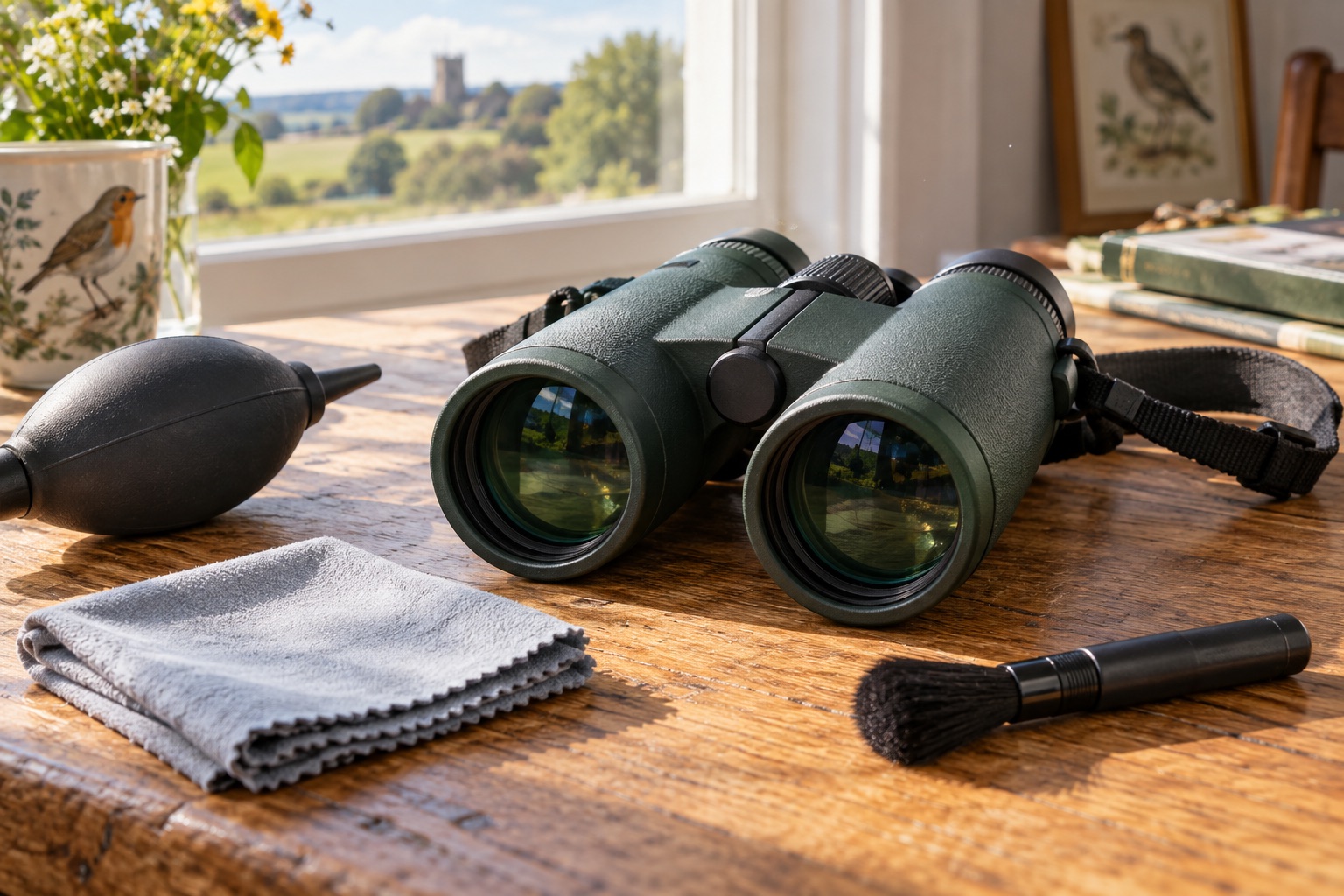
Clean only when the view or lens condition warrants it.
Keep liquid on the cloth, away from lens edges and body seams.
Cloudiness behind the glass is not an exterior cleaning job.
A clear view does not require immaculate glass. Fine dust on the outside of a binocular can be less noticeable in use than a smear caused by over-cleaning it. The real hazard is wiping a grain of sand across a delicate coating. Start with the least contact that will solve the problem.
Check the mark before reaching for a cloth
Work in ordinary daylight with the binocular on a secure surface and the lens facing away from falling dust. Identify whether you are dealing with loose dust, a greasy fingerprint, dried rain, sea spray or a cloudy area behind the exposed glass. There is no reason to clean an inner surface yourself. If the haze is internal, read binoculars fogging inside instead.
Make sure the brush and cloth themselves are clean. A cloth from the bottom of a sandy rucksack is not a lens-cleaning tool, however soft it feels. Wash or replace a contaminated cloth according to its maker's instructions. If the binocular has an unusual coating or a specific cleaning restriction, its own manual takes priority over general advice.
A five-step, low-contact clean
- Remove the loose particles. Hold the objective or eyepiece facing down and use a clean hand blower. A clean, very soft lens brush can lift remaining dust without pressing it into the glass. Avoid canned air near lens seals.
- Reassess. If the view is now clear enough, stop. Do not polish simply because you can still find a speck under a bright inspection light.
- Treat a stubborn mark. For a fingerprint or water mark, lightly dampen a fresh optics-grade cloth with the solution approved for that instrument, or use a suitable sealed lens wipe. Apply fluid to the cloth, never directly to the binocular.
- Wipe gently. Use a clean portion of cloth and minimal pressure, moving across the mark without grinding. If you feel resistance or spot grit, stop and return to the blower or brush.
- Let it dry. Allow the exposed glass and body to dry fully before fitting caps and closing the case.
Nikon's binocular care guidance similarly puts dust removal before gentle stain cleaning and warns against rough ordinary tissue. Cleaning recommendations for fluids differ by model, so avoid applying a general solvent recipe to every optic.
Eyepieces, objectives and sea spray are not identical jobs
Eyepieces collect skin oil and eyelash marks; objectives encounter rain, pollen and windblown grit. Use a fresh area of cloth for each surface. Do not push liquid beneath eyecup rubber or along the rim of a lens. A stuck-on spot may need a brief gentle damp treatment rather than force.
Sea spray deserves particular care because dried salt is abrasive. Do not attack visible crystals with a dry cloth. Check the maker's instructions and weather rating before any exterior rinse or damp clean: a method suitable for a sealed marine model may be unsafe for a merely water-resistant pair. Our care after rain and sea spray guide covers that distinction.
The lens-cleaning kit comparison explains the difference between a complete pouch and a pocket LensPen. Neither is a cure for fungus inside binoculars or a damaged seal. Cleaning should preserve a useful instrument, not become a reason to buy unnecessary equipment.
Helpful products
A complete field-cleaning option
The Celestron kit adds a brush, cloth, fluid and sealed wipes. It does not replace a clean blower or permission to rub grit into a coating.

Celestron Lens Cleaning Kit 93576
Best for: A single pouch for binocular care
A pouch of optics-oriented cleaning essentials: retractable brush, microfibre cloth, fluid and ten individually packed wipes.
What stands out
- Brush, cloth, fluid and wipes together
- Individual wipes are practical away from home
- Soft pouch keeps tools together
Keep in mind
- Fluid should go on cloth, not directly on binoculars
- One-use wipes create waste
- Retractable brush
- Microfibre cloth
- 10 wipes
- Cleaning fluid
Frequently asked questions
Cleaning questions
How often should I clean binocular lenses?
Only when a fingerprint, spray or other mark needs removing. A little dust rarely affects a normal view, and unnecessary wiping raises the chance of dragging grit over a coating.
Can I use a glasses cloth?
A fresh, clean microfibre cloth intended for coated optics can work after loose particles are removed. Do not use a cloth that has lived loose in a gritty pocket.
Is household window cleaner safe?
Do not assume it is. Follow your binocular maker's guidance and use an optics-safe product sparingly on the cloth, never sprayed into the lens rim.
Can cleaning remove a cloudy patch inside a barrel?
No. If exposed glass is clean but haze remains behind it, stop wiping and seek advice about possible internal fogging or contamination.