
Troubleshooting · Internal contamination
Fungus inside binoculars
Learn what may resemble fungal growth inside a binocular, why a cloth cannot remove it and when to seek qualified inspection.
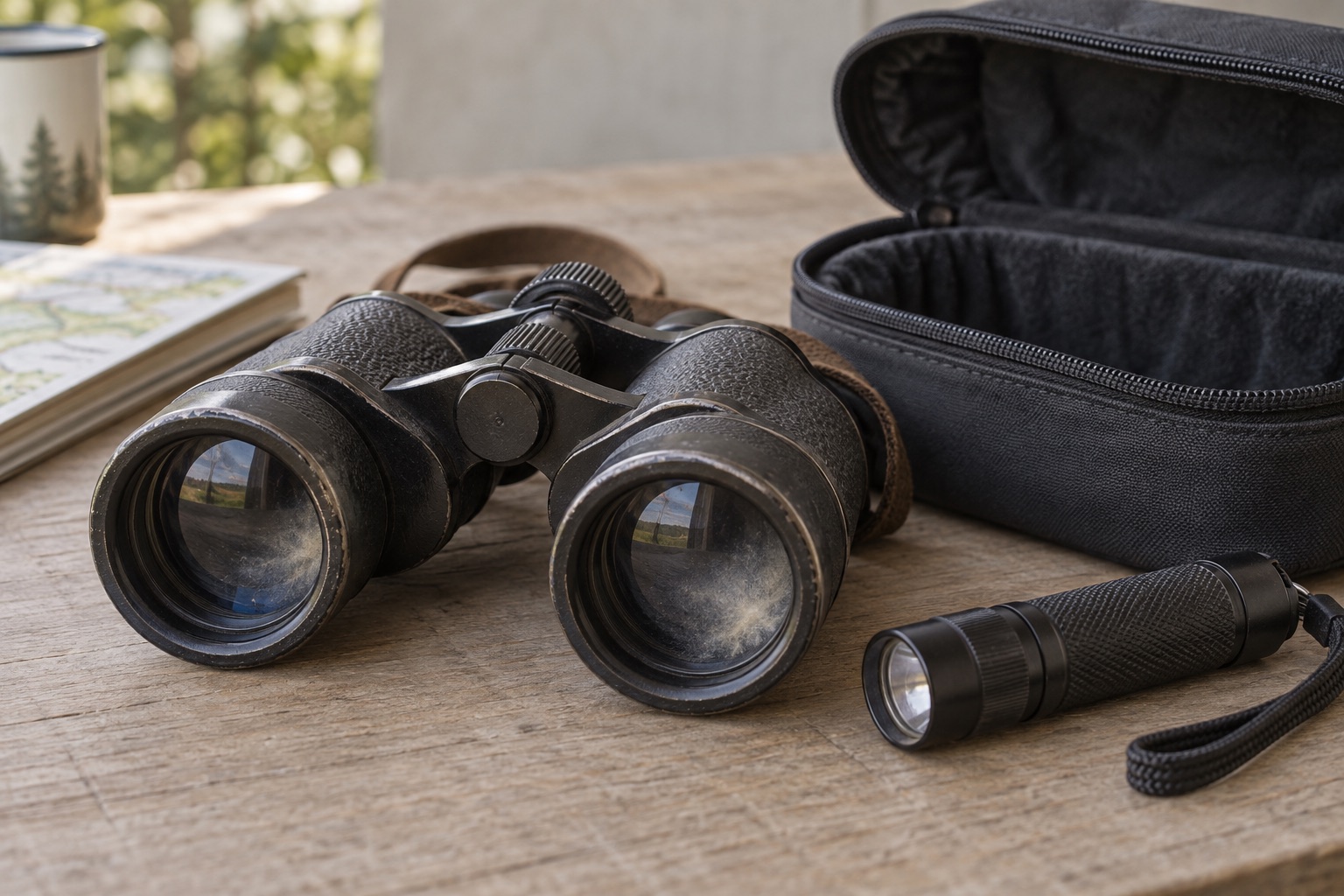
First rule out marks on the outside of the glass.
Do not diagnose fungus from one flashlight angle alone.
An internal cleaning attempt can damage alignment and seals.
Finding a delicate web, feathery mark or patch of haze behind a lens is unsettling. It may be fungal growth, especially after damp storage, but an owner cannot reliably identify every internal mark by appearance alone. Fine dust, old deposits and coating deterioration can all create patterns under a torch. The practical decision is whether the mark is accessible on the outside or trapped inside the optical system.
First separate an exterior mark from an internal one
Inspect in gentle daylight and change your viewing angle. A fingerprint or water spot on the objective or eyepiece moves with the outer glass surface and can be cleaned by the safe lens method. If the exposed surfaces are clear but the mark stays deeper in the barrel, stop wiping. Excessive inspection with a very bright light can reveal harmless dust that never affects a normal view; use the quality of the actual daytime image as part of the judgement.
If the cloudy area appeared suddenly after a cold-to-warm transition, start with exterior condensation. If it remains behind glass after the binocular has acclimatised, internal fogging is another possibility. Recurring internal moisture can make long-term contamination more likely, but the appearance alone is not a diagnosis.
Why home dismantling is a poor first move
Binocular barrels contain aligned prisms, spacers, seals and precisely positioned optical surfaces. Opening one may destroy the weather seal, introduce more dust and leave the two images misaligned. Strong solvents or household mould removers are not appropriate on coated optics. Celestron's optics-care guidance treats fungus and internal cleaning as specialist service situations rather than normal surface cleaning.
Make a note of the model, approximate age, storage conditions and whether the mark affects the view. Photograph the pattern if it is visible without dismantling. Keep the instrument externally dry at normal room temperature and contact the maker, seller or a repair specialist. Ask for a diagnosis, the likely cost and whether the binocular can be resealed and checked for alignment afterwards. On a low-cost older pair, repair may not be economical; on a durable or premium model it often deserves a quote before replacement.
Preventing another damp-storage cycle
Dry the binocular and its strap after rain, then store it away from persistent humidity and high heat. Do not close a wet case and forget it in a cupboard. Follow the maker's storage guidance; some recommend a dry container with desiccant, provided the binocular is fully dry first. Our storage guide gives a practical routine, and professional repair guide helps decide when a service enquiry is worthwhile.
Frequently asked questions
Internal fungus questions
Can I clean fungus inside binoculars myself?
Internal access usually involves dismantling and realigning optical parts. Ask the maker or a qualified service provider rather than opening a sealed binocular yourself.
Is every cloudy binocular lens fungus?
No. Exterior film, internal condensation, dust and coating damage can also make a view cloudy. A professional assessment is useful when the mark lies behind clean exposed glass.
Will a dry box or desiccant remove existing fungus?
Dry storage may reduce further moisture exposure, but it cannot clean growth or residue already on an internal surface.
Should I keep using the binocular?
If the view is usable you can avoid further damp exposure while arranging advice, but do not let an active moisture problem sit indefinitely. Persistent haze or spreading marks warrant service.