
Troubleshooting · Weather
Condensation on the outside of binoculars
Why exterior binocular lenses mist up after temperature changes, how to clear the view safely and when fog is actually inside a barrel.
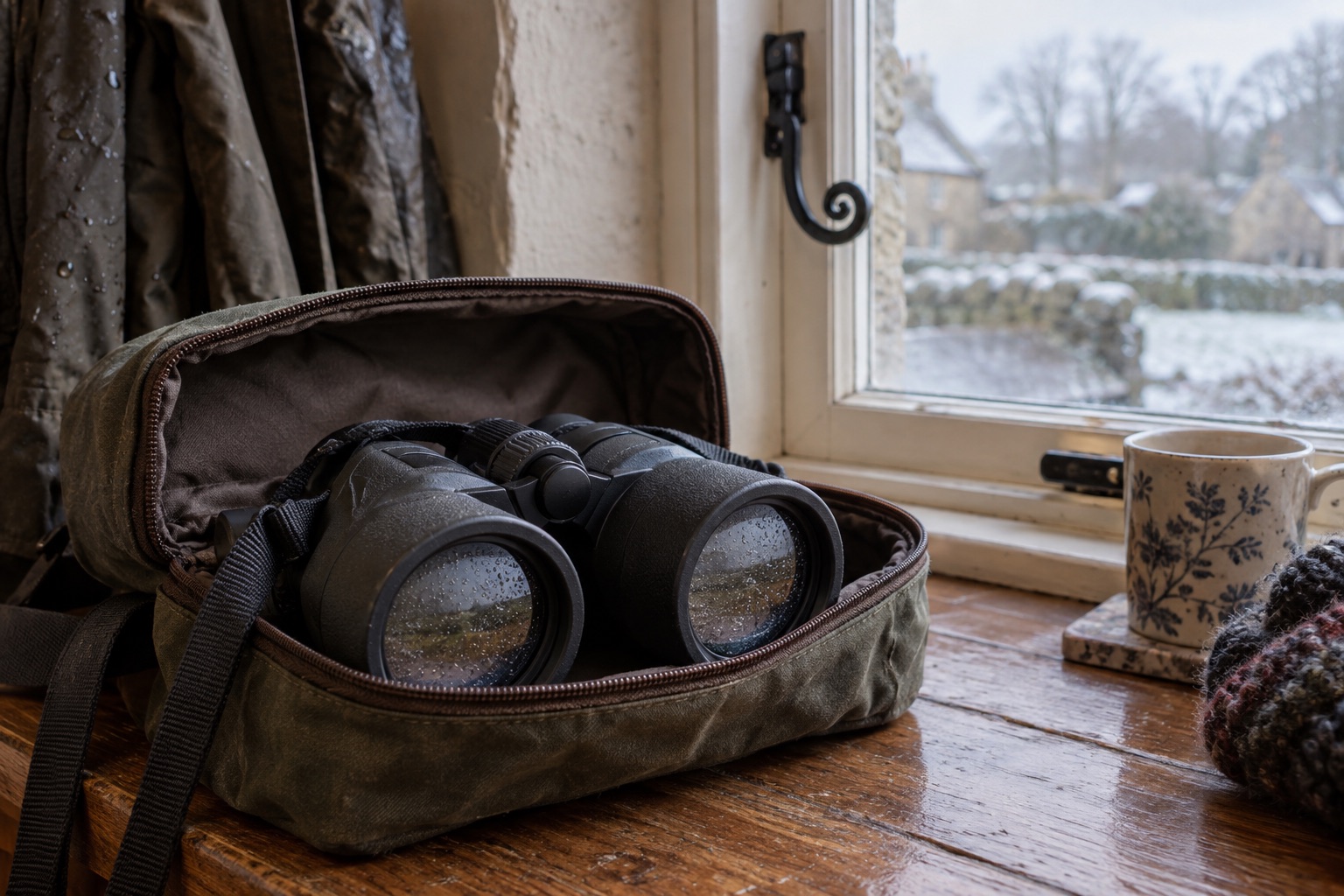
Confirm the mist is on exposed glass before wiping.
Avoid radiators, hairdryers and repeated hard rubbing.
Dry the case as well as the binocular.
Coming indoors after a cold birdwatching session can turn a clear pair of binoculars milky in seconds. The same can happen when you step from an air-conditioned vehicle into humid air. A surface cooler than the surrounding air can collect moisture. It is inconvenient, but an exterior film is not by itself evidence that a sealed binocular has failed.
Locate the moisture without making the lens dirtier
In ordinary room light, tilt the binocular and inspect both exposed objective and eyepiece surfaces. A clean, soft cloth can clear a small test patch if the surface is free of grit. If the patch clears, the moisture is outside. If it does not, do not keep polishing. Fogging inside binoculars explains the internal warning signs.
Rain droplets, dried spray and a greasy eyepiece film can all look cloudy in poor light. If there is visible dirt or salt, follow the grit-first lens-cleaning method before touching the glass. Do not repeatedly rub a cold surface while new condensation is still forming.
Clear the view and dry the whole instrument
For an ordinary cold-to-warm transition, leave the binocular at normal room temperature in a stable, dry place. If it came in a case, you can let the closed case slow the initial temperature change, then open it and dry both case and binocular. Wipe moisture from the exterior body with a clean cloth; use minimal contact on exposed glass after loose dirt has been removed. Keep lens caps and the case open until everything is dry.
A wet strap is easily forgotten. If it is packed against an eyepiece overnight, it can keep the case humid even after the lenses look clear. Let the strap and pouch dry separately where possible. For long-term storage, follow how to store binoculars and the maker's own instructions.
Do not put the instrument on a radiator, blast it with a hairdryer or leave it in a hot car. Nikon's binocular precautions warn against heat, sudden temperature changes and storing a wet pair. Abrupt drying is not a shortcut worth taking.
Reduce repeat misting in the field
During a wet winter walk, keep the pair protected in a dry case when not in use and avoid breathing directly onto the eyepieces. Allow a short adjustment period when moving between very different temperatures. An exterior anti-fog treatment is not automatically suitable for every coating; use only one explicitly permitted by the binocular maker.
If mist repeatedly appears behind a lens after the outside is dry, particularly following rain or a knock, treat that as an internal-moisture question rather than a normal dew-point effect. Do not open the barrel. A damaged seal may need professional assessment, as described in when binoculars need repair.
Frequently asked questions
Exterior mist questions
Why do my binoculars mist up when I go indoors?
Cold glass cools the warm, humid indoor air touching it, so moisture condenses on the exposed surface. Let the instrument acclimatise and dry it before storage.
Can I use a hairdryer to clear the mist?
Avoid strong directed heat. It can stress seals and materials. Normal room temperature and time are safer.
Do waterproof binoculars still get exterior condensation?
Yes. Waterproofing and gas purging concern the body and internal air space; exposed outer glass can still mist in humid air.
How do I tell outside mist from inside fog?
If a gentle wipe clears a patch on the exposed surface, it is outside. If both external surfaces are clean but cloudiness remains deeper in the barrel, seek maker or repair-service advice.