
Care · Storage
How to store binoculars
A practical short- and long-term binocular storage routine that avoids trapped moisture, heat, dust and unnecessary lens cleaning.
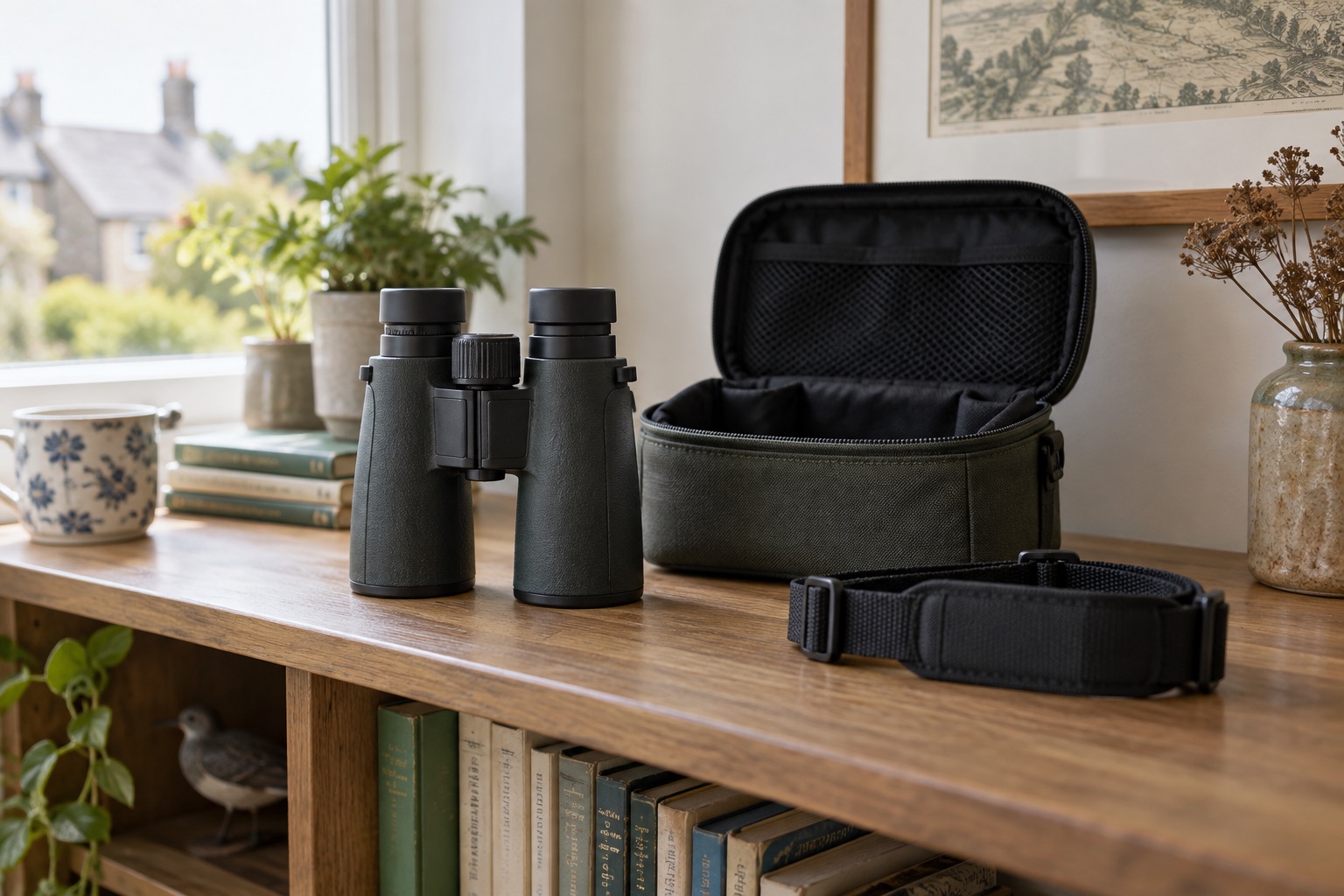
Never close a damp strap or case around dry-looking optics.
Avoid hot cars, radiators and damp sheds.
Check the case and desiccant periodically during long storage.
A pair of binoculars can survive years of regular use yet suffer from one wet case forgotten in a cupboard. Storage is less about a special box than about avoiding trapped moisture, strong heat and impacts. The exact instructions vary by model and weather rating, so keep the owner's manual where you can find it.
The after-walk routine
Put the instrument on a stable surface. Remove obvious rain or dew from the outside with a clean, soft cloth and check under the eyecups and around the strap attachments. Let the strap, case and caps dry separately if they are damp. Do not fit wet covers over dry glass. If the objective has sand or salt on it, use the relevant lens-cleaning method rather than wiping it dry.
If the pair has just come from cold air into a warm room, it may mist on the outside. Allow it to acclimatise at normal room temperature. A heater or hairdryer is unnecessary and risks uneven heating. Once exposed surfaces and the case are dry, cap the lenses and put the instrument somewhere it cannot fall.
Choosing a storage place
A cool, dry indoor shelf or cupboard is better than a humid shed, steamy bathroom or sun-heated car. Keep the binocular away from cleaning chemicals, dust and knocks. Do not leave it on a window ledge where focused sunlight, prolonged heat or an accidental fall may be hazards. Nikon's binocular maintenance guidance warns against high humidity and temperature and recommends dry storage, sometimes with desiccant.
For a long break between seasons, some makers favour a dry sealed container with fresh desiccant; others provide a protective case for ordinary carrying. Those are not contradictory if you separate drying from storage: never seal a wet pair in anything. Check the maker's instructions for your exact instrument, and make sure any desiccant cannot rub against exposed lenses. Periodically inspect the container for moisture and the binocular for a clear view.
What storage will not fix
Silica gel may help control humidity around a dry instrument, but it cannot remove fungus already inside or restore a damaged seal. A case that smells musty, lens haze that stays behind the glass, or corrosion around controls deserves closer inspection. Internal fogging and professional repair describe the next steps.
If several people share the binocular, leave a note of the model and any eyecup or dioptre setting rather than twisting the controls to their limits before storage. The focusing guide explains how to reset them safely when the next outing comes.
Frequently asked questions
Storage questions
Should binoculars stay in their case?
A dry case protects against knocks and dust, but a damp one traps moisture. Dry the whole setup first and follow the maker's long-term storage advice.
Is silica gel useful?
Fresh desiccant can help keep a suitable closed storage container dry, but it is no substitute for drying the binocular and case first or repairing a failed internal seal.
Can I leave binoculars in a car?
Avoid long storage in a car, particularly in sun or extreme cold. Heat can damage materials and large temperature changes encourage condensation.
Do I need to clean the lenses before storage?
Remove significant marks or salt using the correct method, but do not polish away harmless dust after every outing. Fit clean caps once the exposed glass is dry.