
Troubleshooting · Moisture
Binoculars fogging inside
Tell exterior condensation from mist inside binoculars, dry the outside safely and know when persistent internal fogging needs manufacturer service.
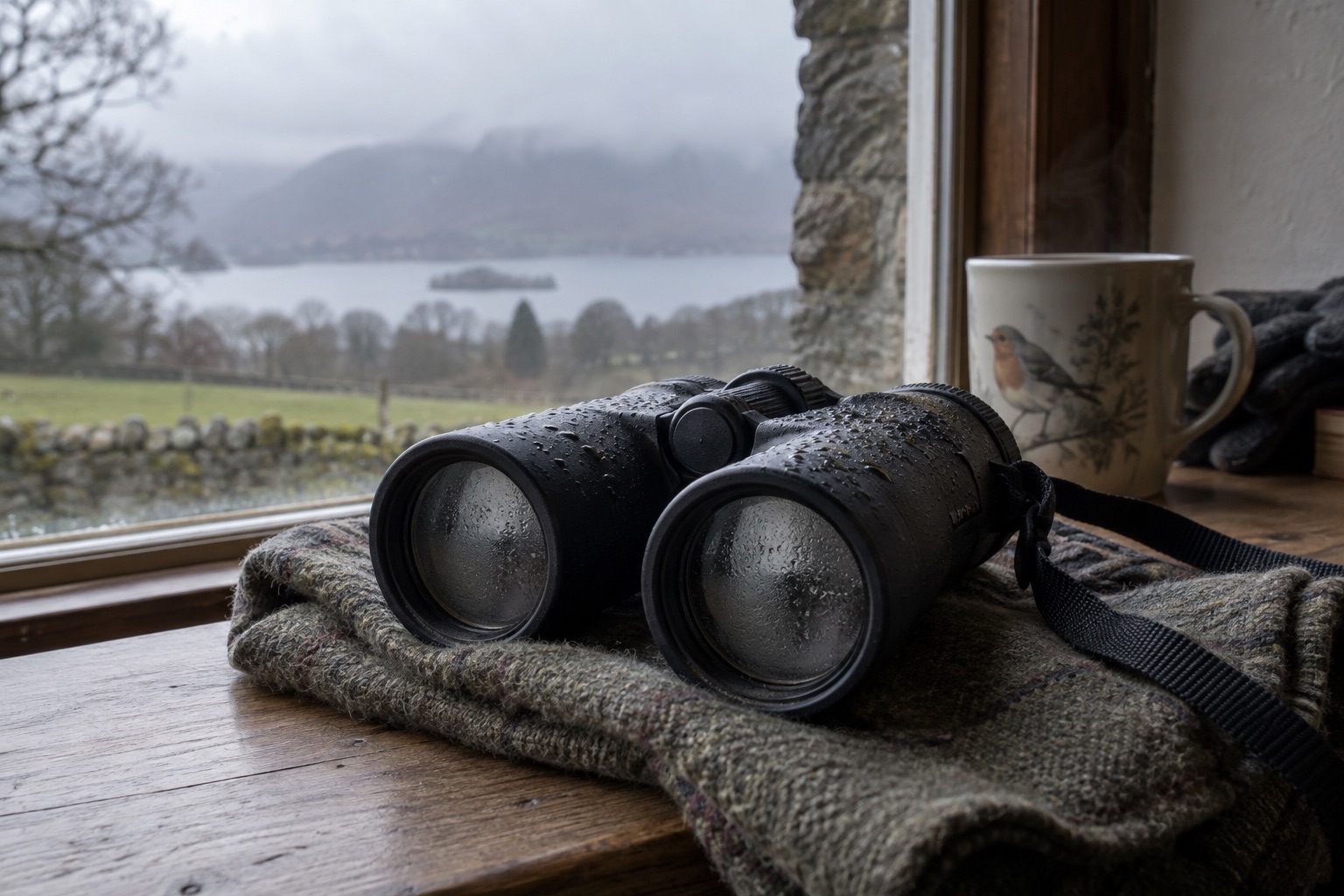
Locate the mist before cleaning; a cloth cannot reach an inner surface.
Do not bake, heat, open or immerse a fogged instrument.
Waterproof and nitrogen-filled claims reduce risk but are not a lifetime guarantee.
“Fogged binoculars” can describe two different things. The first is ordinary condensation on the outside of the eyepiece or objective, often after a cold morning walk and a return to a warm room. The second is moisture inside a sealed barrel. The first is usually a care issue; the second can be a seal or service issue.
Find where the haze sits
In normal ambient light, tilt the binocular slightly and inspect the objective and eyepiece from different angles. If a clean exterior cloth can clear a small patch, the moisture is outside; the exterior-condensation guide covers drying it. Do not rub a gritty lens: follow the safe lens-cleaning method first. If the exposed surfaces are clear but you see a milky film deeper behind the glass, do not keep rubbing. Compare both barrels. A single persistently cloudy barrel can be an important clue for the repairer.
Exterior condensation often forms when the glass is colder than the surrounding air's dew point. Give the binocular time to reach room temperature on a dry, stable surface. Wipe the body dry, leave the case open and replace the caps only after the exposed glass is dry. Do not trap a wet strap and damp cloth in the case. On a cold day, keeping the instrument in its case for a gradual transition can reduce sudden exterior mist.
What internal fogging suggests
Many waterproof binoculars are sealed and nitrogen- or argon-purged to reduce internal condensation. A damaged seal, impact, ageing or a manufacturing defect can allow moist air to enter. Persistent or recurring haze on an inner surface after the instrument has acclimatised is not something a cleaning kit can cure. It may also be accompanied by fungal growth or deposits if moisture stays trapped.
Note when it appears—after rain, after a temperature change, or continuously—and photograph what you can see without shining a powerful light into your eyes. Keep the instrument externally dry at normal room temperature and contact the seller or manufacturer about inspection. Explain the exact model and its published weather rating. If it is under warranty, opening it yourself may make the repair harder and compromise sealing.
Do not put binoculars in an oven, on a radiator or in direct strong heat, and do not loosen a barrel to “let moisture out”. Heat can damage adhesives, lubricants and seals; opening changes alignment. A bag of desiccant can help keep the case dry during storage but cannot reliably restore a failed internal seal.
For future use, understand the difference between waterproof and water-resistant claims and between nitrogen and argon purging. Neither gas choice by itself makes an optic immune to damage. Persistent internal mist is a professional repair question; if the view is not cloudy but appears doubled, use the double-image checks instead.
Frequently asked questions
Fogging questions
Why do binoculars fog when I come indoors?
Cold exposed glass meets warmer, humid indoor air, so water condenses on the outside. Let the binocular warm gradually and dry the exterior before storage.
Can I remove fog inside with a cloth?
No. If the haze is behind the exposed glass, wiping the surface will not reach it. Persistent internal fog warrants manufacturer or repair-service advice.
Does nitrogen filling mean binoculars can never fog?
No. It helps prevent internal condensation while seals remain sound. Exterior lenses can still fog, and a damaged seal can eventually admit moisture.
Should I put fogged binoculars in an oven or on a radiator?
No. Strong heat can harm seals, lubricants and optical alignment. Let the outside dry at normal room temperature and seek service if internal mist persists.