
Weather protection · Fogging
Nitrogen vs argon binoculars
Nitrogen and argon purging both aim to limit internal fogging. Learn why seal quality, waterproofing and optical fit matter more than the gas label alone.
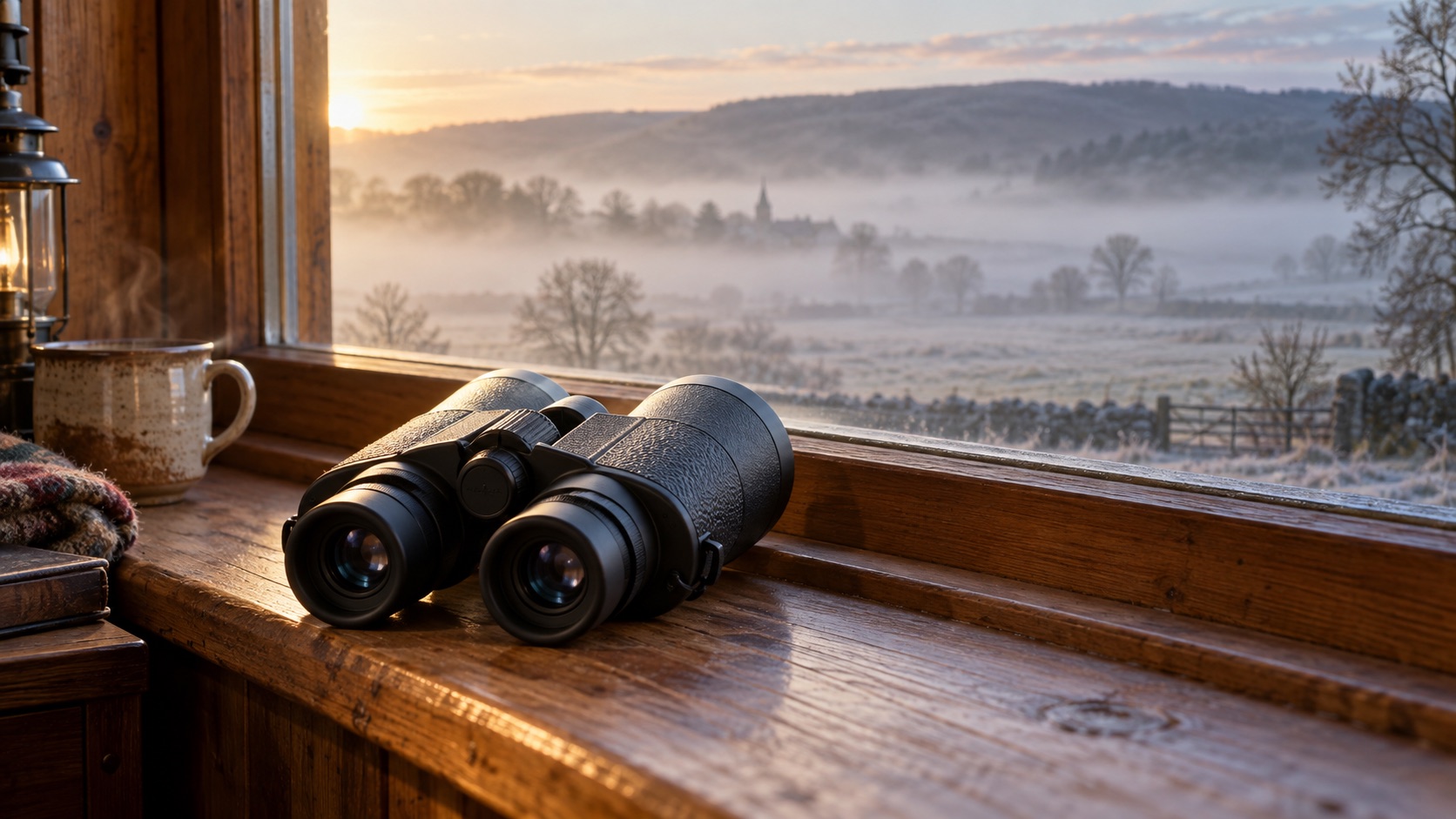
A gas-filled binocular can still fog on the outside of its lenses.
Neither gas repairs a leaky or damaged seal.
Compare actual model specifications and warranty, not an unsupported claim that one gas is always superior.
Manufacturers often place “nitrogen-filled” or “argon-purged” close to a waterproof claim. The wording sounds like a hierarchy, but it answers a different question: what dry gas occupies the sealed internal space? The seals are still what keep rain out.
If two binoculars suit you equally, purge method can be a final detail. It should not outweigh the field you need, the eye relief that actually works with your glasses, or whether the body is comfortable after an hour.
Why purge a binocular at all?
Ordinary trapped air contains water vapour. When a binocular moves from a warm room to a cold hillside, moisture within the housing can condense on internal glass if the design allows enough humidity inside. At manufacture, a maker can replace that air with a dry gas and seal the body. This lowers the chance of fog forming where a cloth cannot reach.
The process also works alongside waterproof sealing, but it is not the same thing. The waterproof vs water-resistant guide explains what to check on the body itself.
Nitrogen: common and effective
Dry nitrogen is widely used in outdoor optics. The Nikon PROSTAFF P7 8×42 and Celestron Nature DX 8×42 are examples of waterproof, nitrogen-filled models. Their practical differences are not gas-related: the P7 publishes 20.2mm eye relief and a 126m field, while the Nature DX gives 17.5mm relief, a 129m field and closer 2m focus.
For a glasses wearer, the P7's eye relief may be the decisive advantage. For a garden observer interested in nearby insects, Nature DX's close focus may matter more. Both use nitrogen to address the same internal-fogging problem.
Argon: a different inert fill, not a magic upgrade
Vortex describes the Diamondback HD 8×42 as argon-gas purged and O-ring sealed. Its wide field, 1.5m close focus and included harness are concrete reasons to choose it. The gas label does not establish that its image is brighter or sharper than a nitrogen-filled rival.
Argon is often presented as a premium feature. The plausible differences between gases are much smaller than differences in sealing, eyepiece design, coatings and build quality. Without directly comparable independent durability tests for the exact models, it is not responsible to promise that one fill will last longer in your hands.
External condensation is a separate problem
A cold lens brought into a warm damp room can mist on the outside even when the binocular is perfectly sealed. Do not judge the purge by that. Allow the instrument to warm gradually, keep the case open until dry and clean external glass gently once condensation has cleared. Rubbing grit or water across a coating can do more harm than the temporary mist.
Fog inside an eyepiece or objective that cannot be wiped away is different. If it persists, the binocular may need service. Do not dismantle it to let the gas out: alignment and waterproofing require specialist tools.
A better order for choosing
Start with the job: 8×42 for mixed wildlife, 8×32 for walking, 10×42 for supported distance or 7×50 for boat use. Next compare field of view, eye relief, weight and close focus. Then check the manufacturer's waterproof claim and warranty. Finally, note whether the sealed interior is nitrogen- or argon-filled.
That sequence avoids paying for an impressive-sounding gas while accepting a binocular you dislike looking through. For the optical numbers themselves, see what binocular numbers mean and exit pupil explained.
Helpful products
Real models, not just gas labels
The Nikon P7 and Celestron Nature DX use nitrogen-filled construction; Vortex describes argon purging and O-ring sealing for Diamondback HD.

Nikon PROSTAFF P7 8x42
Best for: Wide viewing with glasses
A 590g all-round 8x42 with a wide 126m field, long stated eye relief and a locking dioptre ring that helps preserve a personal focus setting.
What stands out
- 126m field of view at 1,000m
- 20.2mm stated eye relief
- 590g waterproof body with locking dioptre
Keep in mind
- 3m close focus is useful rather than class-leading
- No ED glass in the published specification
- 8×42
- 590g
- 126m / 1,000m
- 20.2mm eye relief

Celestron Nature DX 8x42
Best for: First 8×42 and close garden viewing
A well-specified first birdwatching binocular with a wide 129m field, 2m close focus and phase-coated BaK-4 prisms without stepping up to ED-glass pricing.
What stands out
- 129m field of view at 1,000m
- 2m stated close focus
- Waterproof, nitrogen-filled body
Keep in mind
- 17.5mm eye relief offers less margin than the Nikon P7
- No ED glass in this standard Nature DX model
- 8×42
- 629g
- 129m / 1,000m
- 17.5mm eye relief

Vortex Diamondback HD 8x42
Best for: All-weather wildlife walks
A weather-sealed 8x42 with a broad published field, 17mm eye relief and an included harness, giving it a practical ready-to-carry package.
What stands out
- Wide 7.5-degree published field
- GlassPak harness included
- Waterproof, fogproof roof-prism body
Keep in mind
- 17mm eye relief may not suit every glasses wearer
- HD naming alone does not mean ED objective glass
- 8×42
- 618g
- 7.5° field
- 1.5m close focus
Frequently asked questions
Gas-purging questions
Are argon binoculars better than nitrogen binoculars?
Not by default. Both gases can protect against internal fogging in a sealed body. Optical quality, fit, field, weight and the integrity of seals matter more to most users.
Will a gas-filled binocular ever fog up?
Yes. The outside of a lens can fog when its surface is colder than moist air. Persistent fog inside the housing suggests a compromised seal or moisture ingress.
Does gas filling make a binocular waterproof?
No. Waterproofing comes from housing and seals. Gas purging complements sealing by replacing moist internal air.
Can the gas escape over time?
A damaged or ageing seal can allow the internal atmosphere to change. A persistent internal mist, not an absent gas label, is the practical warning sign.