
Weather protection · Buying advice
Waterproof vs water-resistant binoculars
Understand the difference between waterproof and water-resistant binoculars, gas filling, IP ratings, rain care and which protection your use needs.
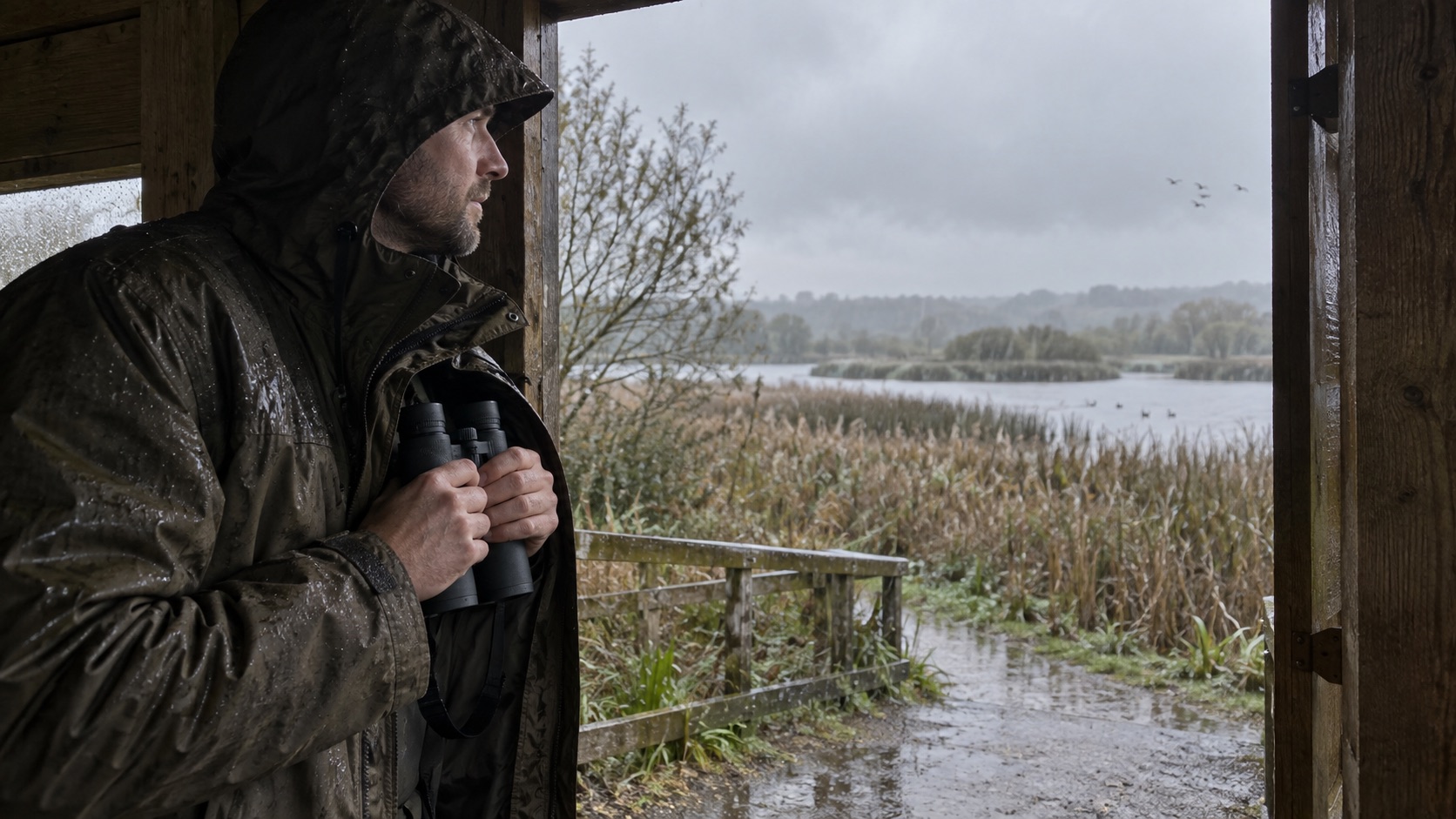
Waterproof does not automatically mean suitable for deliberate submersion or salt water.
Water on the outside of a lens is different from fog trapped inside the binocular.
After rain or spray, dry the instrument before sealing it in a case.
Rain language on binocular packaging is easy to overread. A model described as water-resistant may cope with a brief shower, but that phrase alone does not tell you how much rain, for how long, or whether the body is sealed against internal moisture. Waterproof is the stronger claim; even then, you need the model's actual limit.
For most British birdwatching, coast walks and wildlife trips, a properly sealed waterproof binocular is the sensible default. For occasional clear-night sky viewing from home, water resistance may be adequate if you protect the instrument from dew and never leave it outside.
What each claim really means
Water resistance is a general description of splash tolerance. Celestron calls the UpClose G2 10×50 water-resistant, but not nitrogen-filled or waterproof. It makes sense as a budget fair-weather astronomy binocular, not a pair to leave on a wet hide shelf.
Waterproof models use seals around the housing, controls and optical assemblies. The Nature DX 8×42 is described by Celestron as waterproof and nitrogen-filled. That makes it a more sensible general outdoor purchase, but the word alone is not permission to immerse it. Some specialist marine models publish a depth: the Steiner Navigator 7×50 states waterproofing to 5m. This is a distinct use case, not a reason every walker needs a bulky marine instrument.
Is there a universal waterproof rating?
Not across all binocular listings. Some makers publish an IP rating or test depth and time; others say waterproof without a comparable number. Compare the exact manufacturer's statement, rather than treating all waterproof labels as equal. If no test is stated, assume protection for normal weather, not underwater use.
The most relevant weak points are moving controls, eyepiece assemblies and battery compartments on electronic models. A closure that has not been properly seated may defeat an otherwise robust design. Age, damage and servicing can change the real-world integrity of seals.
Rain outside versus fog inside
External droplets on the objective or eyepiece are inconvenient but can be removed safely. Internal condensation appears behind glass where you cannot wipe it away. A dry-gas fill and sound seals reduce the moisture available to condense inside, especially when the binocular moves between warm and cold conditions.
Nitrogen or argon labels tell you something about the internal atmosphere at manufacture, not the current condition of the seals. See nitrogen vs argon binoculars for the gas comparison. If persistent internal mist appears, stop treating the binocular as weatherproof and seek manufacturer advice.
Which level should you buy?
Garden and occasional fair-weather viewing
A water-resistant pair can be reasonable if it is kept dry and brought inside after use. The UpClose G2 10×50 is relevant here because its 5mm exit pupil and wide view make casual night-sky use approachable, while its 12mm eye relief and limited weather protection are real compromises.
Walking, birdwatching and travel
Choose waterproof sealing. Weather changes during a long walk, and a binocular worn outside a jacket may meet hours of mist and rain. A conventional 8×42 such as the Nature DX is more versatile than a delicate fair-weather Porro. Weight and fit still matter: consult how to choose binoculars before choosing on sealing alone.
Boats and salt spray
Look for a model explicitly intended for marine conditions, with a published waterproof specification and handling designed for use on a moving deck. The Navigator 7×50 trades close focus and compactness for that role. Compare it with other marine binoculars if bearings, a compass or flotation matter.
Aftercare prevents avoidable damage
Keep a rain guard on the eyepieces when not looking through them. Back indoors, remove loose grit with a blower or soft brush before touching glass. Wipe exterior water with a clean cloth; allow the body, strap and case to dry separately. A wet closed case holds moisture against seals and can encourage mould.
Never bake, radiator-dry or open the optical housing to cure internal fog. If water appears inside, check the maker's warranty and service route. The best weather rating is still helped by careful storage and a protective case.
Helpful products
Three different levels of weather protection
The UpClose G2 and SkyMaster are water-resistant. The Nature DX 8×42 is waterproof and nitrogen-filled; the marine Steiner states a specific 5m depth.

Celestron UpClose G2 10x50
Best for: Occasional clear-sky viewing
An inexpensive traditional 10×50 Porro with a broad 118m field and tripod socket for supported night-sky viewing.
What stands out
- 118m field at 1,000m
- 5mm exit pupil
- Tripod adaptable
Keep in mind
- Only water resistant, not waterproof
- 12mm eye relief is poor for glasses
- 10×50
- 765g
- 118m / 1,000m
- 12mm eye relief

Celestron Nature DX 8x42
Best for: First 8×42 and close garden viewing
A well-specified first birdwatching binocular with a wide 129m field, 2m close focus and phase-coated BaK-4 prisms without stepping up to ED-glass pricing.
What stands out
- 129m field of view at 1,000m
- 2m stated close focus
- Waterproof, nitrogen-filled body
Keep in mind
- 17.5mm eye relief offers less margin than the Nikon P7
- No ED glass in this standard Nature DX model
- 8×42
- 629g
- 129m / 1,000m
- 17.5mm eye relief

Steiner Navigator 7x50
Best for: Serious boating without a compass
A purpose-built 7×50 marine binocular with individual eyepiece focus, a 7.1mm exit pupil and waterproofing to a stated 5m.
What stands out
- Waterproof to a stated 5m
- Approximately 140m field at 1,000m
- 20.2mm eye relief and individual focus
Keep in mind
- 20m close focus is unsuitable for nearby nature
- Individual focus is slower when subject distance changes often
- 7×50
- 754g
- 140m / 1,000m
- Waterproof to 5m
Frequently asked questions
Waterproofing questions
Can waterproof binoculars be used in heavy rain?
Usually, if the exact model is specified as waterproof and its seals are in good condition. Check the maker's limits, avoid opening compartments in rain and dry the outside before storage.
Does nitrogen filling make binoculars waterproof?
No. Gas filling helps resist internal condensation when the housing is sealed. The mechanical seals provide water protection; a damaged seal can compromise both benefits.
Can I take water-resistant binoculars to a wetland?
You can use them in settled weather, but protect them from rain and spray. For regular wetland visits, a waterproof model is the more dependable choice.
Should I rinse binoculars after sea spray?
Follow the exact maker's cleaning advice. First remove grit, then carefully clean salt from exterior surfaces without directing water into moving parts. Dry completely before storing.