
UK buying guide · Marine 7×50 binoculars
Best marine binoculars
Three purpose-built 7×50 marine binoculars compared for waterproofing, compass features, field of view, eye relief, focus system and weight.
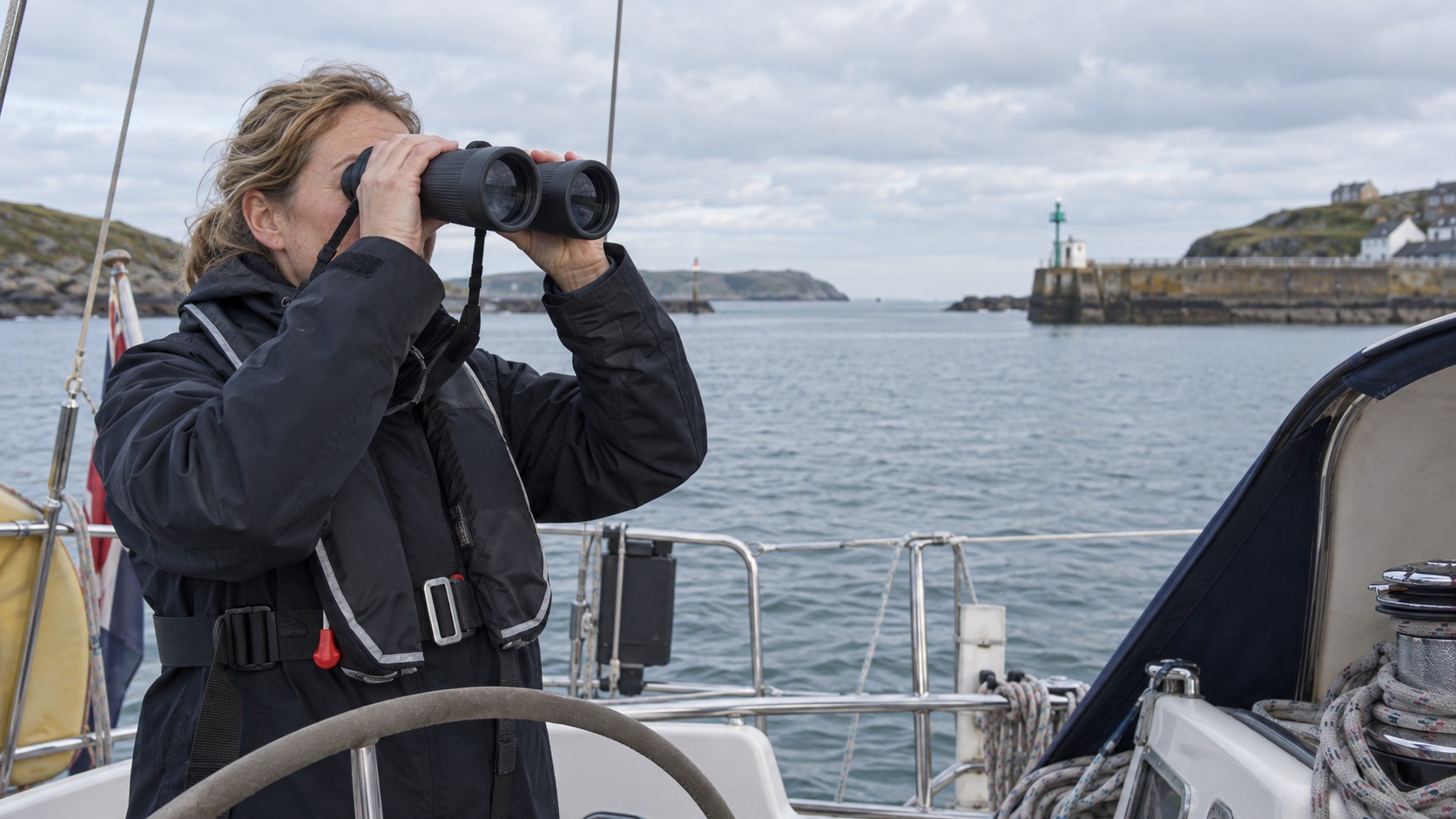
Seven-times magnification is easier to steady on a moving platform than 10×.
A 50mm objective creates a 7.1mm exit pupil for low light and forgiving eye placement.
Compass and reticle features add weight and must match the user's real navigation needs.
Quick picks
Choose by the detail that matters most
Links open the matching Amazon UK listing. Prices and sellers can change, so confirm the model name and ASIN before buying.
Swipe to compare all details →
| Model | Best for | Weight | Field | Eye relief | Compass |
|---|---|---|---|---|---|
| Steiner Navigator 7×50 | Premium viewing without compass | 754g | Approx. 140m / 1,000m | 20.2mm | No |
| Celestron Oceana 7×50 | Compass and glasses | 1,162g | 131m / 1,000m | 22mm | Illuminated |
| Bushnell Marine 7×50 | Traditional compass choice | 1,049g | 117m / 1,000m | 18mm | Illuminated |
The detailed shortlist
Purpose-built marine binoculars
Each model is a true 7×50 marine design. Product links open the exact Amazon UK listing; verify the ASIN, compass version and included accessories because similarly named variants coexist.

Steiner Navigator 7x50
Best for: Serious boating without a compass
A purpose-built 7×50 marine binocular with individual eyepiece focus, a 7.1mm exit pupil and waterproofing to a stated 5m.
What stands out
- Waterproof to a stated 5m
- Approximately 140m field at 1,000m
- 20.2mm eye relief and individual focus
Keep in mind
- 20m close focus is unsuitable for nearby nature
- Individual focus is slower when subject distance changes often
- 7×50
- 754g
- 140m / 1,000m
- Waterproof to 5m

Celestron Oceana 7x50
Best for: Navigation features and glasses
A 7×50 waterproof marine binocular with an illuminated compass, ranging reticle, 22mm eye relief and a 131m field.
What stands out
- Illuminated compass and ranging reticle
- 22mm stated eye relief
- Waterproof, nitrogen-filled aluminium body
Keep in mind
- 1,162g is heavy for extended handheld use
- 10m close focus is specialist rather than versatile
- 7×50
- 1,162g
- 131m / 1,000m
- 22mm eye relief

Bushnell Marine 7x50
Best for: Boat use with compass bearings
A traditional waterproof and fogproof 7×50 with an illuminated compass, internal rangefinder and an 18mm eye relief specification.
What stands out
- Illuminated compass and rangefinding scale
- Waterproof and fogproof
- 7.1mm exit pupil for low-light use
Keep in mind
- 1,049g body is substantial
- Roll-down eyecups are less adjustable than modern multi-stop designs
- 7×50
- 1,049g
- 117m / 1,000m
- 18mm eye relief
Marine binoculars are designed around a moving platform, low light, water and navigation. That is why the established format is 7×50, not the 8×42 or 10×42 that dominates birdwatching guides.
Seven-times magnification is easier to steady as a deck moves. Dividing 50mm by 7 gives a large 7.1mm exit pupil, allowing generous eye placement when the observer is braced, wearing waterproofs or working in poor light.
Why the Steiner Navigator 7×50 is the premium non-compass choice
The current Navigator 7×50 uses individual eyepiece focus: once each side is set for the user's eyes, Steiner describes the view as sharp from roughly 20m to infinity. That suits navigation marks, vessels and distant coastline because constant centre focusing is unnecessary.
Its approximately 140m field is the widest in this shortlist, the stated eye relief is 20.2mm and the body weighs about 754g. Steiner states water-pressure resistance to 5m and nitrogen filling. It is the clear choice when viewing quality, handling and ruggedness matter but an integrated compass does not.
The 20m close-focus limit and individual focus make it less versatile for nearby birds, marinas and changing short distances. That is a design choice, not a fault: it is optimised for the distance regime of marine use.
Why the Celestron Oceana 7×50 is the compass-feature pick
The Oceana includes an illuminated compass, ranging reticle and calculator dial. Its 131m field and 22mm eye relief are useful specifications, especially for glasses or sunglasses. The centre-focus design is more familiar to general binocular users than individual eyepiece focus.
At 1,162g, it is a heavy instrument. Choose it because the compass and ranging functions will be used, not because more features automatically make a better observation binocular. Verify that the compass zone and instructions suit the region and intended use.
Why the Bushnell Marine 7×50 is the traditional alternative
The Bushnell Marine uses a liquid-filled illuminated compass with one-degree markings and an internal rangefinding scale. It is specified as waterproof, fogproof and rubber-armoured, with an 18mm eye relief and 117m field at 1,000m.
The 1,049g body sits between the Steiner and Celestron. Roll-down eyecups are simple but less finely adjustable than multi-stop modern designs. It suits buyers who want a conventional compass-equipped 7×50 and accept the weight.
Compass or no compass?
An integrated compass can provide a bearing while the target remains in view. That is useful for reporting a navigation mark, hazard or vessel direction. It also adds complexity, and accurate use depends on setup, magnetic zone, vessel environment and user training.
A binocular compass is not a substitute for the vessel's primary navigation equipment. If bearings are not part of the intended job, spend the weight and budget on handling, optics and a secure floating strap instead.
Centre focus vs individual focus
Centre focus is fast when subjects move between a nearby buoy, harbour wall and distant coast. Individual focus sets each eyepiece separately and is highly practical when almost everything lies beyond a fixed distance.
Users who share a pair will need to know their settings. Markings should be legible, and the eyepieces must be reset whenever a different observer takes over.
Waterproof does not always mean floating
Waterproofing describes resistance to water ingress under specified conditions. It does not prove that a binocular floats, survives an unlimited depth or tolerates neglect after salt exposure. Use the supplied or correctly rated floating strap, and secure it before leaving shelter.
After salt spray, follow the manufacturer's instructions. In general, loose grit should be removed first, permitted exterior surfaces rinsed or wiped with fresh water, and the binocular dried in air before its case is closed. Avoid forcing water into moving joints or battery compartments.
Weight and one-handed handling
Marine 7×50 models are larger than general nature binoculars. Test whether the bridge, armour and strap can be handled with cold or wet hands. A secure two-handed grip is normal, but the binocular may also need to be passed, stowed or briefly controlled while the user maintains a safe hold on the vessel.
Safety takes priority over any sighting. Observe from a secure position, use a strap and never compromise watchkeeping or movement on deck to obtain a steadier view.
Marine binoculars are not the same as seawatching binoculars
From a stable headland, a 10×42 can exploit greater magnification and a centre focus can follow birds at varying distances. On a vessel, the steadier 7× view and marine construction are more useful. Read best binoculars for seawatching if the primary use is land-based bird observation.
The choice here is therefore straightforward: Steiner for premium non-compass marine viewing, Celestron for long eye relief and integrated navigation features, or Bushnell for a traditional compass-equipped alternative.
Frequently asked questions
Marine-binocular questions
Why are marine binoculars usually 7×50?
Seven-times magnification is relatively easy to steady on a moving vessel, while 50mm objectives create a large 7.1mm exit pupil for forgiving eye placement and low-light use.
Do marine binoculars float?
Do not assume they do. Some are waterproof or submersible without being buoyant, and a floating strap may be an accessory rather than an inherent feature. Check the exact manufacturer specification.
Do I need a compass in marine binoculars?
Only if you will use bearings and understand the compass system. A compass adds weight, cost and another feature to maintain. For general observation from a boat, a non-compass 7×50 may be simpler.
Can marine binoculars be used for birdwatching?
Yes for distant or low-light observation, especially from boats, but their weight, long close-focus distance and individual focus can make them less convenient for woodland and nearby birds than an 8×42 centre-focus model.