
Care kit · Lens cleaning
Best binocular lens-cleaning kits
Compare a complete optics-cleaning kit with a pocket touch-up tool, and learn the grit-first routine that protects binocular lens coatings.
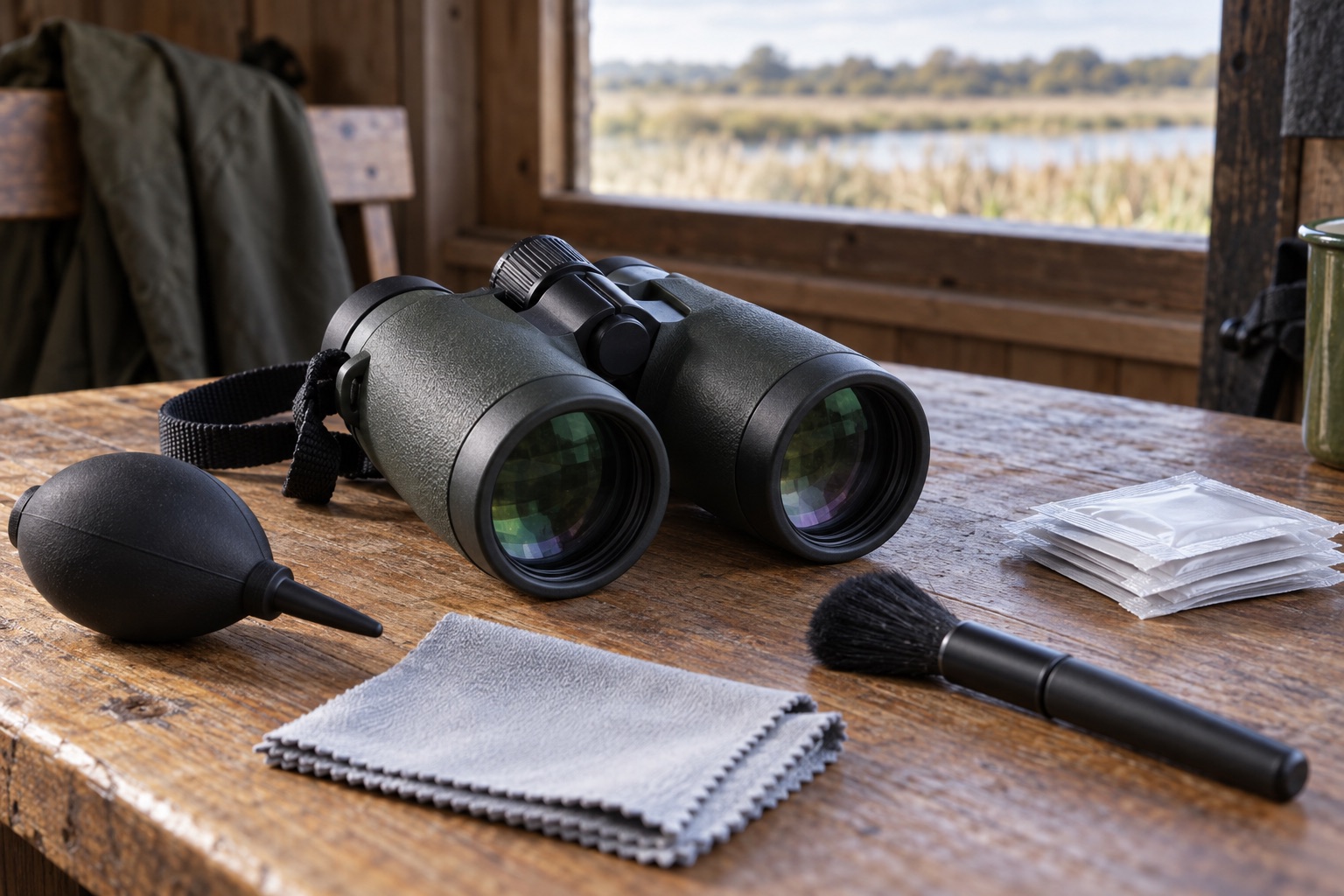
Brush or blow loose particles away before a cloth touches the lens.
Use a clean, optics-safe cloth and only the solution recommended for the instrument.
Never spray liquid directly into an eyepiece or lens edge.
Quick picks
Choose by the detail that matters most
Links open the matching Amazon UK listing. Prices and sellers can change, so confirm the model name and ASIN before buying.
Swipe to compare all details →
| Option | Brush | Cloth or wipes | Fluid | Best role |
|---|---|---|---|---|
| Celestron 93576 kit | Yes | Cloth and 10 wipes | Yes | Full field pouch |
| Celestron 93575 LensPen | Yes | No | No | Dry touch-up only |
The detailed shortlist
Complete kit versus pocket tool
These serve different jobs; check the contents and cleaning instructions before treating either as a complete kit.

Celestron Lens Cleaning Kit 93576
Best for: A single pouch for binocular care
A pouch of optics-oriented cleaning essentials: retractable brush, microfibre cloth, fluid and ten individually packed wipes.
What stands out
- Brush, cloth, fluid and wipes together
- Individual wipes are practical away from home
- Soft pouch keeps tools together
Keep in mind
- Fluid should go on cloth, not directly on binoculars
- One-use wipes create waste
- Retractable brush
- Microfibre cloth
- 10 wipes
- Cleaning fluid

Celestron LensPen 93575 optics cleaning tool
Best for: Minor dry fingerprints
A small brush-and-carbon-tip tool for minor dry marks once all loose particles have been removed.
What stands out
- Retractable soft brush
- Dry carbon-based cleaning tip
- No bottle to carry
Keep in mind
- Not a complete kit
- Do not scrub sand or grit with the tip
- Brush end
- Cleaning tip
- No liquid
Good lens care is mostly restraint. A few harmless specks rarely justify touching a coated surface. The time to clean is when fingerprints, spray or grime noticeably degrade the view. The first step is to make sure you will not drag grit over the coating.
Two genuinely different purchases
The Celestron 93576 puts a retractable brush, microfibre cloth, cleaning fluid and ten individual wipes in one pouch. That combination is practical after a dusty field day: dry removal first, then controlled damp cleaning for a persistent mark. It does not include a blower, so add a simple clean hand blower if you regularly meet sand or fine dust.
The Celestron 93575 LensPen is a brush-and-carbon-tip tool. It is compact for a minor dry fingerprint after loose dust is removed. It is not a substitute for fluid, fresh cloths and a proper salt-spray clean. Do not grind its tip into a lens that might contain grit. Store the capped tip clean.
Use the tools in the right order
A kit cannot make grit safe to rub. Start with a clean blower or brush; use a fresh cloth or suitable wipe only for marks that remain. Keep fluid off lens edges and allow the exposed glass to dry before replacing caps. The full how-to-clean-binocular-lenses guide covers the step-by-step method, eyepieces, objectives and the point where cleaning should stop.
After coastal spray, check your maker's care instructions before attempting a dry wipe: salt crystals are abrasive. The rain and sea-spray care guide distinguishes sealed models from pairs that should not be rinsed. Our waterproof versus water-resistant guide explains the rating behind that choice.
If the surface looks clean but the image is cloudy, shine ordinary ambient light across the exterior lens to determine whether the haze sits on the outer glass. Do not disassemble the instrument. Fogging inside binoculars is a separate fault and a cleaning kit cannot reach it.
Choose for the contamination, not the number of pieces
For an occasional fingerprint on a dry, otherwise clean lens, a well-kept LensPen can be a small field tool. It is a poor first move if you have just walked through blown sand: loosen and lift particles before touching glass. If sea spray is the recurring problem, a fresh cloth and suitable cleaning fluid after grit removal may be more useful than the carbon tip. The 93576 supplies consumable wipes and fluid, but it still lacks a blower. Budget for that missing first step rather than assuming a larger kit is complete.
Keep clean and used materials separate. A microfibre cloth that has sat loose in a sandy pocket can be more hazardous than leaving a few specks alone. Replace a dirty wipe instead of folding grit into another corner. Avoid spraying fluid toward the eyepiece housing, where it could reach seams or rubber. If the maker specifies a different cleaning method or cautions against a particular fluid, follow the instrument manual before the kit packaging.
Know when to stop
Do not scrub an apparent mark that does not move with gentle external cleaning. It may be on an internal surface, in a coating or elsewhere in the optical path. Persistent double images, internal haze or fungus are not kit-shopping problems; consult the repair decision guide instead. For normal field use, keep caps clean and fit them only once the glass and housing are dry. Prevention usually means fewer risky cleaning sessions.
Frequently asked questions
Cleaning binocular lenses
Can I use a glasses cloth on binoculars?
Only if it is clean, soft microfibre intended for coated lenses. A cloth carrying grit can scratch coatings even if it feels soft.
Can I use household window cleaner?
No. Household cleaners and paper towels can damage optical coatings or leave residues. Use a maker-approved optical solution sparingly on the cloth.
Should I clean lenses after every walk?
No. Fit caps, let the instrument dry externally and remove only dirt that affects the view. Repeated unnecessary rubbing increases risk.
Will a kit remove fog inside a binocular?
No. A cleaning kit is for exposed exterior glass. Persistent mist behind the surface needs manufacturer or repair-service advice.