
Care · Weather and coast
Caring for binoculars after rain or sea spray
What to do with wet binoculars after a UK walk or coastal outing, including the important difference between rain and abrasive dried salt.
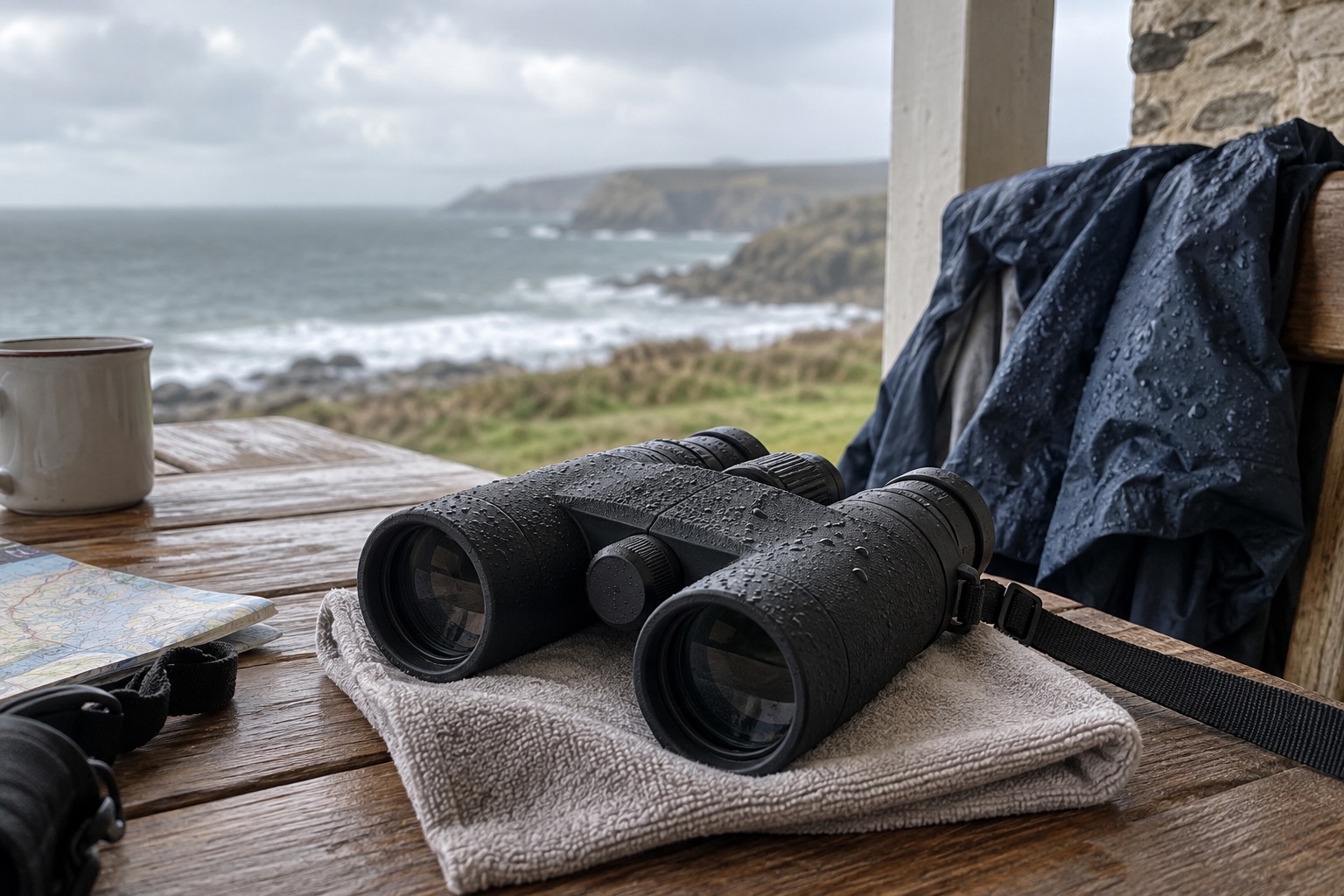
A waterproof claim does not mean leave the binocular wet in its case.
Never scrub dried sea salt from a lens with a dry cloth.
Persistent moisture behind the glass needs service advice.
Rain and sea spray leave different problems. Fresh rain mainly leaves external moisture to dry. Salt spray can leave abrasive crystals and residue on exposed glass, eyecups and body seams. The safe response depends on how the particular binocular is sealed—not merely on the word “waterproof” in a product listing.
After an ordinary rainy walk
In shelter, wipe water from the exterior body with a soft, clean cloth. Check the hinge, focus wheel surrounds, eyecups and strap attachments without forcing any part open. If there is grit on a lens, blow or brush it away before touching it with fabric. Let the caps, strap and case dry separately; then let the binocular finish drying at normal room temperature before repacking.
Even waterproof binoculars need this routine. Nikon's binocular precautions say to wipe rain, dew and mist from waterproof models and dry them for storage. Avoid a radiator, oven or a hot car. If the outer glass mists while warming indoors, see exterior condensation.
After sea spray or muddy water
Do not wipe gritty salt crystals around the objective with a dry sleeve. Check the model's manual first. Nikon specifically recommends promptly rinsing the exterior of certain waterproof models after sea-water or mud exposure, then wiping and drying them thoroughly. That advice must not be generalized to a non-waterproof pair: liquid may enter around the body, eyecups or focus mechanism. If the manual is unclear, ask the maker before applying water.
For marks remaining on suitable exposed glass after grit has been safely removed, use the maker-approved lens-cleaning sequence. A basic cleaning pouch can help with fingerprints and ordinary residue; it is not a substitute for the sealing specification or a safe salt-removal method. The comparison of waterproof and water-resistant claims is worth reading before a boat trip.
Decide whether anything entered the binocular
Once the exterior is clean and dry, look through both barrels at a normal distant subject. If the image is clear, keep the instrument dry and check it again later. If you can see persistent mist behind a clean lens, or the focus wheel begins to bind after exposure, do not keep working it. Record what happened and contact the retailer or maker. Our guides to internal fogging and focus-wheel faults help describe the symptom accurately.
If a binocular was submerged rather than splashed, treat that as more serious than normal wet-weather use, regardless of a published waterproof rating. Nikon advises prompt retailer contact after immersion. Marine navigation binoculars also need the manufacturer's exact care instructions; their large body and seals do not make them maintenance-free. Let everything dry before following the storage routine.
Helpful products
A cleaning kit for exterior marks
Use a brush or blower to remove loose grit first; the kit's cloth and fluid are for suitable remaining marks, following the binocular maker's care instructions.

Celestron Lens Cleaning Kit 93576
Best for: A single pouch for binocular care
A pouch of optics-oriented cleaning essentials: retractable brush, microfibre cloth, fluid and ten individually packed wipes.
What stands out
- Brush, cloth, fluid and wipes together
- Individual wipes are practical away from home
- Soft pouch keeps tools together
Keep in mind
- Fluid should go on cloth, not directly on binoculars
- One-use wipes create waste
- Retractable brush
- Microfibre cloth
- 10 wipes
- Cleaning fluid
Frequently asked questions
Rain and salt questions
Can I rinse binoculars after sea spray?
Only if your exact model's instructions permit it. Nikon advises an exterior rinse for some waterproof models, but a water-resistant or unsealed pair may be damaged by the same treatment.
Should I wipe sea salt off immediately?
Deal with salt promptly, but do not scrub crystals dry across a coating. Check the maker's approved method and first lift loose material safely.
Are waterproof binoculars safe to store wet?
No. Dry the outside, strap, caps and case before storage even if the sealed interior is rated waterproof.
What if water seems to be inside the binocular?
Do not open or heat the barrel. Keep the exterior dry, note how it happened and contact the maker or seller about inspection and warranty.