
Troubleshooting · Focus mechanism
Stiff or loose binocular focus wheel
Tell ordinary focus feel from slipping, grinding or a wheel that jams; learn safe checks and when to stop and request service.
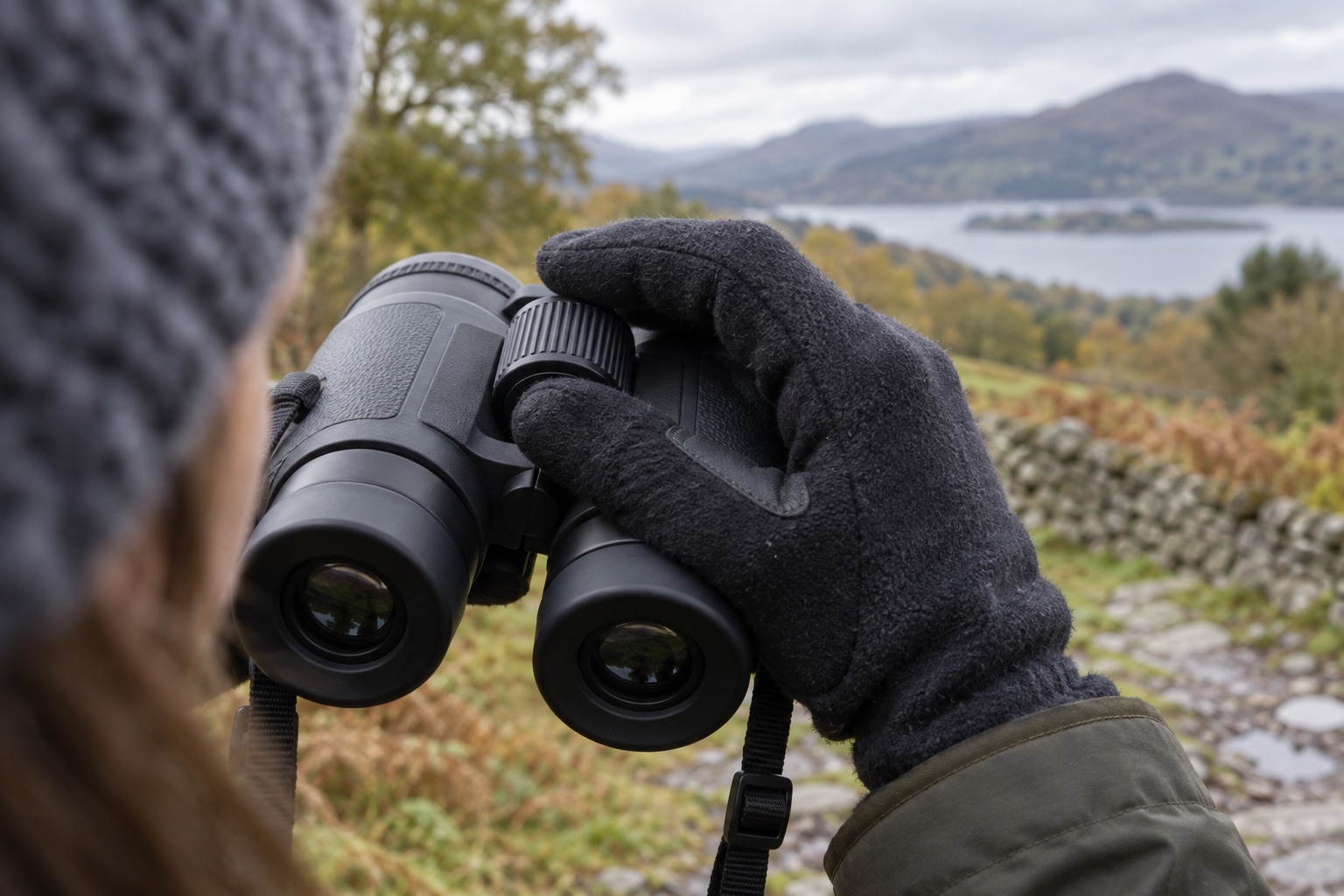
Check the eyecups, dioptre and focus range before blaming the centre wheel.
Never force the wheel beyond its normal end stop.
Do not spray oil or solvent into the hinge or barrel.
Binocular focus wheels are not all equally quick or light. A slow, damped wheel can suit long-distance observation; a faster wheel can be useful for nearby birds. The question is whether yours behaves consistently across its intended range and focuses both barrels, not whether it feels identical to someone else's model.
Do three checks before diagnosing a fault
Choose a fixed, detailed subject in daylight that is neither extremely close nor directed towards the Sun. Hold the binocular steadily and turn the centre wheel gently from a near setting towards a farther one. Does the image in each barrel change focus? If one barrel is sharp and the other is not, confirm you have set the dioptre correctly before suspecting the centre mechanism.
Check the subject's distance against the model's stated close-focus limit. A wheel cannot sharpen something nearer than its optical range. Also confirm the eyecups and hinge give you one comfortable view; black crescents are an eye-position issue, not focus slip. Our complete focusing sequence is the best reset if you are unsure of the setup.
Stiff, loose and uneven feel mean different things
A consistently firm wheel may simply be characteristic of the design. Cold conditions can change how a mechanism feels; allow a gradual return to normal room temperature before concluding that it is seized. Do not leave the pair on a radiator to speed that up. A wheel that develops an abrupt rough patch, grinding noise or hard jam is more concerning. Stop rather than turning harder.
A loose wheel deserves attention if it now turns without changing focus, produces a new rattle, or lets the focus drift after you release it. After a drop, check whether both barrels still focus and whether the image is single. Impact can affect optical alignment as well as the wheel; double-image symptoms need separate assessment.
What to record for a service enquiry
Note the model, when the behaviour began, whether it changes with temperature, which part of the wheel's travel is affected and whether both barrels respond. A short video of the external wheel movement can help a seller or repairer, but do not open the body to photograph inside. Nikon's handling precautions explicitly warn against turning focusing parts beyond their limits.
Avoid adding oil, WD-40, silicone spray or other general lubricant. Binoculars contain specific greases and, often, weather seals; an improvised treatment can migrate onto glass or make proper repair more difficult. If the instrument is covered by a warranty, contact the maker or retailer before any intervention. When to seek professional repair sets out the service decision.
Frequently asked questions
Focus-wheel questions
Why is my focus wheel stiffer in cold weather?
Some mechanisms feel firmer as temperature changes. Let the binocular return gradually to normal conditions and check for smooth movement; grinding or a complete jam is not normal.
Can I lubricate the focus wheel myself?
Do not spray general oil or solvent into a sealed binocular. It can reach optics, alter lubricants or compromise seals. Ask the maker about the exact model.
Why does the wheel turn but the image stay blurry?
Check the dioptre, eye position and whether the subject is inside the minimum close-focus distance. If both barrels never respond to the wheel, the mechanism may need service.
Is a loose wheel always a fault?
Not necessarily; designs vary in resistance. A new rattle, free-spinning section or focus that drifts without touch is more concerning, especially after a drop.