
Troubleshooting · Eye position
Why do I see black circles through binoculars?
Diagnose black rings, crescents and kidney-shaped shadows in a binocular view using eye spacing, eyecup height and glasses fit.
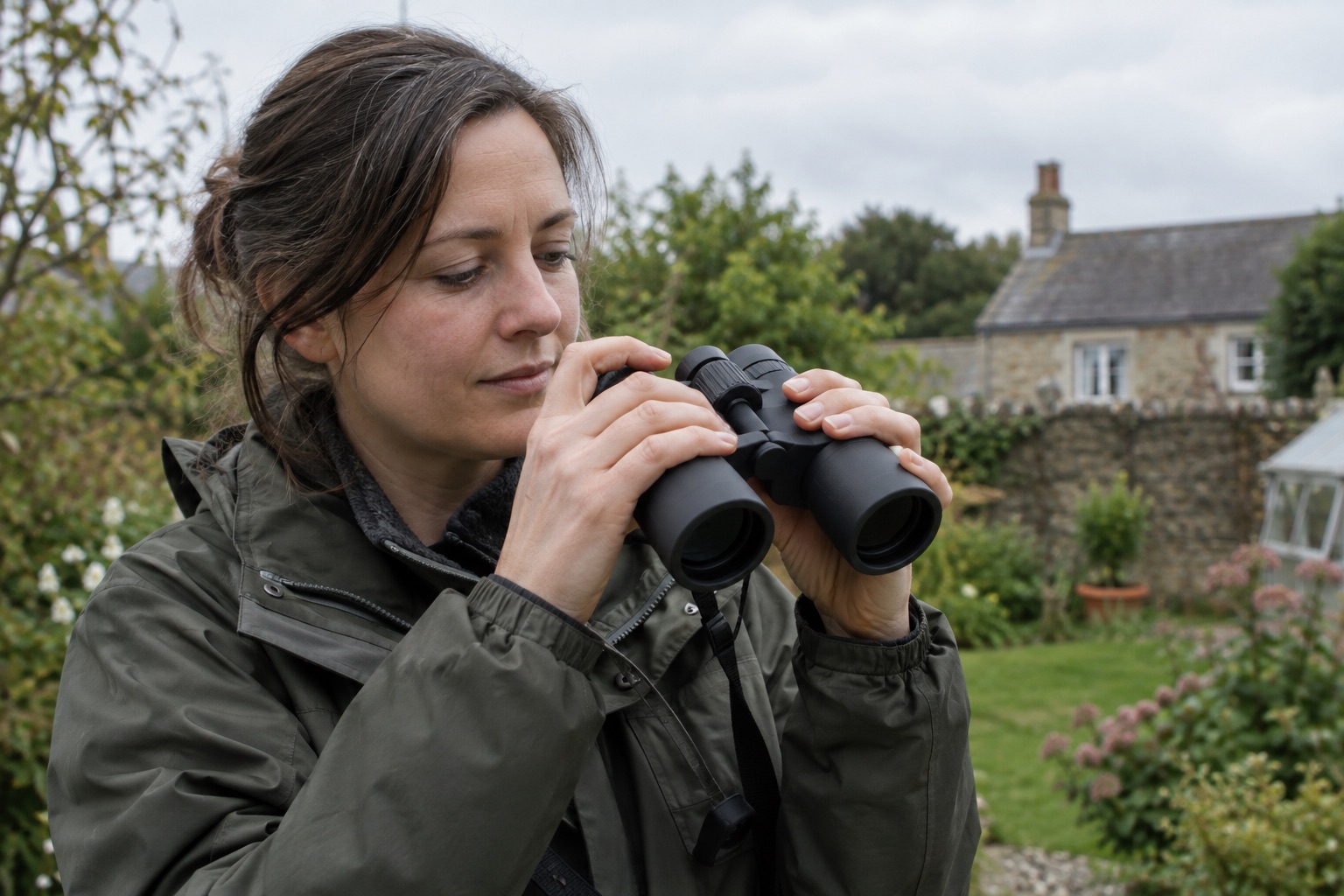
Move the hinge until the two views merge into one comfortable circle.
With glasses, begin with the eyecups down; without glasses, try them extended.
Check the view while looking naturally, not by pressing your face into the eyepieces.
A binocular view should settle into one comfortable circle. If it is ringed by black, shows crescent-shaped shadows, or briefly disappears when you shift your head, the eye is often not at the best position behind the eyepiece. This is sometimes called a blackout or kidney-bean effect. The first checks are physical fit, not a new binocular purchase.
Identify what you actually see
Look at a distant, stationary subject in ordinary daylight. A dark border around the field is normal; a large moving crescent inside the view is not. If two separate circular views refuse to merge, the barrels may be too far apart or too close together. If one subject appears twice despite a correctly merged field, follow our double-image guide instead.
Do not point the binocular towards the Sun to inspect the exit pupil or lens. A bright wall or overcast landscape is enough for the fit check. Keep your shoulders relaxed: pressing the eyecups hard against your face can make a briefly clear view look falsely stable.
Set the hinge, then the eyecups
First move the hinge slowly until the left and right circles overlap into a single field. This is your interpupillary distance, the separation between your eyes. If the hinge reaches its stop before the circles merge, that model may not fit your face. Do not force the barrels.
Next adjust the eyecups. If you do not wear glasses, extend them to place your eyes farther back and give a repeatable resting point. If you do wear glasses, lower the eyecups to bring your spectacle lenses nearer the eyepieces. Intermediate clicks may be the best setting. Some soft rubber cups fold rather than twist; follow the design of your pair.
Now raise the binocular naturally, locate a clear central image and move it a few millimetres in and out. A view that becomes complete at one distance but blackens when you press closer is an eye-position problem. A view that never shows the full edge with your glasses on may reflect insufficient usable eye relief for your frames and facial fit.
Why a specification does not settle the fit
Two people can see different amounts of field through the same model. Eyecup shape, brow and nose clearance, frame depth and lens position all change where the eye actually sits. Published eye relief is useful for narrowing a shortlist, but it cannot guarantee comfort. Our glasses-wearer buying guide explains a practical in-person test.
Occasional edge darkening while deliberately rolling your eyes is less significant than repeated blackouts during ordinary use. If a friend can obtain a stable full field and you cannot, adjust the fit again before suspecting a fault. If no one can see a proper field through one barrel, or an eyecup is damaged or stuck, ask the seller or manufacturer to inspect it. The focusing setup is worth completing once eye position is comfortable; focus will not cure a blackout.
Frequently asked questions
Dark-shape questions
Are black circles a sign my binoculars are broken?
Usually not. If the dark shapes move or disappear when you adjust eyecups, hinge width or eye distance, the issue is eye placement rather than optical damage.
Why do I see dark crescents when I move my eyes?
You may be moving outside the usable exit pupil. Hold the binocular steadily and adjust the eyecups so your eyes rest at a repeatable distance.
Do glasses make blackouts more likely?
They can. Frames keep your eyes farther from the eyepieces. Lower the eyecups and check whether the binocular's usable eye relief still allows the full field.
Is this the same as a double image?
No. Blackouts obscure part of one circular field; a double image shows two displaced versions of a subject. If each barrel is sharp separately but the combined view remains doubled, seek alignment advice.