
Buying guide · First-scope budget
Best spotting scopes under £300
Compare credible lower-cost spotting scopes for UK birdwatching, with the tripod, zoom and changing retailer price included in the decision.
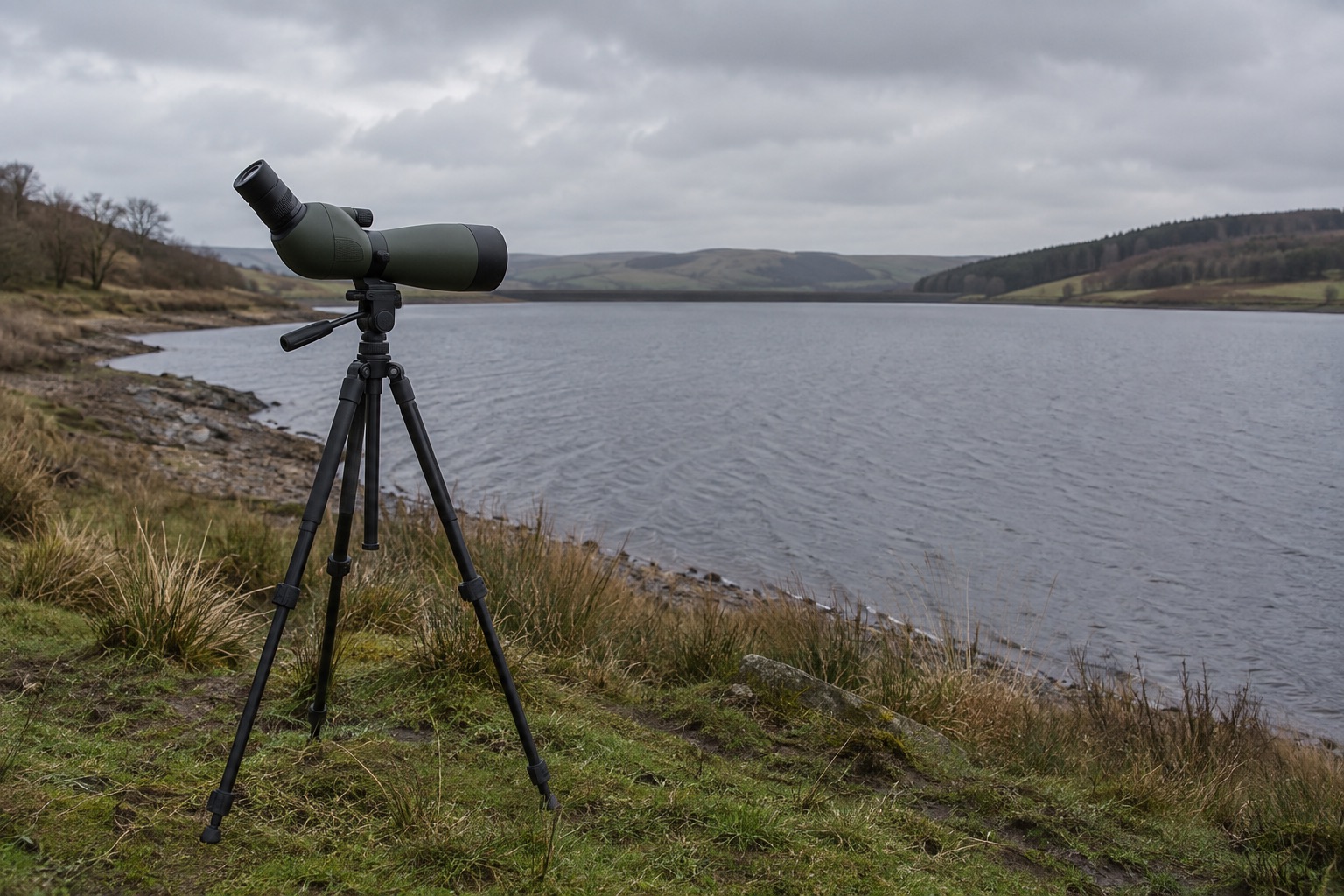
A £300 scope cap is not a £300 complete setup.
Choose by where you will carry and use it, not maximum zoom.
If today's exact Amazon listing exceeds the cap, remove it from the shortlist.
Quick picks
Choose by the detail that matters most
Links open the matching Amazon UK listing. Prices and sellers can change, so confirm the model name and ASIN before buying.
Swipe to compare all details →
| Model | Magnification | Objective | Body weight | Low-end field | Best setting |
|---|---|---|---|---|---|
| Celestron Ultima 65 | 18–55× | 65mm | 1,049g | 27m at 1km | Fixed hide |
| Hawke Nature-Trek Compact | 9–27× | 56mm | About 575g | About 79m at 1km | Long walk |
The detailed shortlist
Two distinct scope candidates
Compare the complete cost, including a stable tripod, and check the current model, included eyepiece and total at checkout.

Celestron Ultima 18–55×65 angled spotting scope
Best for: A first fixed-position scope
A conventional 65mm angled scope and a simpler starting point for fixed-position birdwatching.
What stands out
- 65mm objective for overcast-day viewing
- Waterproof nitrogen-filled construction
- Viewing case included
Keep in mind
- Narrower 27–11.6m published field than the TrailSeeker
- 55× does not guarantee useful detail in poor seeing
- 18–55×65
- 1,049g
- 27–11.6m / 1,000m
- 18mm eye relief

Hawke Nature-Trek Compact 9–27×56 spotting scope
Best for: Long walks and travel
A roughly 575g, short 56mm angled scope for daypacks and lower-zoom viewing from a compact support.
What stands out
- About 575g scope weight
- 9× low end helps locate birds
- 20mm published eye relief
Keep in mind
- Smaller 56mm objective limits higher-zoom dusk use
- A monopod or tripod remains useful at 27×
- 9–27×56
- About 575g
- 20mm eye relief
- Compact angled body
The price of the scope body is only part of the first-scope decision. A low-cost scope placed on a flimsy support can be harder to use than a good binocular. Set a complete kit budget: body, tripod or monopod, head if separate, and a safe carrying method. The two models below occupy different roles rather than competing on a single zoom number.
Celestron Ultima 18–55×65: stay-and-watch scope
The Ultima 65 is a conventional angled scope for hides and reservoir edges. Its 65mm objective and 18× starting power suit deliberate observation of distant birds. The published field at the low end is 27m at 1,000m, noticeably tighter than a binocular; first locate the bird with binoculars, then move to the scope. The 1,049g body is manageable for a destination trip but not trivial once tripod weight is added. The headline 55× should not drive the purchase: wind, dull light and heat haze can make a lower setting more useful.
Hawke Nature-Trek Compact 9–27×56: carry-first scope
The Hawke starts at 9×, providing a broader acquisition view, and weighs about 575g. That makes it more plausible on a longer walk. Its 56mm objective gives less high-zoom light headroom than a 65mm body, and the 27× ceiling is genuinely lower. For a walker who otherwise leaves a scope at home, this may be a better system. At 27× it still benefits from a steady support. Compare the compact scope guide for the carry trade.
The checkout test
These have appeared within a £300 UK body budget, but their current prices may differ. Verify the exact model, included eyepiece, seller and final price at Amazon. Check tripod compatibility and its cost separately. Celestron's UK catalogue has listed the Ultima 65 within the ceiling; that is context, not a promise about today's Amazon offer. If the complete setup exceeds your limit, avoid making up the difference with an unstable support. Read best tripods for spotting scopes and best beginner scopes before deciding.
Spend against the whole observing system
Write down the maximum you can spend on the body, a stable support and the small items needed to carry it. The page's £300 ceiling applies to the scope body, not a claim that a complete field kit costs that amount. Check whether the eyepiece in the exact listing is included and whether a protective case is part of the offer. If you already own a compatible tripod, check its head and plate before treating it as free support. A scope that wobbles during every focus adjustment will not deliver the benefit of its nominal magnification.
For a reservoir hide you can reach by car, the Ultima's larger body and higher zoom range can be reasonable. For a route with several miles on foot and only occasional stops, the Hawke's lower weight and 9× starting point may produce more actual use. Neither arrangement is ideal for fast birds directly overhead: a binocular finds subjects faster. Test the field at minimum power and the stability at your likely working power, not only the maximum printed on the barrel.
Do not turn the budget into a false guarantee
Offers move. If either exact model exceeds the cap at checkout, it is no longer an “under £300” option at that seller. Do not substitute a different body or bare eyepiece just because its title looks similar. The better choice can also be to wait rather than pay the body price and leave too little for a secure tripod. For glasses, check the stated eye relief at the zoom settings you will use and try the eyecup with your own frames where possible; the scope eye-relief guide explains why the number needs a fit test.
Frequently asked questions
Under-£300 scope questions
Are both scopes always under £300?
No. Retailer prices change. Treat them as candidates and check the exact Amazon variant and final total before paying.
Is a tripod included?
Do not assume it is. Check the listing contents and budget for a stable support that reaches a comfortable eyepiece height.
Does 55× beat 27×?
Only when light, air and tripod stability support that power. A larger but hazier or shakier image may reveal less detail.
Can I hand-hold a compact spotting scope?
The Hawke is light, but at higher zoom a monopod, tripod or solid rest still improves the view substantially.