
Fieldcraft · Wildlife welfare
Responsible birdwatching with binoculars
Use binoculars to enjoy UK birds without approaching nests, displacing feeding birds or ignoring reserve and access rules.
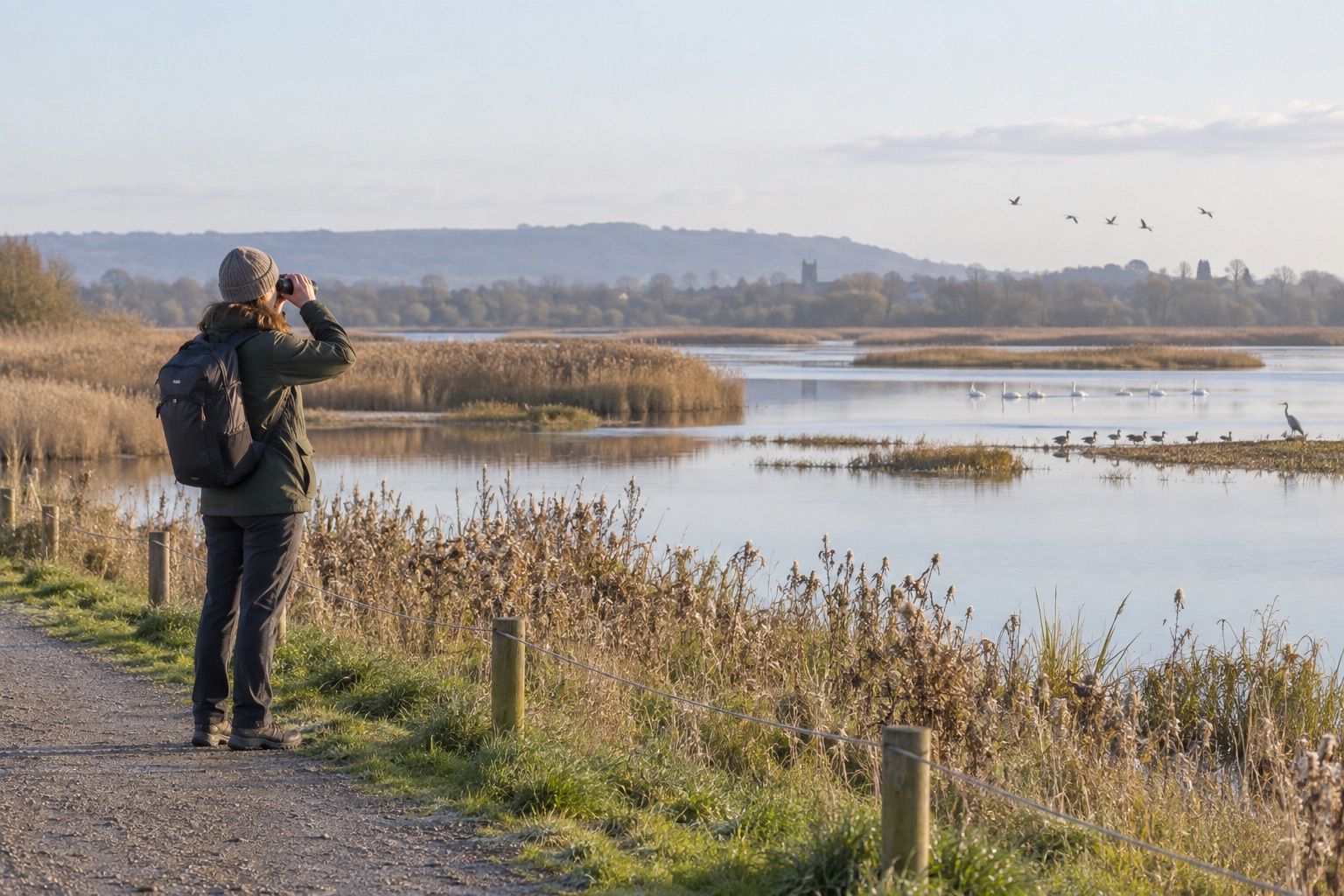
A clear view is not worth causing a bird to leave eggs or young.
Respect closed paths, sensitive habitats and other observers.
Use field width and steady handling to watch from a safe distance.
One of the best reasons to carry binoculars is that they let you remain farther away. A bird feeding, resting or caring for young should not need to react to your wish for a closer look. Good fieldcraft often gives a longer, more natural view than a hurried approach.
Choose a viewpoint before choosing magnification
Start on a path, in a hide or at an established viewpoint. Scan with a wide field rather than crossing vegetation to gain a few metres. At a wetland, keep back from roosting or feeding birds on the shore; repeated flights cost them time and energy. In woodland, a bird carrying food may lead you towards an active nest—watch the behaviour from where you are instead of following it into cover.
The RSPB's beginner birdwatching advice recommends quiet observation, using paths and following signs, especially around vulnerable ground-nesting birds. Keep dogs under control where access allows them. If a reserve has a seasonal closure, treat it as part of the viewing experience, not an obstacle to work around.
Read the bird's response
A bird looking alert, alarm-calling, changing direction repeatedly or leaving an area as you advance is reason to stop and retreat. You cannot measure a universal “safe distance” with binocular magnification alone: species, season, cover and prior disturbance all matter. Sharing a hide quietly and allowing birds to settle often provides a better view than moving closer.
Avoid repeated playback, bright lights, flushing birds for a photograph or crowding around a rarity. If you are guiding others, explain the boundary before the group moves. Watch people and private spaces with the same respect you expect for yourself; observation optics are not a reason to intrude.
Nests and the law
The RSPB overview of UK bird protection explains protection for wild birds and active nests, with extra protections for certain species. GOV.UK guidance for England describes offences involving active nests and Schedule 1 disturbance. Scotland, Wales and Northern Ireland have their own competent authorities and details, so check current local rules before any activity near a protected site. Ordinary birdwatching does not grant an exemption to disturb wildlife.
For long-distance identification, a spotting scope from a suitable established viewpoint can reveal detail without walking towards a bird. A wider binocular field of view helps you find a moving bird without chasing it. Neither instrument substitutes for patience, local access rules or sound judgement.
Frequently asked questions
Birdwatching conduct
How close can I get to a nesting bird?
There is no universally safe distance. Stay on permitted routes, do not approach an active nest for a clearer view and retreat if your presence changes the bird's behaviour.
Are all UK nesting birds protected?
Wild birds, eggs and active nests have legal protections, with additional disturbance protection for certain species. The rules and licensing details vary by nation and situation; consult current official guidance.
Can I use a recording to attract a bird closer?
Avoid playback or lures where they may interrupt feeding, breeding or territorial behaviour. Follow reserve rules and specialist guidance rather than using a recording simply to obtain a photograph.
Should I share a rare nest location online?
Do not publicise a sensitive active nest location. Follow the reserve or relevant records organisation's guidance on reporting without attracting disturbance.