
Fit · Eye spacing
Binocular interpupillary distance explained
Learn what binocular IPD means, how to adjust the hinge for one circular view and why minimum and maximum fit matter before buying.
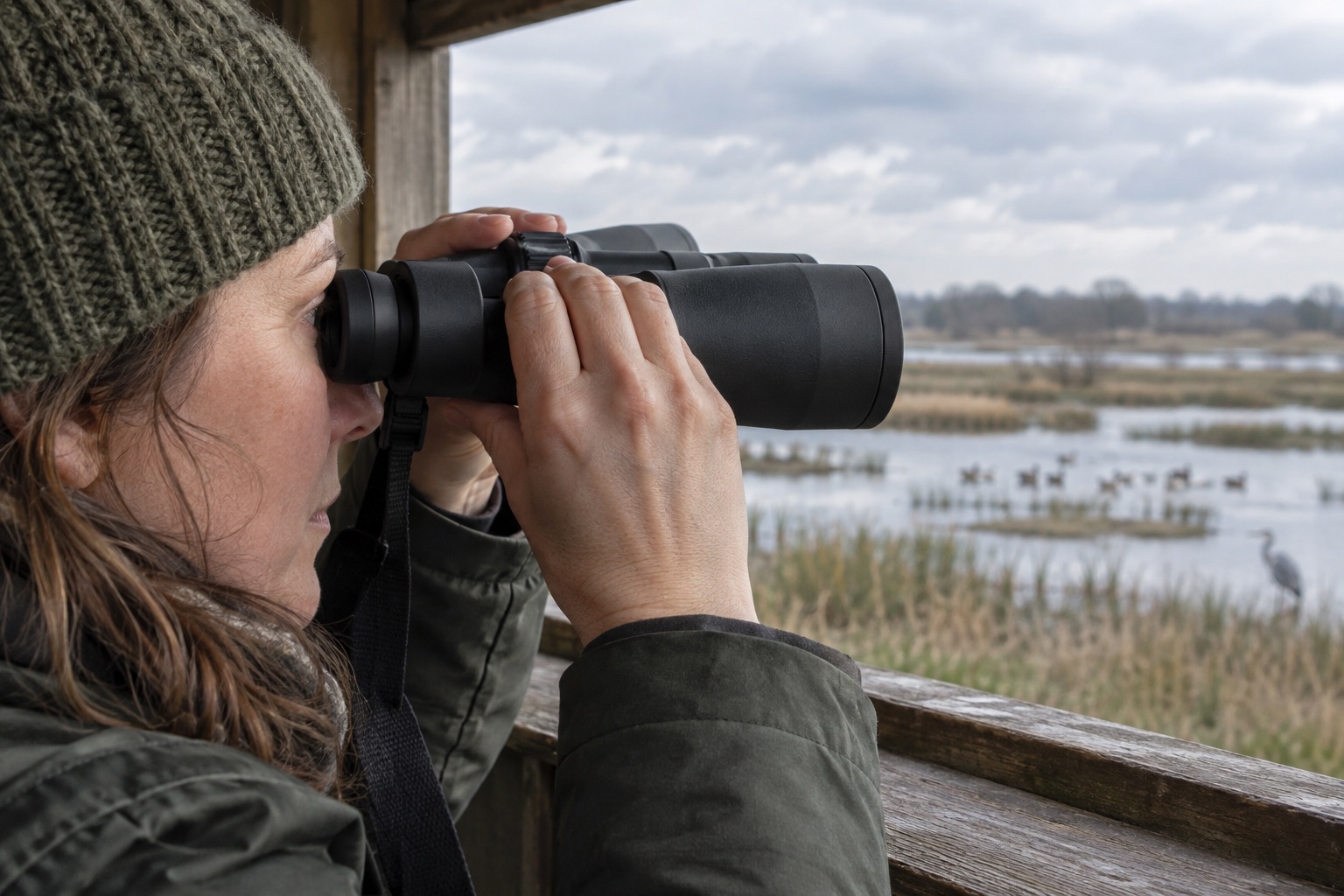
Set the eyecups correctly before judging the hinge fit.
Move the barrels together or apart until you see one complete circular field.
Black crescents can also come from eye relief; a persistent double image may indicate a fault.
Before comparing glass, coatings or magnification, make sure the two eyepieces can line up with your eyes. The binocular's central hinge moves the barrels closer together or farther apart. Its published interpupillary-distance range is the span it can accommodate. A pair that cannot close or open far enough may never give you a full, comfortable image.
Set the hinge in the right order
Choose a safe distant object such as a tree, sign or building—never the Sun. Set the eyecups for your glasses: generally down with glasses, out without, then refine as needed. Raise the binocular normally and move its barrels together or apart slowly. The two separate circular views should merge into one clean circle. If you see dark crescents at the sides, move the hinge a little and also check whether your eyes are too close to or far from the eyepieces. Nikon's use guidance describes this single-circle check; it is more practical than guessing a number from the hinge scale.
Do not press both barrels against your face to force an alignment. Adjust with your hands and let the eyecups position the eyes. Once set, the hinge usually needs little change for the same user, though sharing binoculars means resetting it every time.
Why the printed range matters
An optician's pupillary-distance figure can give you a starting point, but read the binocular's published eyepiece-spacing range as well. Frames, nose shape and eyecup diameter can change whether the pair feels usable even when the millimetre figures overlap. Children and adults with narrower eye spacing should pay particular attention to the minimum setting; a broad Porro-style body may remain too wide. At the other end, someone with wider eye spacing should check that both fields still appear fully open at the maximum hinge position.
A compact double-hinge design may fold very small for a bag yet have a different viewing IPD range. Folded storage width is not the specification you need. Before ordering online, find the exact model's IPD minimum and maximum in the maker's specification. If it is omitted, ask the seller or try the model in person rather than assuming “adult” or “child” branding proves fit.
Separate IPD from other causes of a bad view
IPD is not eye relief. Eye relief concerns how far each eye sits behind its eyepiece; IPD concerns how far apart the two eyepieces sit. Both can create black cut-offs when wrong. If you get one circular view but it is blurry, use the centre focus and then the dioptre setting to match each eye. If you still see two distinct displaced images after careful setup, the instrument may be out of alignment; our double-image guide explains when to stop troubleshooting.
A buying check that takes one minute
With the hinge at the right spacing, view a detailed stationary target for a full minute. Can you see the entire field with normal relaxed posture? Can you refocus without the barrels shifting? Try again wearing the glasses you use outdoors. If the answer is no at either hinge limit, choose a different model rather than accepting strain. Eye spacing is a fit requirement, not an optical luxury.
Frequently asked questions
Interpupillary-distance questions
What is binocular IPD?
It is the adjustable separation between the centres of the two eyepieces, intended to match the distance between your pupils.
How do I set it without a ruler?
Look at a distant non-solar target, move the hinge slowly and stop when the two fields merge into one comfortable circular view without dark cut-offs.
Why can my child not see through my binoculars?
The model's minimum eyepiece spacing may remain wider than the child's eyes. Check the published IPD range rather than forcing the hinge.
Is a double image always wrong IPD?
No. First check hinge, eyecups and focus. If two distinct images persist after correct setup, stop using the pair and ask the retailer or manufacturer about alignment.