
Carrying · Buying guide
Best binocular harnesses
Compare an open elastic binocular harness with a protective chest-pouch harness, including strap-lug and case-fit checks.
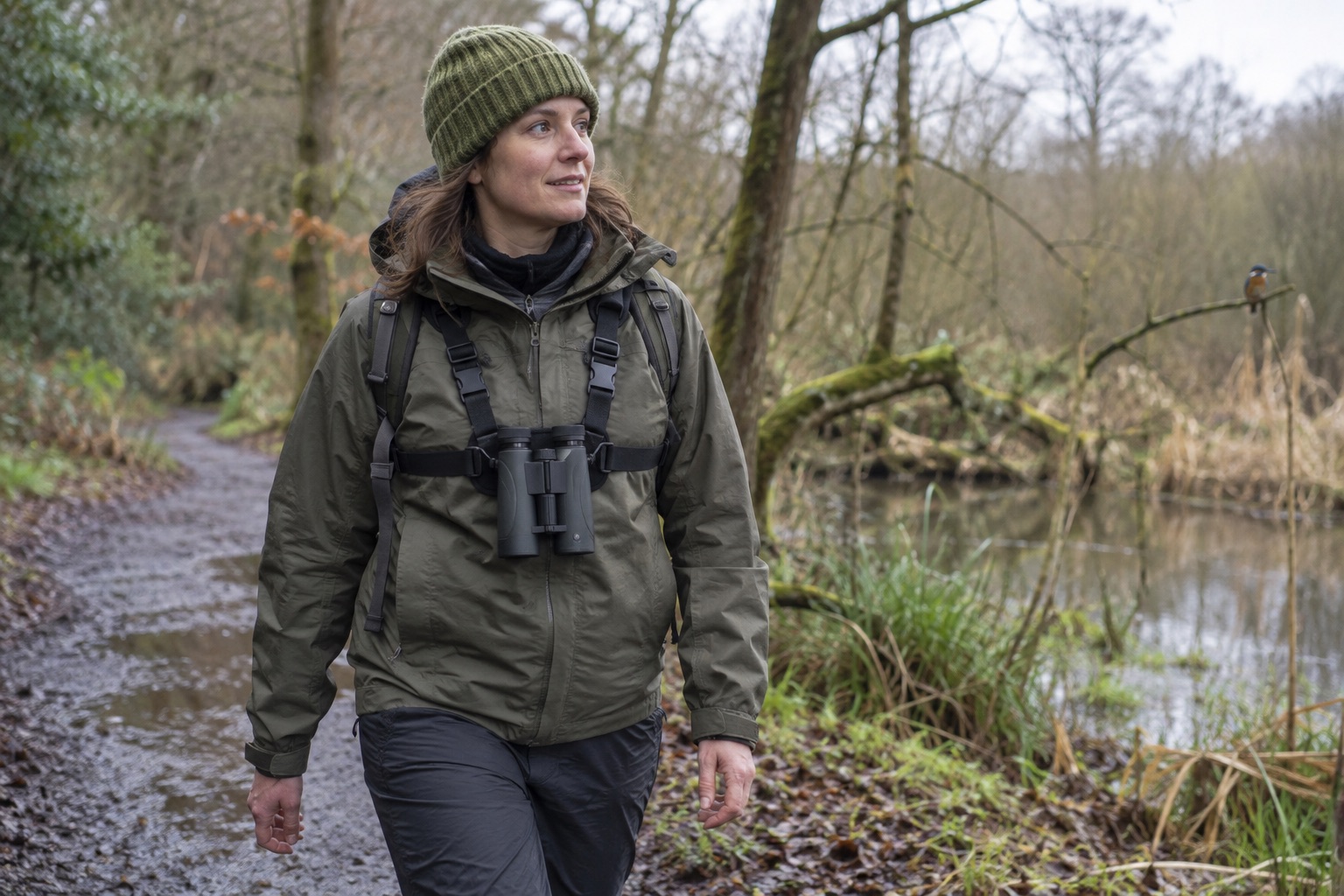
Inspect both binocular strap lugs and the supplied harness connectors.
Measure your binocular with caps and eyecups before ordering a pouch.
Set chest height so the binocular cannot swing into a gate or belt buckle.
Quick picks
Choose by the detail that matters most
Links open the matching Amazon UK listing. Prices and sellers can change, so confirm the model name and ASIN before buying.
Swipe to compare all details →
| Choice | Protection | Attachment check | Best for |
|---|---|---|---|
| OP/TECH Bino/Cam Elastic | No pouch | Uni-Loops to both lugs | Fast access |
| Vortex GlassPak P400 | Chest pouch | Tethers and binocular dimensions | Covered carry |
The detailed shortlist
Two harness formats
These exact models solve different carry problems. Check lug and pouch fit before ordering.

OP/TECH Bino/Cam Harness Elastic 5301422
Best for: Neck-load relief without a pouch
An elastic four-point carrying harness with Uni-Loop attachment points that shifts carrying load away from the neck.
What stands out
- Four-point support
- Stretch helps movement
- Quick-disconnect Uni-Loops
Keep in mind
- No protective pouch
- Check loop fit at both lugs
- Elastic variant 5301422
- Uni-Loop connectors
- Four-point carry

Vortex GlassPak binocular harness P400
Best for: Covered field carry
A chest pouch harness with attached tethers for protecting and carrying a compatible binocular.
What stands out
- Pouch and harness together
- Attached tethers
- Protects from routine bumps
Keep in mind
- Check binocular dimensions against pouch
- Bulkier than open straps
- P400
- Approx. 6.75 × 6.25 × 3.75in pouch
- 8oz published weight
A harness earns its place when a binocular pulls on your neck, swings while you walk or spends long periods ready for use. It should make the instrument easier to raise—not turn each sighting into a buckle puzzle. These two designs serve different field habits rather than competing on unmeasured comfort claims.
Open harness or pouch harness?
The OP/TECH Bino/Cam Harness Elastic supports the binocular at four points and uses Uni-Loop connections. With no pouch flap to open, it suits woodland walks where birds appear suddenly. It also leaves the binocular exposed to rain, grit and branches. The Vortex GlassPak P400 places the instrument in a chest pouch with tethers. Vortex publishes approximately 6.75 × 6.25 × 3.75 inches for the pouch. Measure your exact pair, including covers and extended eyecups, rather than assuming every 8×42 will fit.
Fit the complete carry system
Check each strap-lug opening and how its connector passes through. Thread both sides as the maker directs, then tug them over a padded surface before going out. The binocular should sit high enough not to strike your belt but low enough to raise naturally. If you carry a rucksack, practise getting it out while both packs are worn. Shoulder and sternum straps can compete for the same space.
The OP/TECH published comfort-load claim is not a personal comfort guarantee. Shoulder shape, clothing and binocular mass all matter. A pouch is useful only if its flap and tethers work for your hands. On short local trips, a padded strap may be simpler.
Wet-weather care
Keep the binocular tethered while removing it from the pouch, but do not expect a tether to arrest a hard fall. After rain, remove the binocular, open the pouch and dry both fully. In salty air, follow the binocular maker's care directions; a damp harness can hold salt against the housing. With an open harness, use the binocular's caps and a separate case when travelling.
A fit check before the first walk
Measure a pouch candidate with lens caps, eyecups and any permanently attached strap in their usual positions. The GlassPak's stated pouch envelope is not a promise that every 8×42 fits; an overfilled flap can press on the eyepieces and slow retrieval. With the OP/TECH open system, check that both Uni-Loops attach cleanly to the actual strap lugs and do not bind against a hinge. Put the assembly on over your usual coat, then raise and lower the binocular several times while a friend checks for twisting connectors.
Try a short route with steps and a rucksack rather than judging fit while standing still. The open harness should keep the instrument close without pulling the eyepieces upward into your chin. The pouch should open and close without two hands and should not obstruct a pack's sternum buckle. If either system makes you leave the binocular behind, a simpler padded strap may better match the actual use. A harness is a carry choice, not a substitute for correctly fitted eyecups or a stable hold.
Frequently asked questions
Binocular harness questions
Will a harness fit any binocular?
No. Confirm both strap-lug shapes, connector width and, for a pouch harness, the binocular's dimensions with caps and eyecups fitted.
Is a harness better than a neck strap?
It can spread weight across the shoulders and reduce bounce, but adds straps and may interfere with a rucksack. A light binocular may need only a padded strap.
Can I wear a rucksack over a harness?
Often, but shoulder straps can trap harness webbing or block access. Test the complete setup at home.
Do harnesses waterproof binoculars?
No. A covered pouch gives routine shielding, not a waterproof enclosure. Dry both items after wet outings.