
Mounting · Buying guide
Best binocular tripod adapters
Compare an L-adapter and a quick-mount kit; check front-hinge thread, barrel clearance and tripod interface.
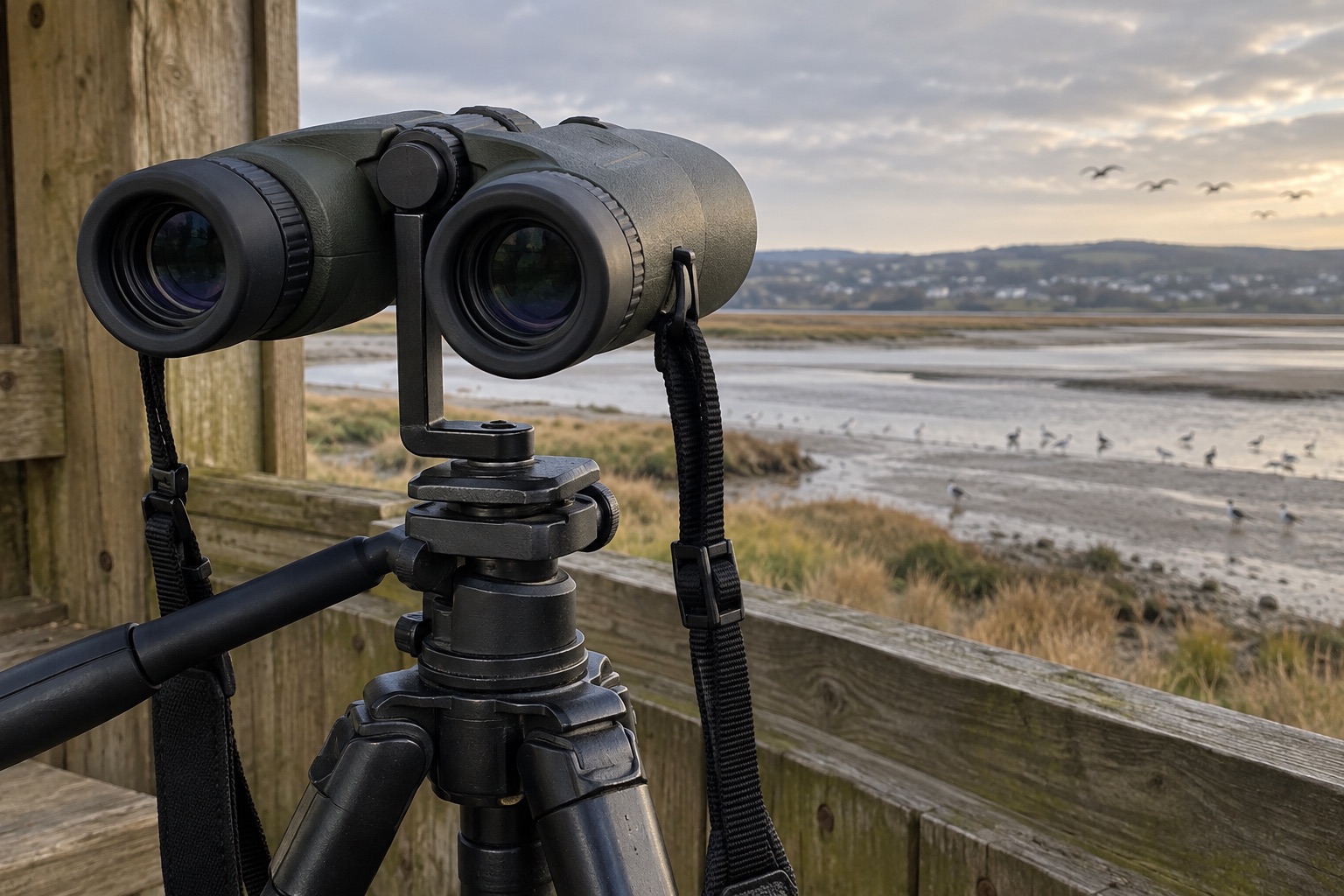
Verify a front-hinge tripod socket in the exact binocular manual.
Check bracket clearance at your own eye-spacing setting.
Match the adapter base to your tripod plate or head.
Quick picks
Choose by the detail that matters most
Links open the matching Amazon UK listing. Prices and sellers can change, so confirm the model name and ASIN before buying.
Swipe to compare all details →
| Adapter | Binocular requirement | Tripod-side check | Watch for |
|---|---|---|---|
| Celestron 93524 | Usable front-hinge thread | 1/4-20 plate | Barrel clearance |
| Vortex Pro complete | Tripod-adaptable body | Receiver and head | Stud-only variant |
The detailed shortlist
Two mounting approaches
Confirm both binocular-side and tripod-side fit before ordering.

Celestron binocular tripod adapter 93524
Best for: Threaded full-size binoculars
An L-shaped bracket that attaches to a suitable front-hinge threaded binocular and a 1/4-20 tripod plate.
What stands out
- Straightforward threaded bracket
- Works with common 1/4-20 plates
- Small to pack
Keep in mind
- Not for binoculars lacking threaded bridge
- Check barrel clearance at your eye spacing
- Front hinge mount
- 1/4-20 tripod interface
- L-shaped metal bracket
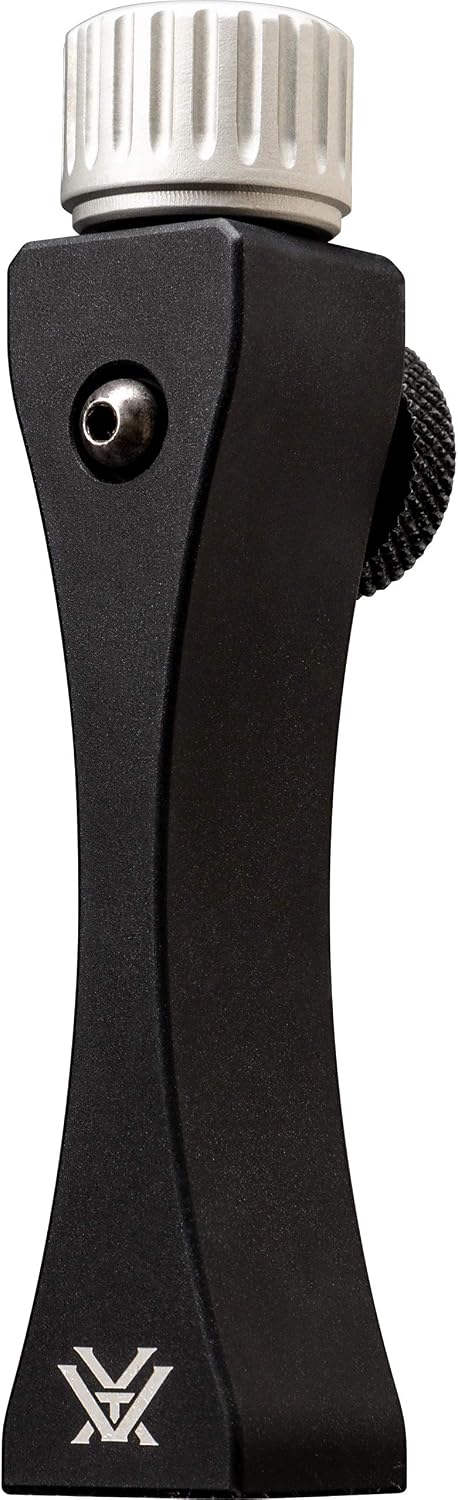
Vortex Pro Binocular Adapter complete kit
Best for: Repeated supported viewing
A two-part binocular mounting system with stud and receiver for supported binoculars.
What stands out
- Stud and receiver in complete kit
- Faster repeated mounting
- Compact at tripod head
Keep in mind
- Tripod and head separate
- Do not order stud-only listing by mistake
- TRA-BINDAP complete kit
- Stud plus receiver
- Tripod-adaptable binocular required
A tripod helps for prolonged 10× estuary scans and many 15×70 astronomy pairs, but the adapter has to bridge three interfaces: binocular, support and your eye spacing. Start in the binocular manual. A tripod socket is often behind a front-hinge cap; do not unscrew unrelated parts of a sealed body.
Check three separate points of fit
“Tripod adaptable” only settles the first question. A mount still has to clear the barrels at your hinge setting and connect securely to the tripod head. The Celestron 93524 is a conventional centre adapter; the Vortex Pro uses a matching stud and receiver. Those maker descriptions establish how each accessory works, not universal cross-brand compatibility.
- Binocular-side socket: identify the exact body and its front-hinge thread in the maker's instructions. Do not infer it from objective size. Nikon, for example, names MONARCH M5 and M7 among the models for its TRA-3 adapter; that is a model-specific compatibility statement, not permission to assume every Nikon or third-party adapter fits.
- Hinge clearance: set the barrels to your normal eye spacing before checking an L-arm's thickness and screw access. A matching thread can still leave the binocular unusable if the arm stops the barrels closing far enough.
- Tripod-side connection: check the adapter foot, plate and head as one assembly. The Vortex replacement stud is not the complete Pro kit, so a stud by itself cannot attach to a tripod without its matching receiver.
If the maker confirms only the socket, treat barrel clearance and plate fit as unresolved until the exact combination is checked. That is more useful than a brand-level “compatible” label that hides a mechanical mismatch.
Standard L-adapter
The Celestron 93524 attaches to a suitable threaded front hinge and offers a 1/4-20 connection at its foot for a compatible head or quick-release plate. Its vertical arm passes between the binocular barrels. Set your binocular hinge to your normal pupil spacing and check that the arm does not prevent the barrels reaching that position. The front socket also needs enough surrounding clearance to seat the screw properly.
Complete quick-mount kit
The Vortex Pro is a two-part system intended for repeat removal and attachment. The linked Amazon product is the complete kit, not the similarly named stud-only replacement. Confirm the exact binocular supports its stud and the receiver connects properly to your support. A quick release is not an advantage if the binocular-side fixing is insecure.
Test the whole rig
A large binocular puts leverage on a small central mount. Assemble it over a padded table, lock the plate and gently operate focus and tilt. If it twists, identify whether movement comes from the hinge, bracket, plate or head before tightening anything harder. Large astronomy models may require a maker-specific bar. The binocular tripod guide covers leg height and head choice.
A window mount commonly replaces tripod legs, not this binocular-to-head adapter. A phone clamp adds rear weight; test that complete arrangement rather than just a bare binocular.
Work backwards from the binocular
Before comparing adapter prices, remove the front-hinge cap only if the binocular manual identifies it as a tripod socket cover. Some compacts have no usable front thread; some large astronomy models use a built-in rail instead. Record the body model, the socket type and the space between barrels at your normal eye spacing. A narrow L-bracket that blocks the hinge is not compatible even if its screw fits. Do not force a screw that resists the first turn.
Then check what the tripod head actually accepts. A 1/4-20 thread on an adapter foot is not the same thing as a quick-release plate supplied with a particular head. If a plate is required, verify it can attach flat and lock without the adapter arm colliding with the head. The Vortex kit's receiver and stud form their own pairing; buying only a replacement stud will not make a complete mount. For occasional stationary viewing, a simple correctly fitting L-bracket may be the clearer purchase than a quick-release system.
Decide if support solves your problem
At 8× on a short walk, setup time may cost more sightings than a tripod saves. A binocular harness addresses carry fatigue, not hand shake. A 10×50 or larger astronomy pair used from one position is a stronger case for support. Check eye height while seated and standing, because a stable tripod that forces a hunched posture will be tiring. If you plan to attach a phone, assemble the full weight over a soft surface first and confirm the view does not creep after you let go.
Frequently asked questions
Binocular adapter questions
Do all binoculars have a tripod thread?
No. Many full-size models do, but many compacts and specialist designs do not. Check the exact manual before removing any cap.
Will a 1/4-inch adapter fit any tripod?
A common 1/4-20 interface still needs the correct plate or head clamp. Verify the complete connection.
What if the barrels hit the bracket?
Do not force the hinge. Check arm thickness against the binocular's eye-spacing range and choose another compatible mount if necessary.
Is the Vortex stud-only item complete?
No. The stud-only listing is a replacement component; the complete kit includes the receiver.