
Support · Buying guide
Best tripods for binoculars
Choose a complete tripod for 10× or large astronomy binoculars, with honest height, mounting and stability checks.
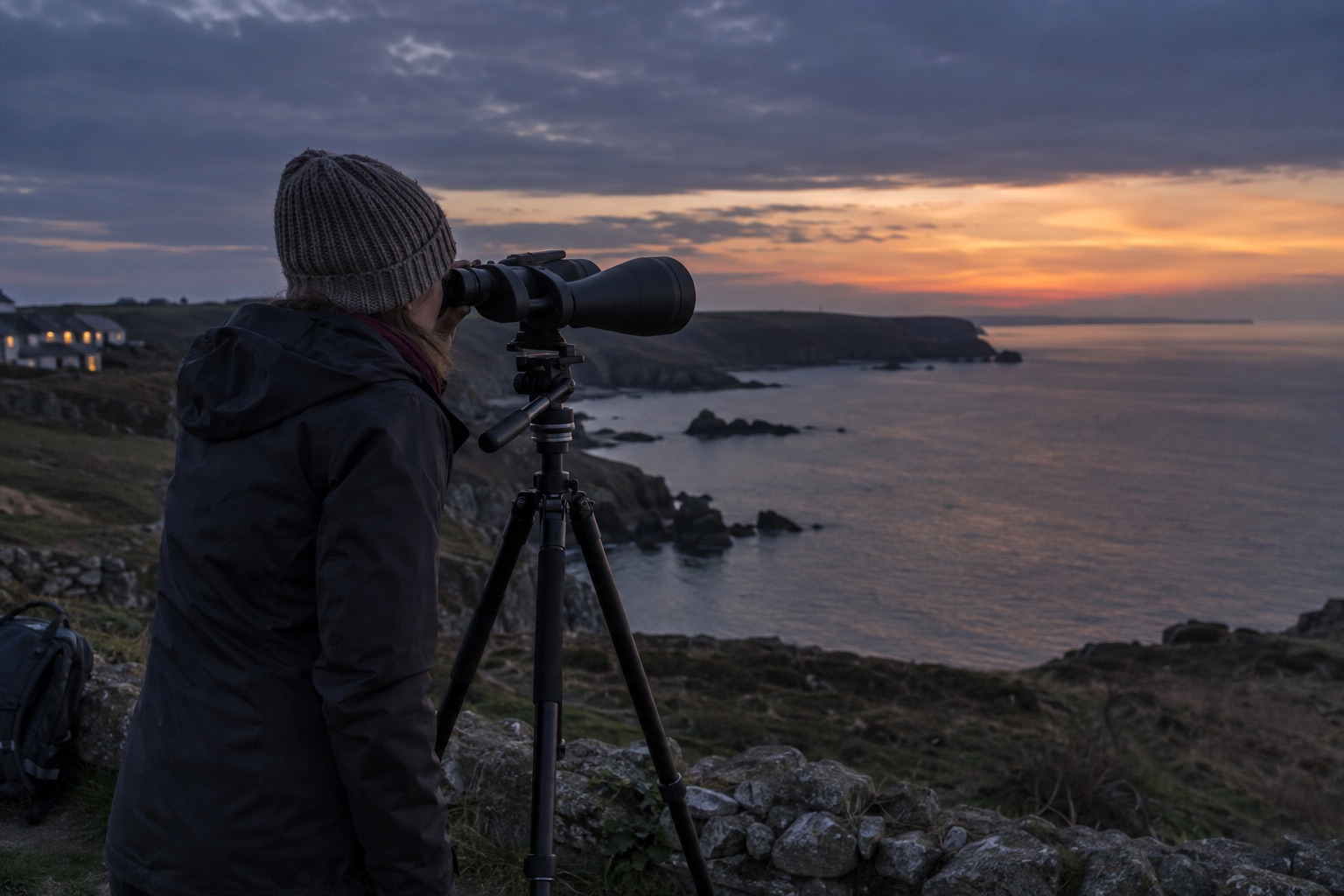
Allow for eyepiece height and standing or seated posture.
Check included head and plate, then the separate binocular adapter.
Evaluate wobble at the magnification you will actually use.
Quick picks
Choose by the detail that matters most
Links open the matching Amazon UK listing. Prices and sellers can change, so confirm the model name and ASIN before buying.
Swipe to compare all details →
| Kit | Weight | Maximum height | Stated load | Head |
|---|---|---|---|---|
| TrailSeeker 82050 | 1.79kg | 179cm | 4kg | Two-way fluid |
| Ultima 93612 | 2.12kg | 172cm | 4kg | Pan-tilt |
| Heavy-Duty 93607 | 3.54kg | 125cm | 5kg | Alt-az slow motion |
The detailed shortlist
Complete support kits
The tripods include heads; most binoculars still need a separate compatible adapter.
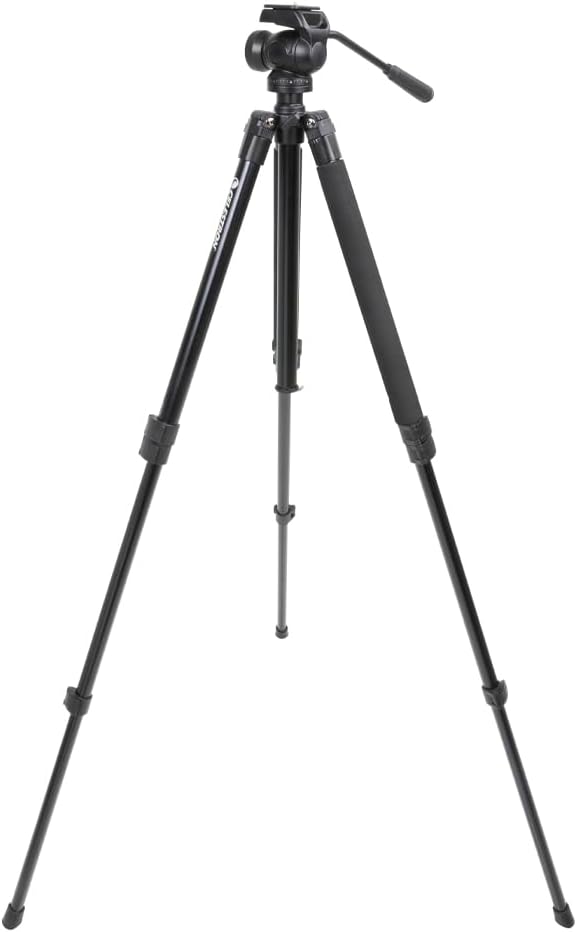
Celestron TrailSeeker 82050 tripod
Best for: Regular wetland scanning
A complete four-section tripod with a two-way fluid pan head, 1/4-inch quick-release plate and 147.5cm height without raising the centre column.
What stands out
- Two-way fluid pan head included
- 147.5cm height with column down
- 1.79kg published tripod weight
Keep in mind
- Still a second bulky item to carry
- Check the plate and scope foot before ordering
- 1.79kg
- 179cm maximum height
- 147.5cm column-down height
- 4kg stated load

Celestron Ultima 93612 pan-tilt tripod
Best for: First full-height scope tripod
A complete aluminium field tripod with pan-and-tilt head, 1/4-inch quick-release plate and full standing height.
What stands out
- Head and plate are included
- 172cm stated maximum height
- Four-kilogram stated load rating
Keep in mind
- 2.12kg is a notable carry weight
- Extended centre column reduces stability in wind
- 2.12kg
- 172cm maximum height
- 4kg stated load
- Three leg sections

Celestron Heavy-Duty Alt-Azimuth Tripod 93607
Best for: Larger astronomy binoculars
A heavy complete alt-az support with slow-motion controls for a stationary, large binocular setup.
What stands out
- Slow-motion controls
- 5kg stated load
- Complete head-and-leg support
Keep in mind
- 3.54kg to transport
- Check viewing height and separate binocular adapter
- Model 93607
- 3.54kg tripod
- 5kg stated load
- 125cm stated maximum height
Tripod shopping for binoculars differs from camera shopping. You look through two straight eyepieces, sometimes high into the sky. The support needs useful height, space behind the binocular and a head that moves predictably. A numerical load rating does not prove the view will settle quickly at 15×.
Walking, hide or fixed sky-viewing spot?
For daytime shore and hide use, Celestron TrailSeeker 82050 is the lighter of these complete kits at 1.79kg. Its fluid pan head helps follow a moving subject. The 147.5cm height with the centre column down is often more useful than its 179cm maximum: raising a column adds shake. Ultima 93612 is a 2.12kg complete pan-tilt kit reaching a stated 172cm maximum. Both state a 4kg load; check how the view behaves when refocusing rather than relying on that figure alone.
The Heavy-Duty Alt-Azimuth 93607 weighs 3.54kg, has slow-motion controls, a stated 5kg load and around 125cm maximum height. It better suits a fixed or seated large-binocular setup than a walking route. “Heavy duty” does not imply comfortable standing sky viewing: straight-through eyepieces may become awkwardly low when the binocular points up.
The missing connection
These are tripod-and-head products, not universal binocular clamps. A typical front-hinge body needs a tripod adapter before it sits on a plate. A large astronomy binocular may need a dedicated bar. Inspect plate and adapter together and keep the binocular centred over the support. Never balance it loosely while attaching a phone.
Check real stability
Extend thicker leg sections first and keep the centre column down when practical. Look at a stationary distant feature, touch focus once and see how quickly the view settles. Try again with any phone adapter. Wind and soft hide floors may dominate the result. For the optical choices themselves, see binoculars for stargazing and 10×50 binoculars.
Height is a viewing-position question
For a straight-through binocular aimed near the horizon, the eyepieces sit behind and below the objective end. Work out the height of your eyes when you are actually watching, not just your standing height. A tripod that reaches the manufacturer's maximum only with a long centre column extended may be less steady than a shorter setup used with a stool. Looking high into the sky changes the geometry again: a normal camera tripod may put the eyepieces uncomfortably low even when the head itself tilts far enough. Consider a seated position before paying for more stated height.
The TrailSeeker is the more portable complete kit here, but 1.79kg plus a binocular and adapter is still a deliberate carry. The Ultima's additional weight and pan-tilt controls may suit a fixed hide. The heavy alt-azimuth option belongs to an observing spot where slow-motion adjustment matters more than packability. Do not compare their load figures alone; the disturbance from turning focus and the length of the binocular can expose movement below a rated payload.
Pack the missing pieces
Before a trip, assemble the binocular, compatible bracket, plate and head once at home. Verify the plate latch closes fully, the bracket clears both barrels at your eye spacing and the binocular does not slowly tilt when you release it. Take the correct plate with the tripod—without it, a complete legs-and-head kit may still be unusable. If you observe on a public path, place legs where they cannot trip someone and do not leave a mounted binocular unattended.
Frequently asked questions
Binocular tripod questions
Do binoculars attach directly to these tripods?
Usually not. A front-hinge binocular commonly needs a separate compatible adapter between the body and tripod plate.
Is a 4kg rating enough for 15×70 binoculars?
It may cover weight, but steadiness also depends on head stiffness, balance, leg extension and wind. Test the complete rig.
Should I use a ball head?
A controlled two-way or pan-tilt head is often easier for scanning. An unlocked ball head can let heavy optics flop.
Why does astronomy viewing need extra height?
Aiming straight-through binoculars high can put the eyepieces awkwardly low. Consider a taller mount or seated setup.