
Family guide · First optics
Best binoculars for children
Choose a child's first binocular by eye spacing, weight, simple focusing and safe supervised use—not a high magnification claim.
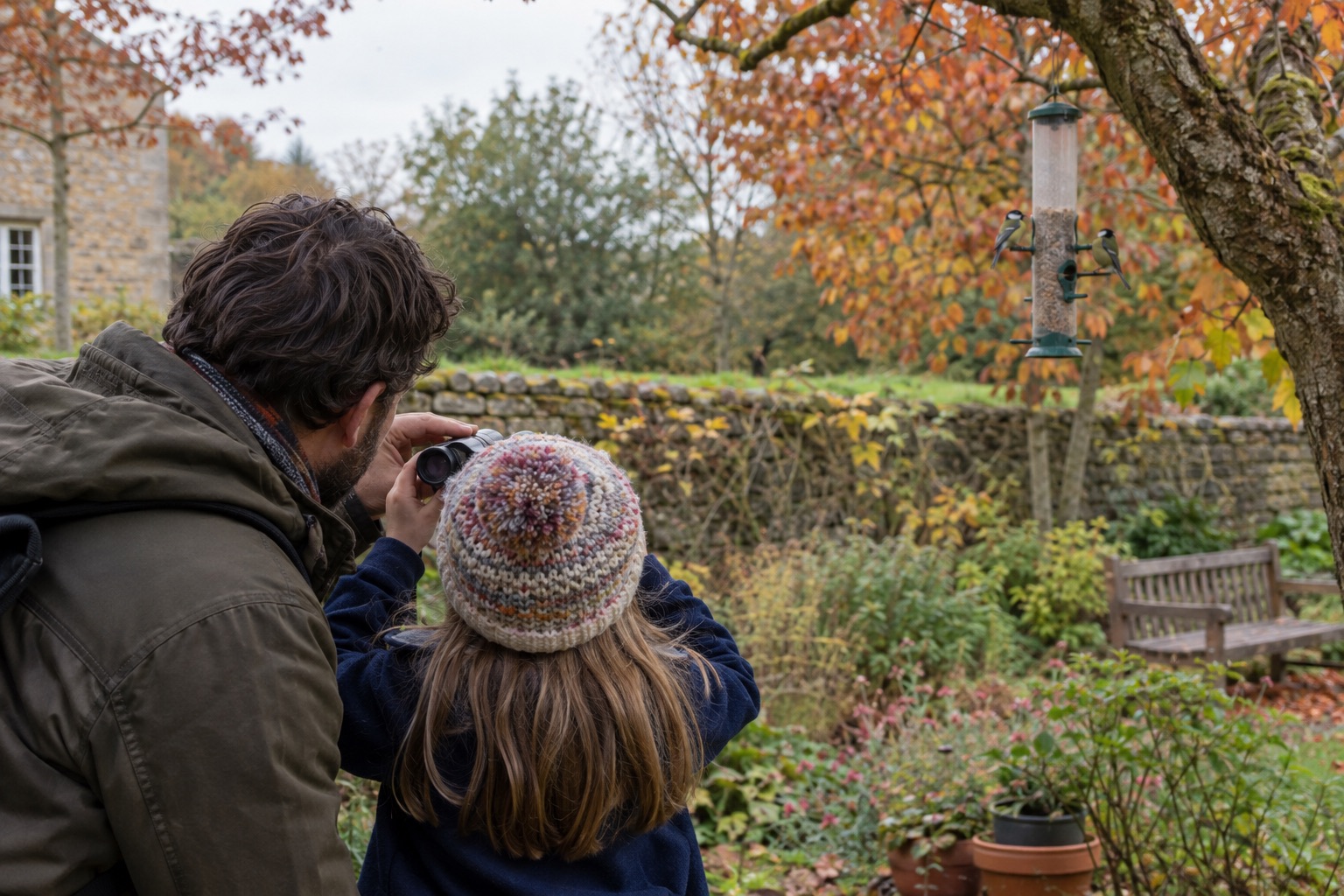
Reject any pair that still shows two circles at its narrowest hinge setting.
Try 4× to 6× first for younger children; 8× is a later fit-and-steadiness choice.
Never allow binoculars to point at or near the Sun.
Quick picks
Choose by the detail that matters most
Links open the matching Amazon UK listing. Prices and sellers can change, so confirm the model name and ASIN before buying.
The detailed shortlist
An older-child option only after a fit check
This adult compact is shown as a conditional step-up, not a universal children's recommendation. Try a lower-power child-sized pair in person for a younger user.

Nikon SPORTSTAR EX II 8x25
Best for: Travel and all-day carry
A genuinely pocketable 310g binocular with a wide 8.3-degree field and a waterproof, nitrogen-filled body.
What stands out
- Only 310g
- Wide 8.3-degree field
- Waterproof and nitrogen-filled
Keep in mind
- 25mm objectives are less forgiving at dusk
- Compact controls can be fiddlier with gloves
- 8×25
- 310g
- 8.3° field
- Waterproof
Giving a child the strongest binocular you own can make their first bird look worse, not better. Adult barrels may not close far enough for smaller eye spacing; a heavy 10× pair exaggerates every hand movement. A child's first success is often one clear view of a familiar garden bird, not maximum reach.
First check: one circle from two barrels
Binocular hinge spacing is called interpupillary distance, or IPD. Have the child look at a shaded, distant object while you gently move the barrels together. They should see one complete circle without pressing the eyepieces into their face. A child who reports two circles, black edges or strain needs a different fit. A maker's unreported IPD range is not evidence that its model will fit every child.
Younger children: simple, low-power viewing
For a small first user, choose a light 4× or 6× pair that fits the eyes and small hands, with a focus wheel that actually moves smoothly. Celestron's Kids 4×30 illustrates the low-power approach, but its published specification does not give a minimum IPD; try it before purchase if possible. It has just 5mm stated eye relief, so it is not a sensible glasses recommendation. The included neck strap also calls for adult supervision around young children; remove or manage it according to age and setting.
Older children: compact adult optics, conditionally
An older child whose IPD fits may benefit from the waterproof Nikon SPORTSTAR EX II 8×25. Its 310g weight and wide 8.3° field make it easier to carry and find subjects than many narrow high-power compacts. The 8× view is still harder to hold steady than 4× or 6×, and 10mm eye relief is not glasses-friendly. The Amazon card is for this exact adult model, not a claim that it fits a given child.
Teach a repeatable viewing routine
Spot the bird with unaided eyes first, keep looking at it, then lift the binoculars. Focus on a distant stationary subject before trying a moving one. Use a garden feeder or a reserve hide where there is no need to chase wildlife. The responsible birdwatching guide covers distance and disturbance. Keep the solar rule absolute: ordinary binoculars must never be aimed at or near the Sun, even briefly.
A shop fitting that takes five minutes
Ask the child to hold the binocular rather than setting it up entirely for them. Can they reach the focus wheel without shifting their grip? With both eyes open, can they fold the hinge to one view, then put it down and find that setting again? Try a stationary sign, then a bird-shaped object at another distance. A clear central image is not enough if the child loses the full circle each time they lift the pair. If they wear glasses, check the view with the glasses on; the 10mm stated relief of the adult Nikon is a warning to test, not a promise of usable field.
On a safe indoor table, compare the feel of a low-power child-sized pair with the 8×25 adult compact. The child's preferred grip and ability to follow a subject matter more than which model looks impressive on paper. Do not assume a stated age range replaces an IPD measurement. If neither pair fits, wait or seek an adjustable model that does; an uncomfortable binocular is unlikely to inspire repeat use.
What to take into the garden
Start with a short session and a known feeder position, not a long walk with a heavy instrument. Have an adult manage any neck strap around young children and teach the child to stop walking before looking through the lenses. Keep the view away from the Sun and bright sky near it. A small field notebook can turn a brief observation—colour, size and behaviour—into a useful memory without demanding more magnification. If the child grows into longer sessions, revisit fit and consider the wider choices in beginner binoculars.
Frequently asked questions
Children's binocular questions
What magnification should a child start with?
A steady low-power pair around 4× to 6× is easier for a young beginner. Eight-times may suit an older child who can hold it steady and whose eyes fit the hinge.
Can a child use my adult 8×42?
Only if the hinge closes enough to give one circle and the body is comfortable to hold. Many adult pairs are too wide or heavy for small children.
Are toy binoculars enough for birdwatching?
They can introduce the habit of looking, but check that focus and alignment work. A fuzzy or double view is frustrating even at low power.
What safety rule matters most?
Never look at or near the Sun through binoculars, and supervise children so this rule is followed every time.