
Spectator sport · Practical guide
Best binoculars for watching sport
Choose binoculars for cricket, football, rugby, racing and other spectator sport with five options compared for seating distance, field, weight and light.
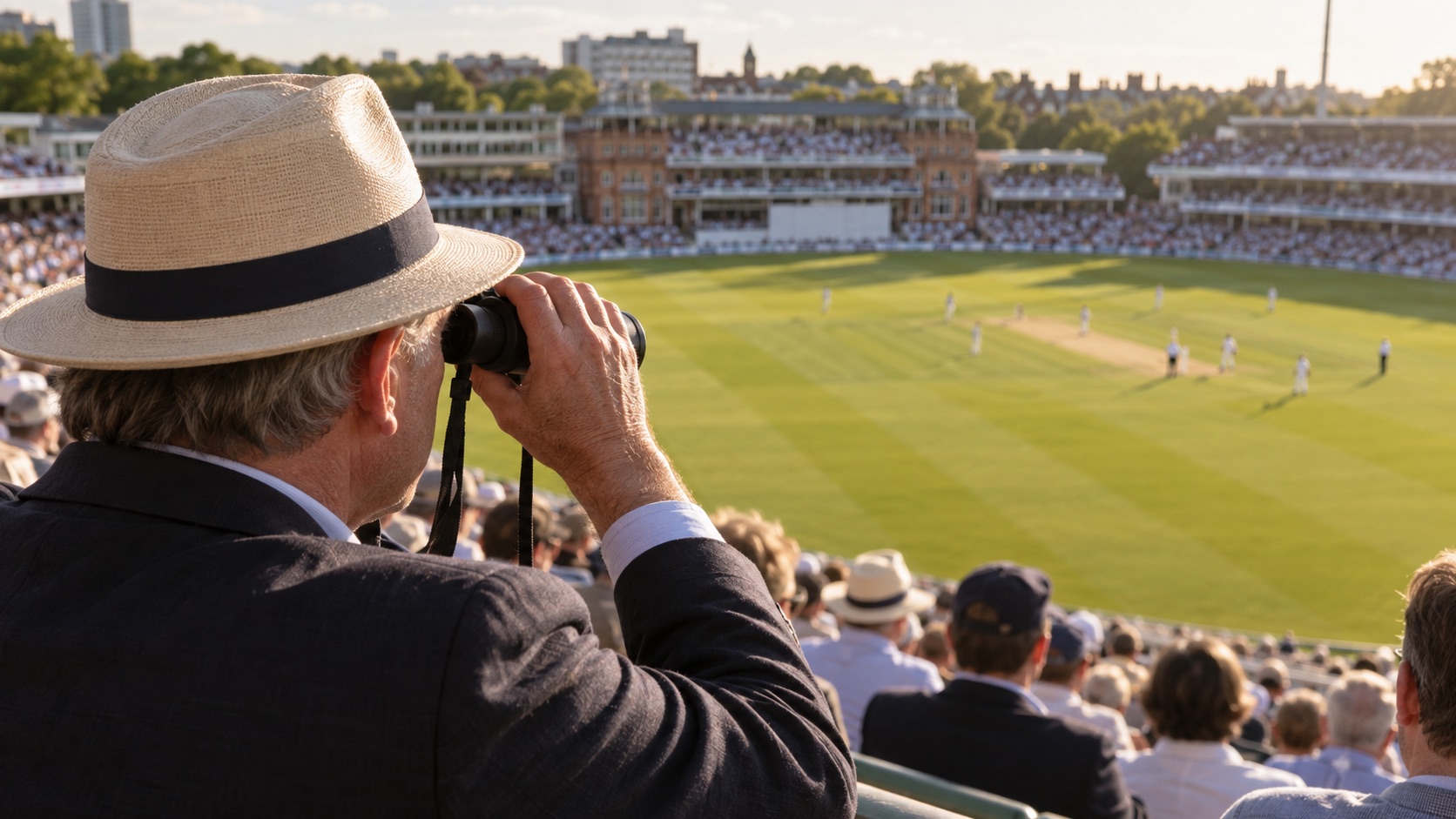
Follow moving play with a wide field; use binoculars for moments, not every second.
Check the venue's current bag and binocular rules before travelling.
A stabilised compact is a daylight distance tool, not an evening brightness solution.
Quick picks
Choose by the detail that matters most
Links open the matching Amazon UK listing. Prices and sellers can change, so confirm the model name and ASIN before buying.
Swipe to compare all details →
| Model | Format | Carry | View advantage | Best situation | Main limit |
|---|---|---|---|---|---|
| Sportstar EX II | 8×25 | Pocket-friendly | Compact | Bright daytime event | Small exit pupil |
| PROSTAFF P7 | 8×30 | Mid-size | Wide 152m field | General seated sport | Less dusk margin than 8×42 |
| Diamondback HD | 8×32 | Mid-size | Wide published field | Moving play | 16mm eye relief |
| PROSTAFF P7 | 8×42 | Full-size | 5.25mm exit pupil | Evening fixture | More bag space |
| Canon 10×20 IS | 10×20 | Compact | Stabilised 10× detail | Distant daylight seat | 2mm exit pupil |
The detailed shortlist
Five ways to watch sport more comfortably
The exact Amazon UK product links and images appear below. Confirm the variant and ASIN, especially for Canon stabilised models.

Nikon SPORTSTAR EX II 8x25
Best for: Travel and all-day carry
A genuinely pocketable 310g binocular with a wide 8.3-degree field and a waterproof, nitrogen-filled body.
What stands out
- Only 310g
- Wide 8.3-degree field
- Waterproof and nitrogen-filled
Keep in mind
- 25mm objectives are less forgiving at dusk
- Compact controls can be fiddlier with gloves
- 8×25
- 310g
- 8.3° field
- Waterproof

Nikon PROSTAFF P7 8x30
Best for: Walking and fast-moving wildlife
A compact 485g 8×30 with an unusually broad 152m field, a locking dioptre and a waterproof, fog-free body.
What stands out
- 152m field of view at 1,000m
- 485g compact body
- Waterproof with a locking dioptre
Keep in mind
- 15.4mm eye relief may be marginal with some glasses
- 30mm objectives are less forgiving than 42mm at dusk
- 8×30
- 485g
- 152m / 1,000m
- 2.5m close focus

Vortex Diamondback HD 8x32
Best for: Walks, travel and close viewing
A compact weather-sealed 8×32 that combines a 451g carry weight with a very wide 142m field and 1.5m close focus.
What stands out
- Approximately 451g
- Approximately 142m field of view at 1,000m
- Waterproof, fogproof and 1.5m close focus
Keep in mind
- 16mm eye relief may be marginal with some glasses
- Smaller 32mm objectives give up some low-light ease to 42mm models
- 8×32
- 451g
- 142m / 1,000m
- 16mm eye relief

Nikon PROSTAFF P7 8x42
Best for: Wide viewing with glasses
A 590g all-round 8x42 with a wide 126m field, long stated eye relief and a locking dioptre ring that helps preserve a personal focus setting.
What stands out
- 126m field of view at 1,000m
- 20.2mm stated eye relief
- 590g waterproof body with locking dioptre
Keep in mind
- 3m close focus is useful rather than class-leading
- No ED glass in the published specification
- 8×42
- 590g
- 126m / 1,000m
- 20.2mm eye relief

Canon 10x20 IS
Best for: Daytime sport and travel
A 430g battery-powered stabilised 10×20 that prioritises compact, steady daytime viewing.
What stands out
- 430g compact body
- Button-activated optical stabilisation
- Up to 12 hours stated battery life
Keep in mind
- 2mm exit pupil is unforgiving in dim light
- Requires a CR123A battery
- 10×20
- 430g
- 2mm exit pupil
- CR123A battery
Watching sport is a quick-look task. You lift binoculars to see a distant player, a bowler's run-up, a horse on the far side of a course or action near the opposite touchline, then return to the whole scene. A narrow, heavy binocular can make that rhythm less enjoyable. A wide, easy-to-raise 8× is the best starting point for most spectators.
Nikon Sportstar EX II 8×25: bright-day portability
The Sportstar EX II 8×25 is the pair most likely to come along when a stadium bag is small. Its folding body is easier to carry than a full-size binocular. That matters when the binocular is one item among tickets, jacket and food.
Its 3.1mm exit pupil is the main trade-off. In bright sunshine it is serviceable; under a roof or at a late-evening event it gives less forgiving eye placement and light margin. Choose it for occasional daylight use, not as an all-conditions optic. Our compact binocular guide explains the format in more detail.
Nikon PROSTAFF P7 8×30: the balanced stadium choice
The P7 8×30 publishes a notably wide 152m field at 1,000m. That helps with sweeping play and reacquiring a subject after lowering the binocular. Its mid-size body is less intrusive than a 42mm model while being easier to align than a pocket 8×25.
It is a strong choice for cricket, field sports and motorsport where the interesting action moves across a broad area. The 3.75mm exit pupil is not a twilight specialist. For predominantly evening use, bring the P7 8×42 instead.
Vortex Diamondback HD 8×32: wide view and durable carry
The Diamondback HD 8×32 weighs roughly 451g and includes a carry case and strap. Its broad field and 1.5m close focus also make it useful on the walk to and from a countryside venue. If you want chest-harness carry for an all-day event, check and budget for a separate compatible one.
At 16mm stated eye relief, glasses wearers should test the full field. If you only watch from a fixed seat and use binoculars briefly, the included strap or case may be simpler than adding a harness.
Nikon PROSTAFF P7 8×42: overcast and evening fixtures
The P7 8×42 offers a 5.25mm exit pupil, 20.2mm eye relief and a 590g body. It is the most forgiving pick here when conditions are grey, when a stand roof blocks light or when a match runs into evening. The longer eye relief also makes it a strong shortlist candidate for glasses wearers.
It takes more bag space and may be more conspicuous in a crowded stand. If the event is brightly lit and ease of carry dominates, the 8×30 can be the better experience despite the smaller objective.
Canon 10×20 IS: distant seats in good light
Canon's 10×20 IS uses push-button optical image stabilisation. At 430g it provides a steadier 10× view than a typical unsupported compact, potentially useful when you are far from the action. The result is still a 10×20 with a 2mm exit pupil. The stabiliser does not add light, and 10× makes locating fast-moving subjects harder than 8×.
It requires a CR123A battery. Choose it for a bright-day, distance-led situation and carry a spare; for dusk or evening, the 8×42's larger exit pupil is the more practical priority. The image-stabilised binocular guide compares the broader Canon range.
Match the binocular to the sport
Cricket and horse racing can involve long distances and slower moments of observation. A wide 8×30 or 8×32 works well for general following, while supported 10× can help with distant static detail. Football and rugby shift rapidly: field width and quick focus are often more useful than extra power. Indoor events and covered stands make objective size and comfortable eyecups more important.
Take a seat-based test if possible: aim at a distant moving subject, lower the binocular, then find it again. If you keep losing the subject, choose a wider field or lower magnification. Compare field of view explained and eye relief explained before buying. Always check the event's current equipment rules on its official site.
Frequently asked questions
Sport-binocular questions
What magnification is best for watching football or rugby?
Usually 8×. It gives enough scale for distant moments while retaining a steadier, wider view for moving play. A distant upper-tier seat may benefit from 10× if you can hold it steady.
Can I take binoculars into a stadium?
Many venues permit them, but policies can change by event and organiser. Check the current official venue rules, including case and bag limits, before travelling.
Are compact binoculars good for evening sport?
Under strong floodlights they can work, but a 25mm objective offers less margin in darker stands and around unlit areas. An 8×32 or 8×42 is more forgiving.
Is image stabilisation useful at sport?
It can help from distant seats when fine detail is difficult to hold steady. It does not widen the field or brighten a small 20mm objective, and the battery needs checking.