
Phone photography · Buying guide
Best phone adapters for binoculars
Compare NexGO and NexYZ for binocular photography, including eyepiece diameter, phone width and camera-lens alignment.
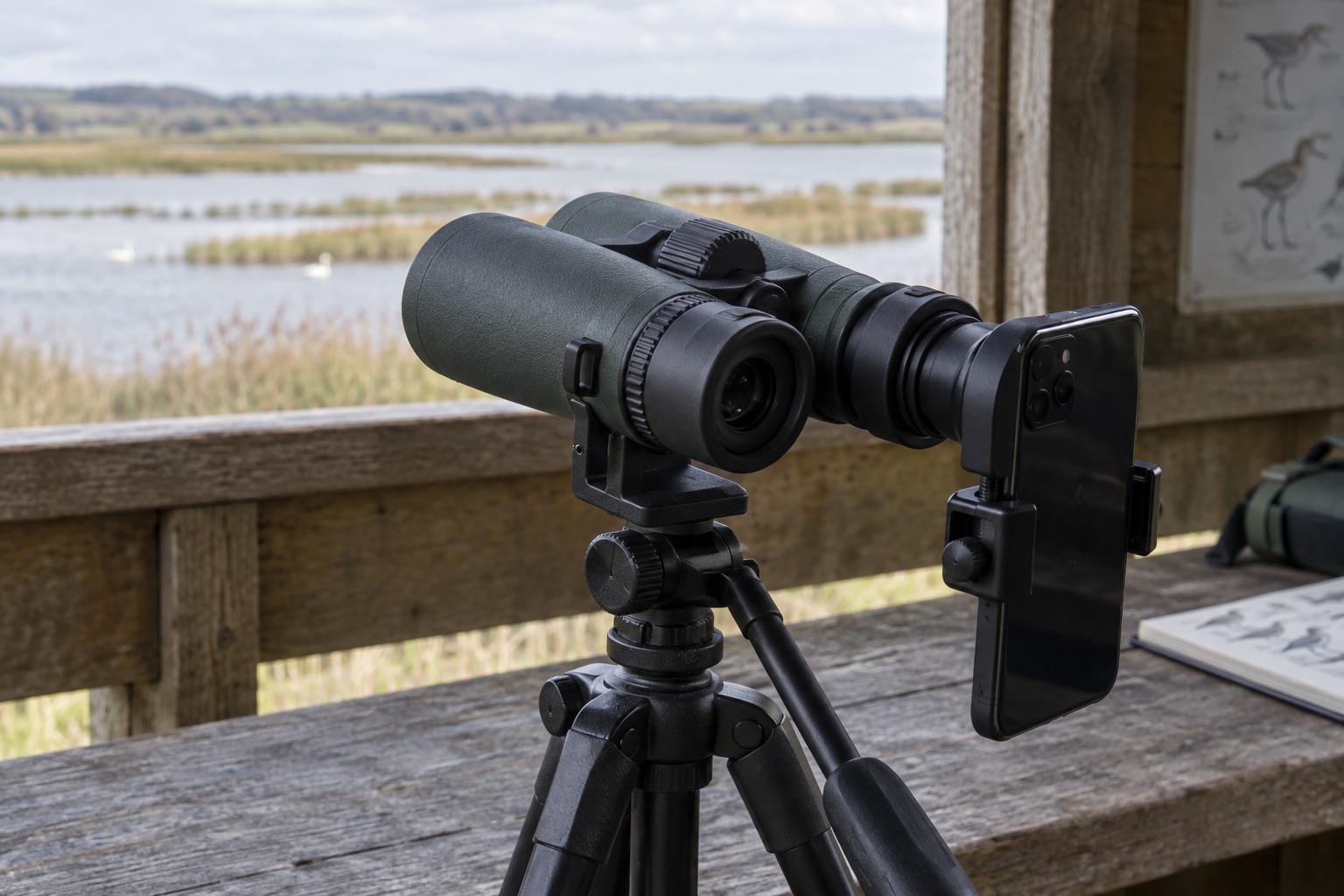
Measure outside eyepiece diameter at the adapter's grip point.
Measure phone width with the case you plan to use.
Confirm the main camera lens can line up without the clamp pressing a button.
Quick picks
Choose by the detail that matters most
Links open the matching Amazon UK listing. Prices and sellers can change, so confirm the model name and ASIN before buying.
Swipe to compare all details →
| Adapter | Eyepiece outside diameter | Phone width | Alignment |
|---|---|---|---|
| NexGO 81036 | 25.4–44.45mm | 58–103mm | X/Y |
| NexYZ 81055 | 35–60mm | 65–90mm | X/Y/Z |
The detailed shortlist
Two adjustable phone clamps
Maker-stated ranges are starting points; test the complete phone, case, eyecup and binocular.

Celestron NexGO 81036 two-axis phone adapter
Best for: Smaller compatible eyepieces
A folding X/Y-adjustable smartphone-to-eyepiece mount suited to smaller-diameter eyepieces within the maker's stated clamp range.
What stands out
- X and Y alignment controls
- Folds for transport
- Phone clamp spans 58–103mm
Keep in mind
- 25.4–44.45mm eyepiece clamp excludes some wide eyepieces
- No independent Z-axis adjustment
- 25.4–44.45mm eyepiece clamp
- 58–103mm phone clamp
- Two-axis adjustment
- Folding body

Celestron NexYZ 81055 three-axis phone adapter
Best for: Repeatable phone positioning
An X/Y/Z-adjustable smartphone-to-eyepiece mount that helps position a phone camera and set its distance from the scope's eyepiece.
What stands out
- X, Y and Z adjustments
- 35–60mm standard eyepiece clamp range
- Phone clamp spans 65–90mm
Keep in mind
- Check phone case thickness and eyepiece shape
- At 283g it adds weight behind the eyepiece
- 35–60mm eyepiece clamp
- 65–90mm phone clamp
- 283g
- Three-axis adjustment
A phone adapter clamps a camera behind one binocular eyepiece. It does not increase the binocular's optical resolution, and a marketing claim of “universal” cannot account for every eyecup, camera bump and phone case. The correct product starts with two measurements: the eyepiece's outer diameter where the adapter will grip, and the phone's width in the condition you will actually carry it.
NexGO for smaller eyepieces
Celestron gives NexGO 81036 a 25.4–44.45mm eyepiece range and 58–103mm phone-width range. Its two axes move the phone camera left/right and up/down. It folds for transport. A large or flared eyecup outside the gripping range can still defeat the clamp, even if the binocular's stated eyepiece diameter sounds close. Check whether the eyecup retracts without damage and whether the clamp clears the focus wheel.
NexYZ for three-axis adjustment
NexYZ 81055 covers stated 35–60mm eyepieces and 65–90mm phone widths. Its X/Y/Z controls add camera-to-eyepiece distance adjustment, useful for centring the view and reducing a black ring. It is larger and heavier than NexGO, and its narrower phone-width range excludes some large phones in thick cases. Do not assume it fits merely because it fits a spotting-scope eyepiece in another review.
Test the complete setup
Fit the binocular on a stable tripod via a compatible adapter. Clamp the phone behind one eyepiece without hanging its weight from a loose eyecup. In the camera app, identify the active main rear lens; some phones switch lenses automatically. Centre that lens over the bright field, then adjust distance if available. Photograph a stationary distant subject first. Our step-by-step binocular photography guide covers focus, exposure and common failures.
Do not point the assembled rig at the Sun. It is unsafe to look through ordinary optics at the Sun and unsafe to aim an unfiltered concentrated beam into a phone camera.
Measure at the clamping surface
The relevant eyepiece dimension is the outside width where the adapter's jaws will actually sit, not the objective size printed on the binocular. Measure both eyepieces if their rubber cups or housings differ, and note whether the cup folds or twists. A clamp that covers the eyecup's moving edge may slip even when its nominal diameter is within range. Measure the phone with its usual case across the part the jaws grip, then check whether side buttons or a protruding camera island sit under a contact point. Do not force the binocular hinge wider just to make room for the adapter.
The NexGO and NexYZ ranges overlap, but neither is universal. If an eyepiece is in the overlap and the phone fits both, NexYZ's extra depth control can help line up a lens with a difficult eyepiece. NexGO may be preferable when folding bulk matters and a simple alignment already works. A phone with multiple rear cameras may switch lenses in the default app; determine which lens is active before deciding the adapter cannot centre the image.
What a successful first photograph looks like
Use a stationary subject in even daylight, not a distant bird in motion. Focus the binocular by eye, mount it securely, align the phone until the circular field is centred, then use a short timer. A black crescent on one side usually points to off-centre alignment; an evenly dark ring can mean the lens is too far from the eyepiece or the camera has changed lenses. Crop only after capturing a clear central image. If you cannot keep both the optical view and phone still, stabilise the binocular first rather than spending more on clamp adjustments.
Frequently asked questions
Binocular phone-adapter questions
Does a universal phone adapter fit all binoculars?
No. Measure the eyepiece outside diameter and check eyecup shape, camera position, phone width and case thickness.
Can I attach a phone to either eyepiece?
Usually one eyepiece at a time, if the clamp can grip safely and the phone does not interfere with focus, the hinge or your support.
Why is the image a small bright circle?
The phone lens may be off-centre or too far from the eyepiece. Align the active main camera lens and adjust spacing before cropping.
Do I need a tripod?
A supported binocular is strongly recommended. Holding binocular, phone and adapter steady by hand is difficult, especially above 8×.