
Buying guide · Second-hand optics
Used or refurbished binoculars
Decide whether a second-hand binocular is worth buying by checking alignment, internal condition, focusing, seller terms and realistic repair risk.
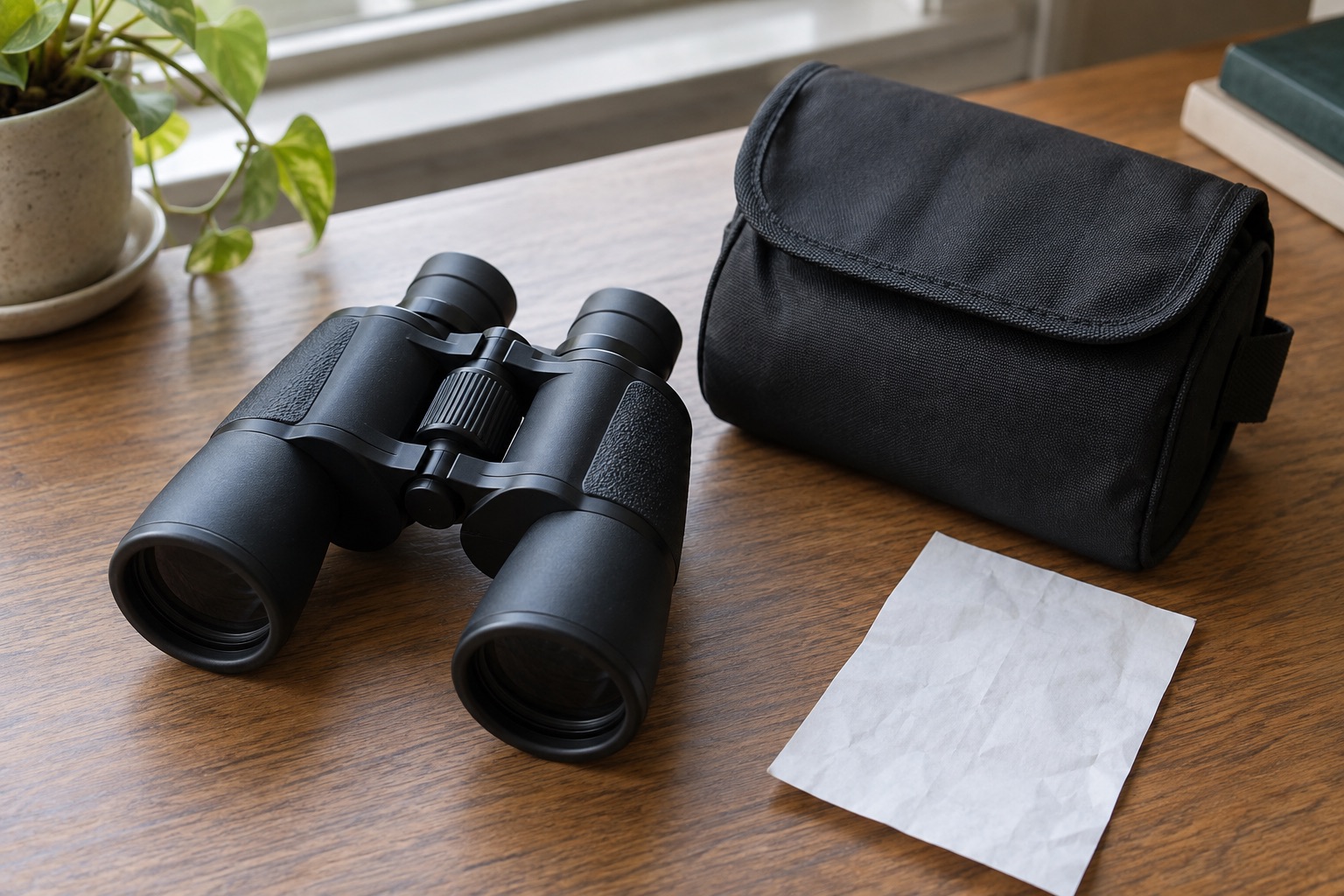
Separate seller-refurbished from manufacturer-serviced; ask what was actually done.
Check focus, alignment and glass condition before paying.
Include likely service cost and return rights in the real comparison.
Quick picks
Choose by the detail that matters most
Links open the matching Amazon UK listing. Prices and sellers can change, so confirm the model name and ASIN before buying.
The detailed shortlist
New-model benchmarks for the same decision
These Amazon UK cards are new alternatives, not used-stock listings. Their exact product images help compare whether the second-hand saving is worth the risk.

Nikon PROSTAFF P3 8x42
Best for: Beginners and glasses wearers
A relatively light 8×42 with 20.2mm eye relief, a 126m field and a waterproof, fog-free body.
What stands out
- 20.2mm stated eye relief
- 575g is light for an 8×42
- Waterproof and fog-free
Keep in mind
- 3m close focus is useful rather than exceptional
- No locking dioptre ring like the P7
- 8×42
- 575g
- 126m / 1,000m
- 20.2mm eye relief

Celestron Nature DX 8x42
Best for: First 8×42 and close garden viewing
A well-specified first birdwatching binocular with a wide 129m field, 2m close focus and phase-coated BaK-4 prisms without stepping up to ED-glass pricing.
What stands out
- 129m field of view at 1,000m
- 2m stated close focus
- Waterproof, nitrogen-filled body
Keep in mind
- 17.5mm eye relief offers less margin than the Nikon P7
- No ED glass in this standard Nature DX model
- 8×42
- 629g
- 129m / 1,000m
- 17.5mm eye relief
Second-hand optics are one of the few places where a model name tells you less than the individual item. A high-end binocular that has been dropped, stored damp or misaligned can be worse to use than a modest new pair. Treat “refurbished” as a description to interrogate, not proof of manufacturer service.
Inspect the view, not just the body
In daylight, focus on a distant sign or branch and move your gaze across the field. You should see one comfortable image, without the eyes fighting to merge two pictures. Then test a nearer subject, turning the wheel through its full travel. It should move smoothly without a loose patch, grinding or a point where one barrel stops responding. Our double-image guide distinguishes setup problems from possible alignment faults.
Look through both ends with a small ordinary torch angled across the glass—not directly into your eyes. Dust specks are common; spreading haze, branching marks or internal droplets are more serious. External coating scuffs may be tolerable, but a deep scratch across the central viewing area is not a bargain. Internal fungus and internal fogging are reasons to request a professional assessment or leave the listing.
Ask specific seller questions
Get the exact model code and photos of the actual pair, not catalogue imagery. Ask whether both objective and eyepiece caps, strap, case and any special adapters are included. Ask what “refurbished” means: cleaned externally, tested, resealed, or repaired? If a seller cannot name the work or offer a meaningful return route, price the risk accordingly. Warranty transfer varies by brand and purchase history; verify it with the seller or maker rather than assuming a lifetime promise follows the pair.
Compare against a known new baseline
Before paying for an uncertain old 8×42, compare its all-in cost with a new Nikon PROSTAFF P3 8×42 or Celestron Nature DX 8×42. The former offers 20.2mm eye relief and a 575g body; the latter focuses to 2m. Neither is universally better than a well-kept premium used pair. They simply establish what a predictable, currently documented new model offers. The cards above lead to exact new Amazon listings, not second-hand inventory.
If you cannot try the used pair, insist on clear condition descriptions and returns. If repair might be necessary, read when to seek professional repair before treating the asking price as the total cost.
A ten-minute collection check
If the seller allows collection, arrive in daylight and use the binocular at several distances. Begin by adjusting the hinge and eyecups to your own eyes, because a double-looking view can be caused by bad setup. Focus a distant sign with each eye in the proper sequence, then look with both eyes. If the image still takes effort to merge or causes discomfort, do not bargain over a possible alignment fault. Turn the focus wheel to each end without forcing it and check that near and far subjects become sharp in both barrels. Look at the body for signs of impact, loose eyecups, missing screws and a strap lug that may not support safe carry.
Ask to see the serial number and whether the stated model matches the actual markings. A blurred generic listing photo cannot establish what is being sold. Request a receipt or written description of what servicing was done, especially when “refurbished” appears in the title. A professional service may be worthwhile on a valuable model, but it is not free and may not be available for older parts. Get a real estimate before counting on a cheap repair.
Distance purchase and return risk
For a posted item, ask for clear photographs of both lens faces, barrel interiors as visible without dismantling, hinge, focus wheel and accessories. Confirm the return period and who pays return postage if alignment or internal condition differs from the description. Do not infer fungus-free interiors from a polished exterior. If the seller cannot provide enough information to judge the risk, a documented new model is the better comparison than the original retail price of a used premium badge.
Frequently asked questions
Second-hand binocular questions
Is a refurbished binocular the same as a repaired one?
Not necessarily. Ask who performed the work, which parts were checked or replaced, and what warranty or return terms apply.
Can I fix a double image myself?
Do not plan on it. Misalignment can need professional equipment and may be uneconomic on a lower-cost pair.
What does internal fungus look like?
It may appear as branching marks, threads or cloudy patches inside the optical path. Do not open a sealed binocular to investigate.
Should I choose used premium or new entry-level?
Used premium can make sense when you can verify condition and returns. Without that, a known new model is usually easier to assess and support.