
Field guide · One-eye birdwatching
Best monoculars for birdwatching
Choose a birdwatching monocular by field width, steadiness, close focus and shade performance, with honest comparisons to compact binoculars.
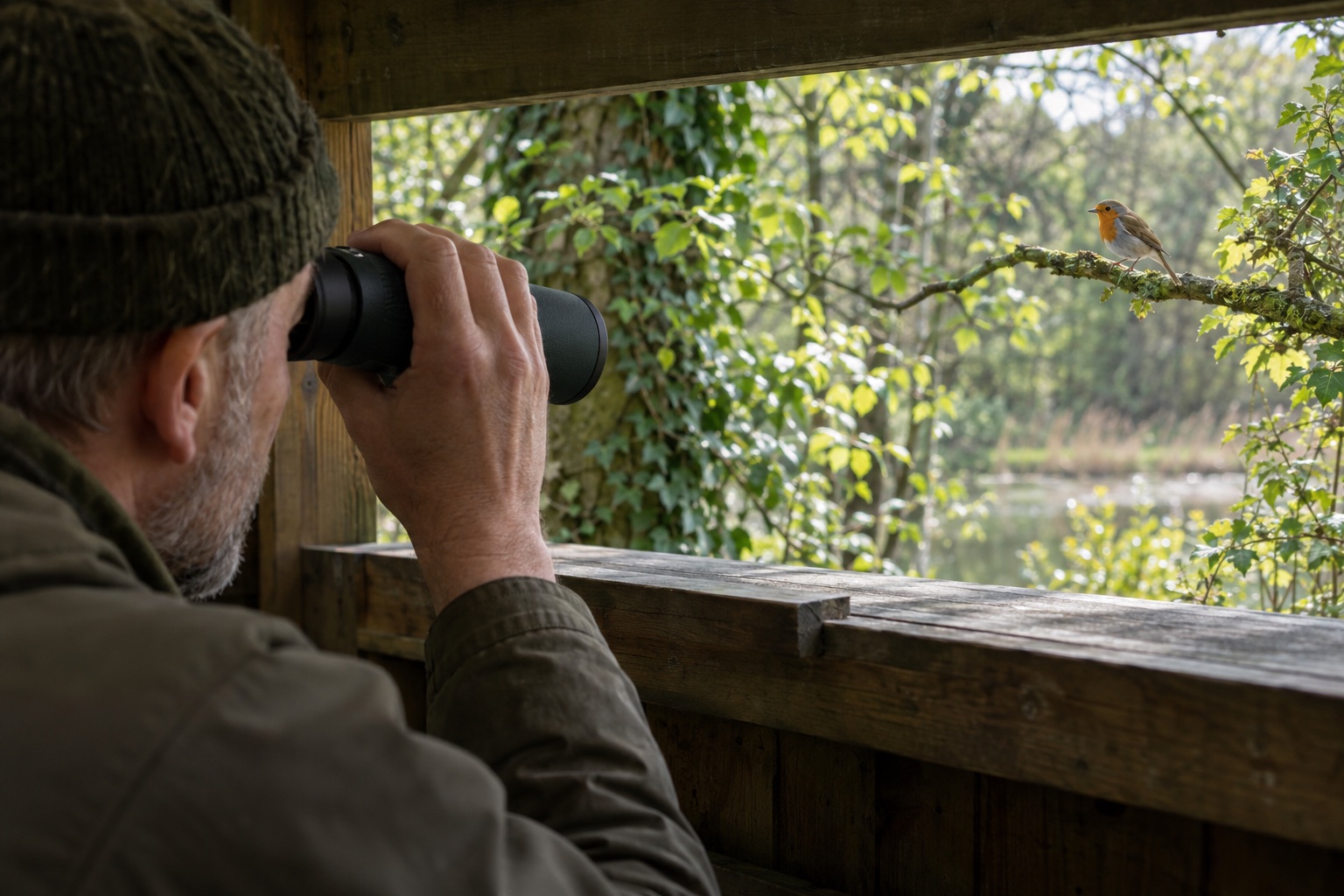
A broad field helps find a bird before it moves again.
The 8×42's larger exit pupil is more forgiving under canopy or at dawn.
For long sessions and tracking flight, an 8×32 or 8×42 binocular is usually more comfortable.
Quick picks
Choose by the detail that matters most
Links open the matching Amazon UK listing. Prices and sellers can change, so confirm the model name and ASIN before buying.
Swipe to compare all details →
| Model | Best context | Field at 1km | Exit pupil | Close focus | Main limit |
|---|---|---|---|---|---|
| Opticron 8×42 | Woodland and regular use | About 131m | 5.25mm | 1.9m | Larger carry |
| Vortex Solo 8×25 | Bright-day pocket backup | About 126m | 3.1mm | 5m | Shade and near birds |
| Hawke Endurance ED 8×25 | Light weather-ready walks | 119m | 3.1mm | 5m | 13mm eye relief |
The detailed shortlist
Three credible birdwatching monocular options
Compare the view, grip and eye relief, then confirm the one-eye format and maker's model code before ordering; the Vortex listing's category wording is inconsistent.

Opticron Explorer WA ED-R 8x42 monocular
Best for: Birds and close nature
A one-eye 8×42 with ED glass, a generous published field and 1.9m close focus for birds and nearby nature.
What stands out
- 8×42 exit pupil is forgiving
- About 131m field at 1,000m
- 1.9m close focus and ED glass
Keep in mind
- Larger than 8×25 pocket models
- One-eye viewing remains less restful than binoculars
- 8×42
- About 329g
- About 131m / 1,000m
- 17mm eye relief

Vortex Solo 8x25 monocular
Best for: Daylight travel and casual birds
A waterproof 8×25 with a 7.2° field, 15mm eye relief and 5m close focus, sized for grab-and-go use.
What stands out
- About 126m field at 1,000m
- Waterproof and fogproof
- About 159g
Keep in mind
- 3.1mm exit pupil is less forgiving in shade
- 15mm eye relief requires a glasses fit check
- 8×25
- About 159g
- About 126m / 1,000m
- 15mm eye relief

Hawke Endurance ED 8x25 monocular
Best for: Short daytime walks
A 150g waterproof pocket monocular with ED glass, a 119m field and 5m close focus; its eye relief is only 13mm.
What stands out
- 150g carry weight
- ED glass and phase-corrected prism
- Waterproof and nitrogen purged
Keep in mind
- 13mm eye relief may frustrate glasses wearers
- 3.1mm exit pupil is daylight-first
- 8×25
- 150g
- 119m / 1,000m
- 13mm eye relief
A bird is not a static test chart. It hops, flies behind branches and vanishes while you search for it. That makes field width, one-handed steadiness and fast focus more important than a dramatic magnification claim. A monocular can be a useful field companion, but it is a compromise chosen for carry or one-eye use, not a secret substitute for a comfortable binocular.
Best for deliberate watching: Opticron Explorer WA ED-R 8×42
The Opticron 8×42 publishes a field equivalent to roughly 131m at 1,000m, a 1.9m close focus and 17mm eye relief. Its 5.25mm exit pupil gives more tolerance when lifting the optic to the eye under a canopy than an 8×25's 3.1mm beam. ED glass is relevant when a dark bird sits against bright sky. It is a solid choice for an observer who needs a one-eye format but will genuinely birdwatch rather than merely carry an emergency optic.
At roughly 329g, it is also a reminder that “monocular” does not always mean tiny. An 8×32 binocular may be a better balance if two-eye viewing is comfortable and the bag can take it.
Best pocket backup: Vortex Solo 8×25
The Solo 8×25 has a broad published 7.2° field, about 126m at 1,000m, and weighs roughly 159g. It can be ready in a coat pocket when a full binocular was left behind. Waterproofing helps on a damp British walk. But it focuses only to about 5m and its small exit pupil becomes fussy in woodland shade. The retailer's listing title calls this model a binocular; the manufacturer's S825 and image identify a one-barrel monocular.
Best light ED pocket option: Hawke Endurance ED 8×25
The Hawke 8×25 is 150g, sealed, nitrogen-purged and uses ED glass. Its 119m field is useful but narrower than the Vortex or Opticron here. Thirteen millimetres of eye relief is the major fit warning for glasses. Like the Vortex, 5m close focus limits use for birds immediately outside a hide window. It is best when a very light daytime optic will be carried consistently.
Where a binocular still wins
For prolonged scanning at a wetland, two-eye viewing reduces the strain of holding one eye closed or mentally suppressing its image. A binocular also gives a more natural sense of the scene and is easier for many people to keep on a moving bird. Compare a compact 8×32 or full-size 8×42 before buying a larger monocular for the sole purpose of birdwatching.
If a monocular is right for your handling, practise acquiring a branch with the naked eye first, then lift the optic without looking away. Stabilise your elbow against your body or a hide rail. Test focus near and far, and check the complete field with your glasses. Those habits will make more difference than jumping to a narrow 10×25 for an apparently larger image.
Where each choice helps a birdwatcher
At a shaded feeder, the Opticron's larger objective and closer focus are practical advantages. A bird may land much nearer than the 5m minimum of the two pocket models, and a wider exit pupil makes eye placement less exacting during a quick lift. On a bright coastal walk where the binocular was left at home, the Vortex is easier to carry and its stated field helps reacquire movement. Hawke offers a slightly lighter pocket ED alternative, though a short published eye-relief figure is a significant warning with glasses. These are not three levels of the same purchase; they suit different observing patterns.
For a moving bird, locate it unaided, follow its direction and bring the monocular to your viewing eye without sweeping randomly. A broad field can help, but one-eyed scanning still feels different from binocular viewing. Pause and brace rather than increasing power. If most sessions involve sustained wetland scanning or identifying distant birds for several minutes, try two-eyed 8×32 or 8×42 binoculars before committing to a larger monocular. The smaller pocket choices are strongest as companions for opportunistic daylight sightings, not as an unqualified replacement for a primary birding instrument.
Frequently asked questions
Birdwatching monocular questions
Can I watch birds properly with a monocular?
Yes, especially perched birds and brief sightings. Tracking fast flight or watching for long periods is usually easier with binoculars.
What magnification is best for a birdwatching monocular?
Eight-times is a practical starting point. It is easier to steady and usually gives more scanning room than 10×.
Is an 8×25 enough in woodland?
It can work in bright openings, but its 3.1mm exit pupil is less forgiving in shade than an 8×42's 5.25mm.
What if I wear glasses?
Check the full field with your own glasses. Published eye relief is 17mm for the Opticron, 15mm for Vortex and 13mm for Hawke; those numbers are guides, not a guaranteed fit.