
Technology choice · Steadier viewing
Image-stabilised vs standard binoculars
Decide whether electronic shake reduction is worth batteries, weight and cost compared with a conventional binocular or tripod.
Compare magnification, objective size and field separately from stabilisation.
Battery type, runtime and weather protection vary by model.
A supported conventional binocular may be better for a fixed hide.
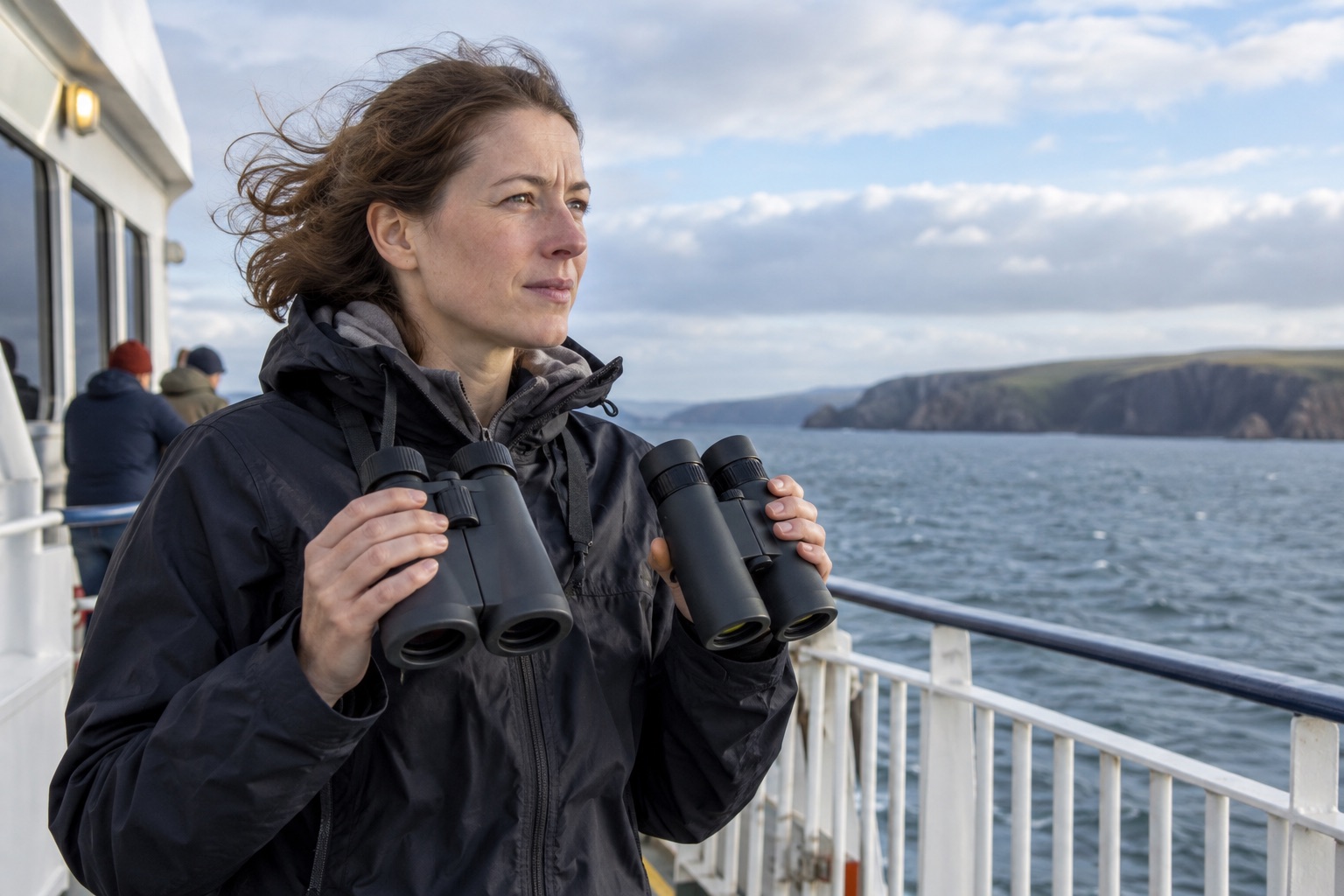
Stabilisation is worth paying for when the view moves more than the subject does. On a ferry, at a distant sports seat or in a windy open landscape, a steadier 10× handheld image can reveal detail that a shaky conventional 10× does not. In a sheltered hide where you can use a tripod, the calculation changes.
Swipe to compare both designs →
| Decision | Stabilised | Standard |
|---|---|---|
| Hand shake | Electronically corrected within limits | Controlled by hold or support |
| Power | Battery required for correction | No battery |
| Long fixed session | Useful but not essential | Can be tripod-mounted if compatible |
| Important checks | Runtime, weather rating, switch feel | Field, fit, mount and body balance |
What the stabiliser does—and does not do
An image-stabilised binocular senses or compensates for movement and shifts optical elements or another part of its system to steady the field. The engineering differs by maker. It cannot correct a bird moving out of view, improve poor focus, overcome atmospheric heat haze or make a small objective gather more light. A calm image can feel clearer because fine detail stops swimming across the eye, but that is different from claiming higher optical transmission.
Two 10× models show the hidden variables
The Canon 10×30 IS II gives a 3mm exit pupil, 105m field at 1,000m and 14.5mm eye relief. Nikon's conventional PROSTAFF P7 10×42 gives a 4.2mm exit pupil, 122m field and 15.7mm relief. Both makers list 600g for the body, although Canon excludes the two AA batteries it needs. Thus stabilisation here does not come with a lighter body; it trades the Nikon's 17m wider published field and larger exit pupil for electronic shake correction. That is a useful daylight-handholding choice, not evidence that either has greater optical sharpness or transmission in a controlled comparison.
Battery planning is part of owning the Canon. Check the exact battery type, expected life under your temperature and usage, and whether stabilisation can be activated comfortably while holding the instrument. Equally, check the P7's grip, eye relief and real-world steadiness for your hands. A binocular you can hold naturally can narrow the practical benefit of electronic correction.
Where the premium makes sense
Consider stabilisation for frequent long-distance handheld viewing, boat trips and situations where a tripod is impractical or not permitted. Prefer a standard 8×42 for fast woodland and mixed wildlife use unless shake is a proven problem. Prefer a conventional 10×42 on a tripod for extended stationary sessions. Our image-stabilised shortlist covers specific Canon formats; this page is about whether the technology is appropriate at all.
Try to compare the same distant target both with elbows braced and without. If stabilisation makes an otherwise unreadable detail stay visible long enough to inspect, it may be worth its weight, batteries and cost. If the difference is small, spend first on field, fit and an optic you will carry every day.
Helpful products
A 10× decision with different compromises
Canon 10×30 IS II and Nikon PROSTAFF P7 10×42 are both 10×, but differ in objective size, battery needs and body design. This is a use-case comparison, not a measured sharpness ranking.

Canon 10x30 IS II
Best for: Steady general daytime viewing
A 10×30 stabilised binocular balancing a steadier 10× view with a more useful 3mm exit pupil than a pocket 10×20.
What stands out
- 10× view with push-button stabilisation
- 30mm objectives improve light margin over 10×20
- Handheld format
Keep in mind
- Batteries must be carried
- Stabilisation cannot make a dark 30mm image bright
- 10×30
- 3mm exit pupil
- Image stabilisation
- Battery powered

Nikon PROSTAFF P7 10x42
Best for: Estuaries and open-country distance
A 600g 10×42 with a notably wide 122m field, 15.7mm eye relief and a locking dioptre for repeatable long-distance viewing.
What stands out
- 122m field is wide for a 10×42
- 600g waterproof body
- Locking dioptre and protective lens coating
Keep in mind
- 15.7mm eye relief offers limited margin for some glasses
- 10× shake is more visible than with 8×
- 10×42
- 600g
- 122m / 1,000m
- 15.7mm eye relief
Frequently asked questions
Stabilised binocular questions
Do image-stabilised binoculars work without batteries?
The optical view may remain usable on some models, but stabilisation requires power. Check the exact maker's instructions and carry the specified spare batteries.
Are stabilised binoculars brighter?
Stabilisation does not increase light transmission or objective diameter. It can help you inspect detail by reducing apparent shake, but low-light brightness is a separate question.
Can stabilisation replace a tripod?
For mobile handheld viewing it can reduce the need for one. For prolonged high-power observation or phone imaging, a stable mount may still be better.
Is standard 8× a better alternative to stabilised 10×?
Often for broad, quick wildlife viewing. Ten-times stabilisation can help with distant detail, while a conventional 8× remains simpler and generally easier to aim.